Most protein powder problems trace back to one of five causes: too many added ingredients, fermentable carbohydrates (FODMAPs), poor solubility, an allergen your body reacts to, or simply not taking enough to hit your daily target. The complaint you searched for — the bloating, the chalky aftertaste, the clumps that refuse to dissolve — almost always has a specific mechanism behind it, and most of them are fixable without giving up protein supplements entirely.
The most common protein powder problems are digestive discomfort (usually from FODMAPs or lactose), unpleasant taste and texture (from sweeteners, gums, and flavorings), clumping (poor solubility), allergen reactions (dairy, soy, egg), and missed protein targets (under-dosing or low-quality protein). The single most effective fix is switching to a single-ingredient powder with a high digestibility score: potato protein isolate, for example, is a low-FODMAP source (Monash University, 2019) with a DIAAS reported as high as 100% (Food Science & Nutrition, PMID:33133540).
This page is the hub for our troubleshooting guides. Below is a quick map from symptom to cause to fix, followed by a fuller overview of each problem category. Where a problem needs depth, we link to the guide that goes deep on it.
| Symptom | Likely cause | First fix to try |
|---|---|---|
| Bloating, gas, cramping | FODMAPs or lactose in the powder | Switch to a low-FODMAP, single-ingredient powder |
| Chalky or bitter aftertaste | Stevia, sucralose, or gum additives | Use an unflavored powder; sweeten your own food |
| Clumps that won’t dissolve | Low solubility; adding powder to liquid second | Add liquid first, then powder; use a shaker or blender |
| Itching, hives, congestion, GI distress | Allergen — dairy, soy, egg, or cross-reactant | Read the full label; choose a single allergen-free protein |
| No strength or muscle progress | Under-dosing or low-quality protein | Track grams per day; check the protein’s quality score |
| Worry about contaminants | Heavy metals in some powders | Buy third-party tested; request a Certificate of Analysis |
Why Does Protein Powder Cause Bloating?
Protein powder bloating is most often caused by FODMAPs — fermentable carbohydrates that the small intestine absorbs poorly — or by residual lactose in dairy-based powders. FODMAPs cause discomfort through two mechanisms: an osmotic effect that pulls water into the intestine, and rapid fermentation by gut bacteria that produces gas. The protein itself is rarely the problem; the carbohydrates riding along with it usually are.
Monash University notes that plant-derived proteins such as soy and pea “can be particularly challenging to purify, and often contain some FODMAPs (eg. GOS and fructan),” and that protein powders run 70–90% protein yet are often high in FODMAPs because even small amounts can trigger symptoms in sensitive people. On the dairy side, Monash explains that whey concentrate carries more lactose — a FODMAP — than whey isolate, which is processed further; whey isolate is typically 90–95% protein and under 1% lactose. So a switch from concentrate to isolate sometimes resolves the issue on its own.
If you have IBS or a sensitive stomach, the more reliable move is a low-FODMAP protein. Potato protein isolate is classified as a low-FODMAP source (Monash University, 2019), which is one reason it sits well with people who react to pea, soy, or whey concentrate. There is also a broader point worth knowing: when dietary protein exceeds what the small intestine can digest and reaches the colon, bacteria ferment the leftover protein into gases and other compounds (Am J Physiol Gastrointest Liver Physiol, PMID:29597354). A more digestible protein leaves less behind to ferment.
For the full mechanism and a step-by-step elimination approach, see our guide to why protein powder causes bloating and how to fix it, plus our deeper resources on the best protein powder for IBS, FODMAP-friendly protein, and protein powder and gut health.
Taste and Texture Problems
The chalky, bitter, or cloyingly sweet taste people complain about almost never comes from the protein. It comes from what was added to mask the protein: stevia, sucralose, gums, and “natural flavors.” The fix is to remove those ingredients rather than chase a better flavoring system — an unflavored, single-ingredient powder has no aftertaste to fight in the first place.
Sweetener sensitivity is real and common. Stevia leaves a lingering, slightly metallic note for many people; sucralose can taste artificially sweet in a way that does not pair with savory food. Stevia-free options do exist — some powders use monk fruit or coconut sugar instead, and unsweetened plant-based blends typically deliver somewhere around 15–21 g of protein per serving with little or no added sugar. But the most direct route around taste problems is to skip sweeteners altogether and let the protein disappear into food you already flavor yourself.
This is where an unflavored isolate earns its place. It disappears into your food: stirred into oatmeal, soup, or a smoothie, a neutral powder adds protein without adding taste. Flavorless vegan powders are genuinely hard to formulate — industry commentary puts soy isolate as the closest but still “far from flavorless” — so manufacturers lean on flavoring to cover the gap. Removing the flavoring removes the problem.
For specifics, see our guides to the best unflavored protein powder and how to use unflavored protein, or our breakdowns of protein shakes without stevia and protein powder without sucralose. If you want to put it to work in actual food, our recipe index is built around neutral protein.
Mixing and Clumping Problems
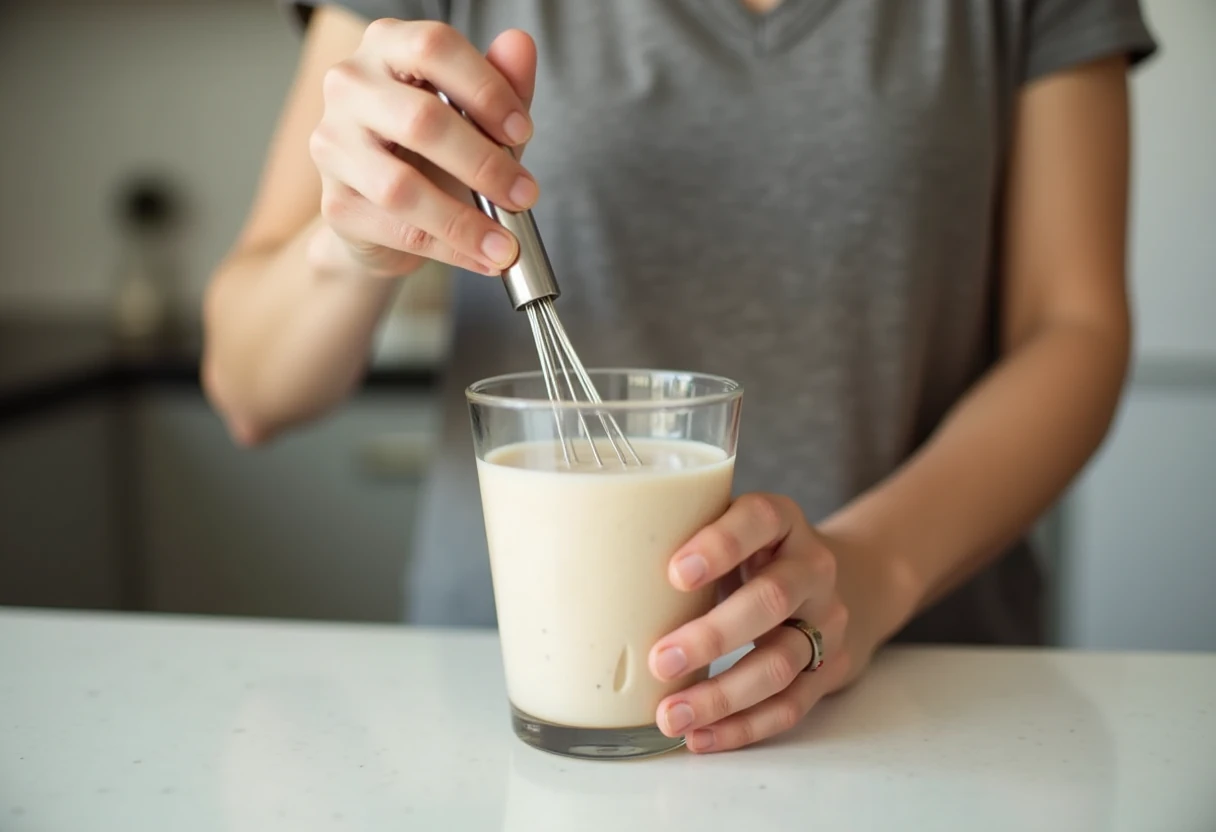
Clumping is a solubility problem, and the order you combine ingredients matters more than the powder’s price. Add liquid to the glass first, then the powder — not the reverse — and use a shaker bottle, blender, or milk frother to break up dry pockets before they hydrate into lumps. Cold liquid and a few seconds of agitation solve the majority of clumping complaints.
Protein isolates are made for high protein content, not necessarily for easy dispersion. A purer isolate can actually be harder to wet out than a concentrate, which is why baking guidance often recommends using a concentrate or a blend rather than a straight isolate when texture matters. Processing methods change this: research on insoluble potato protein isolates found that high-intensity ultrasound treatment improved emulsifying activity and emulsion stability (PMID:35364471). In other words, solubility is a property of how the powder was made, not a fixed trait of the protein.
Practical fixes, in order: use cold or room-temperature liquid; combine in a sealed shaker and shake hard for ten seconds; for hot applications, make a slurry with a little cold liquid before adding to the hot dish; for smoothies, blend the powder with liquid before adding ice or frozen fruit. Heating does not destroy the protein content of a powder, so cooking with it is fine — the concern is texture, not nutrition.
For application-specific technique, see how to use potato protein powder and how to bake with protein powder.
Allergen Reactions: Protein Powder Side Effects You Can’t Ignore
If a protein powder triggers itching, hives, nasal congestion, swelling, or sudden GI distress, you are likely reacting to an allergen — most commonly dairy (whey, casein), soy, or egg — rather than experiencing ordinary protein powder side effects like mild gas. Allergic reactions are immune responses and can escalate; they are not something to manage by drinking through it. The fix is to identify the offending input and remove it, which is far easier when the powder has fewer ingredients to investigate.
Multi-ingredient powders make this hard. A proprietary blend can hide a dozen components behind one line on the label, and cross-reactivity complicates things further: protein families such as PR-10 proteins, profilins, and lipid transfer proteins can cause reactions across botanically unrelated sources. This is the entire case for single-ingredient protein. When the label lists one item, there is nothing to cross-reference and nothing hidden.
Potato protein is one of the proteins positioned specifically to add protein “without relying on common allergens,” and it sidesteps the big eight — no dairy, egg, soy, nuts, wheat, or shellfish. That makes single-ingredient potato protein a reasonable starting point for the allergy parent and the autoimmune-aware adult who needs the fewest possible inputs. Other single-allergen-free options exist across the plant category — rice, pea, and hemp isolates among them — so it is worth comparing several against your own trigger list.
For the full framework on choosing a safe powder, see our allergen-free protein guide, plus targeted resources on protein powder without soy, dairy-free protein, and protein for dairy intolerance. If you follow an elimination protocol, our notes on AIP-compatible protein may help.
Not Hitting Your Protein Targets
If you are taking protein powder daily and seeing no change in strength, recovery, or muscle, the problem is usually dose, quality, or both — not the act of supplementing. Protein powder alone does not build muscle; it has to be paired with resistance training, and the total daily grams have to be high enough. Many people scoop once and assume it is enough when their actual target is several times that single serving.
Quality matters alongside quantity. Protein quality is measured by PDCAAS and DIAAS, and animal proteins generally score higher than plant proteins because of their amino acid profile and digestibility (Foods, PMID:38890999). Plant proteins also tend to be lower in leucine, the amino acid most associated with triggering muscle protein synthesis, which is why some plant powders produce a smaller response gram-for-gram. In a controlled comparison, a 20 g plant-protein blend without added leucine raised myofibrillar synthesis to 0.041%/h versus whey’s 0.046%/h; matching the blend’s leucine to whey closed the gap (Curr Dev Nutr, PMC11153912, 2024).
Potato protein is a useful exception within the plant category. Its DIAAS has been reported as high as 100% (Food Science & Nutrition, PMID:33133540), and a 2020 trial found that 25g of potato protein isolate twice daily stimulated muscle protein synthesis in young women (Nutrients, PMID:32349353). A later study concluded potato protein is a “high-quality” plant source that stimulates synthesis effectively (Medicine & Science in Sports & Exercise, PMID:35438672). So if a plant powder is under-performing, the issue may be the source, not plant protein as a category — and the fix can be as simple as increasing the dose to meet a real target.
To set a number and meet it, see how much protein per day for muscle gain, our explainer on protein digestibility and what actually gets absorbed, and complete vs incomplete proteins. Older readers should also read anabolic resistance, since aging blunts the muscle response to protein (PMID:23558692) and shifts the target upward.
Worries About Safety and Contaminants
The most legitimate safety concern with protein powder is heavy-metal contamination, and it is verified by independent testing. The Clean Label Project’s 2025 Protein Study 2.0 tested 160 products from 70 brands across 35,862 data points and found that 47% exceeded at least one federal or state safety standard (California Proposition 65), with 21% exceeding twice the Prop 65 levels. Plant-based powders contained five times more cadmium than whey-based ones, and chocolate powders contained 110 times more cadmium than vanilla.
Consumer Reports reached a similar conclusion in October 2025: of 23 protein powders and shakes tested, more than two-thirds contained more lead per serving than the publication’s safe daily limit of 0.5 micrograms, and lead in plant-based products averaged nine times higher than in dairy-based powders. The Clean Label Project also reported that certified organic powders averaged three times the lead of non-organic products — a counterintuitive result that shows “organic” is not a proxy for low contaminants.
The fix is verification, not avoidance. Buy from brands that publish third-party lab results and will hand you a Certificate of Analysis on request. Fewer ingredients also narrows the contamination surface: with one input, there is only one source to test. Learn the broader criteria in is protein powder safe and protein powder third-party testing. To understand why blends are harder to vet, see why proprietary blends are a problem and protein powder without fillers.
The Common Thread: Fewer Ingredients, Fewer Problems
Look across all six categories and the same pattern repeats. Bloating comes from added carbohydrates. Bad taste comes from added sweeteners. Allergen reactions come from added or hidden proteins. Contamination risk grows with each additional input. The more a powder contains, the more there is to go wrong — and the harder each problem is to diagnose.
That is the case for single-ingredient protein. A single-ingredient powder is not automatically better at everything — whey isolate digests faster and stimulates synthesis slightly more per gram, and that is worth acknowledging — but it gives you a short list to troubleshoot against. Single-ingredient powders are a whole category — potato, rice, pea, soy, and whey isolates all come in unflavored, one-ingredient forms — not a single product. To understand the ingredient itself, start with what is potato protein and why single-ingredient protein matters.