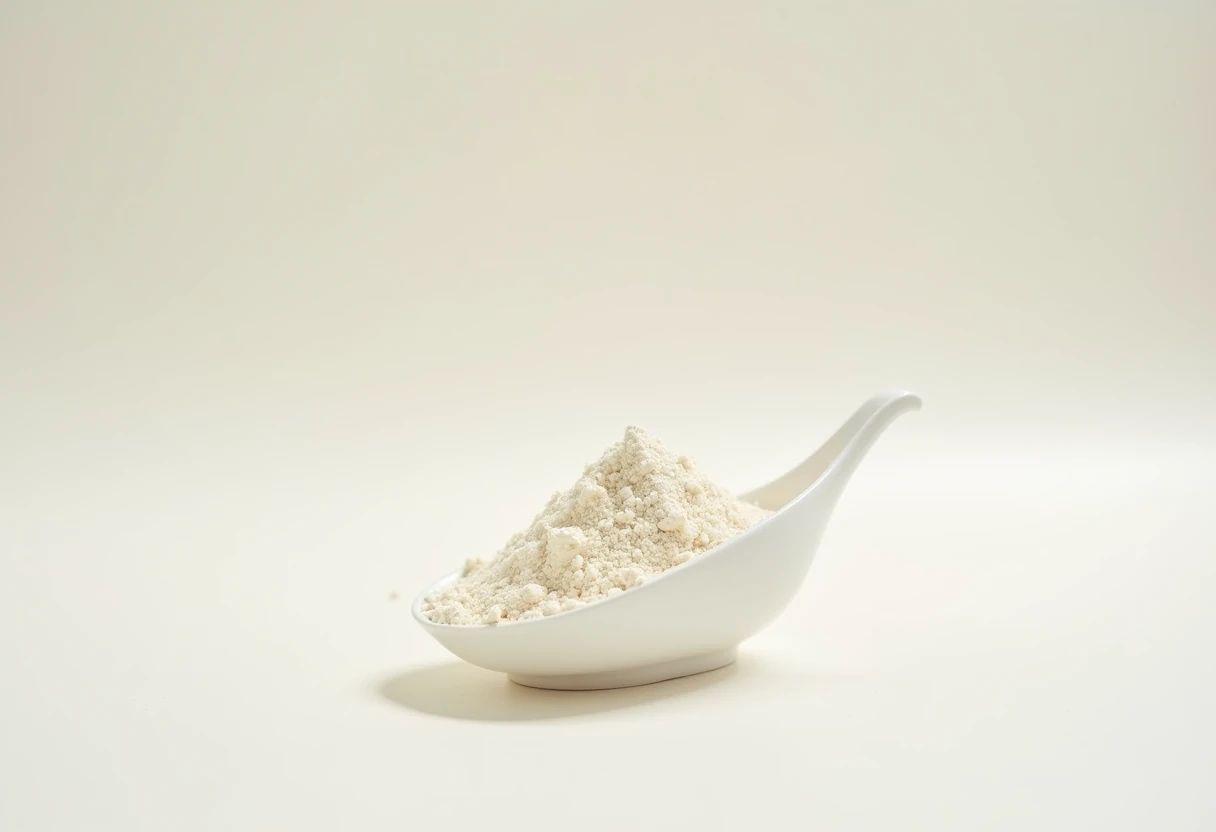
A single ingredient protein powder is not a premium feature. It is the baseline condition under which the ingredient label tells you the truth, and every step away from it shifts a decision you should be making onto a manufacturer you cannot question.
A single-ingredient protein powder contains only the protein itself — no sweeteners, gums, flavors, or fillers — so you can verify exactly what you are consuming from the label alone. This matters because the FDA does not pre-approve dietary supplement ingredients before they reach shelves, and the Clean Label Project’s 2025 Protein Study 2.0 found that 47% of 160 tested products exceeded at least one federal or state safety standard. Fewer ingredients means fewer undisclosed judgment calls and fewer points where contamination can enter.
Pick up a flavored protein powder and read the back. Fourteen ingredients is common. Three of them are sweeteners, two are gums, one is a “natural flavor” blend that legally does not have to disclose its components, and several are present in quantities too small to do anything except change the color, texture, or mouthfeel. None of those were your choice. They were chosen for you, by someone improving for taste-test scores and shelf stability, and then printed in a typeface you have to squint to read. One ingredient — that is the honest default, or it should be.
The label is the product
The reason single-ingredient matters is not aesthetic. It is epistemic. When a tub lists one item, you know what you are eating with certainty. When it lists fourteen, you are trusting that every one of those additions was necessary, well-tested, and present at a dose that does nothing you would object to. That trust is unverifiable from your side of the counter.
This is the entire argument for an allergen-free protein approach: the fewer inputs a product has, the fewer things there are to react to, to question, or to discover later that you would rather not have consumed. For the allergy parent whose child cannot have dairy, eggs, nuts, or soy, a single-ingredient label is not a marketing nicety. It is the difference between a safe food and an emergency room.
“Every additional ingredient is a judgment call the manufacturer makes on your behalf, without your input.” — Our editorial position
What “one ingredient” actually removes
The difference is easiest to see side by side. Here is a representative flavored powder against a single-ingredient one. Neither is invented; both formats sit on the same shelf.
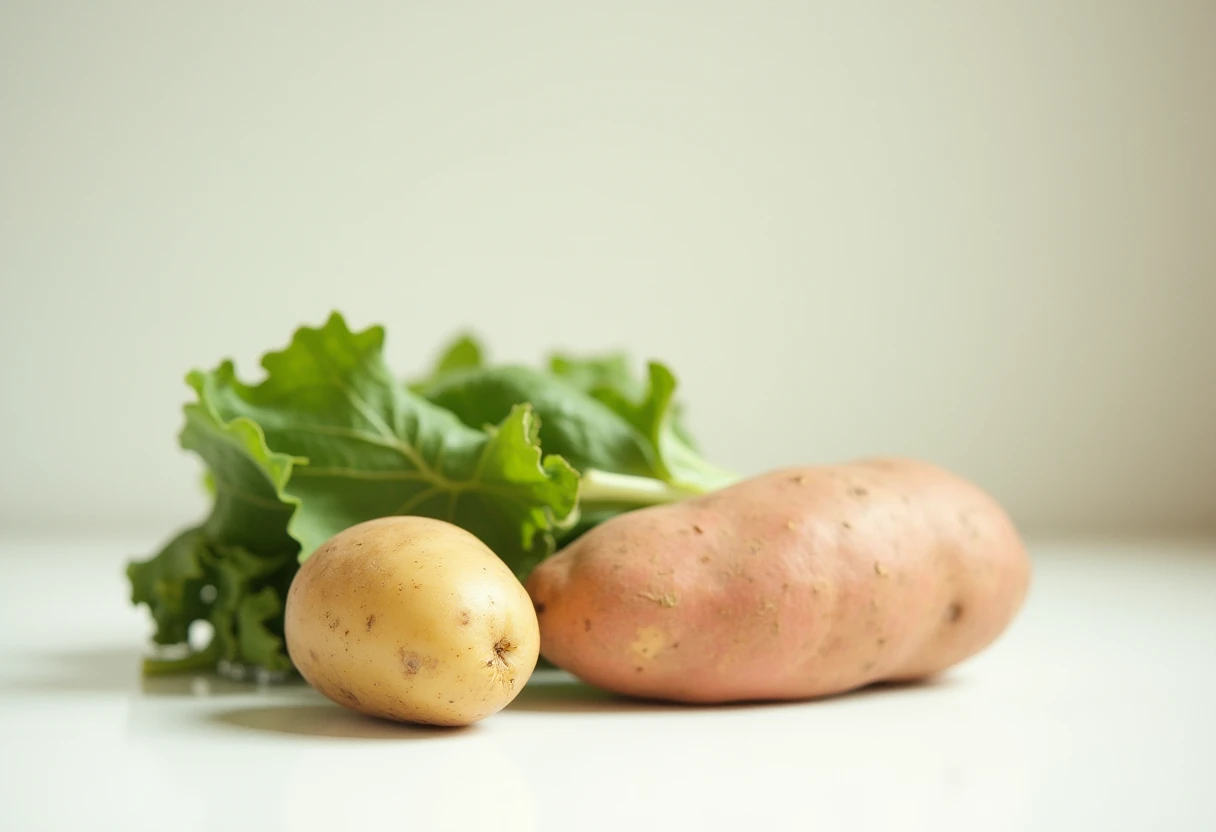
Fourteen ingredients Protein blend, natural and artificial flavors, sucralose, acesulfame potassium, stevia leaf extract, xanthan gum, guar gum, soy lecithin, salt, medium-chain triglyceride powder, silicon dioxide, dextrin, dipotassium phosphate, color. Three of those are sweeteners. The flavor line discloses nothing. One ingredient Potato protein isolate. That is the complete list. There is nothing to look up, nothing to cross-reference against an allergy list, and nothing whose function you have to take on faith. It disappears into your food.
A one ingredient protein powder removes the entire category of additions that exist for the manufacturer’s benefit rather than yours: flavors that improve a panel score, gums that keep a shake from separating on a store shelf, sweeteners that mask the underlying taste of cheap protein. Some single-ingredient protein brands have built their entire premise on this approach, and they were right to. The format is honest. The question is why it is treated as the exception.
Why the FDA does not catch this for you
Many people assume that because a supplement is sold, someone has reviewed its ingredients. That is not how the regulation works. Under the Dietary Supplement Health and Education Act, the FDA does not pre-approve supplement ingredients before sale. Manufacturers are responsible for their own safety substantiation, and the agency generally acts only after a product is already on the market and a problem has surfaced.
The Claim “Flavoring agents and additives in protein powder are safe and well-tested — they would not be allowed if they were not.” The Reality The FDA does not pre-approve dietary supplement ingredients. There is no gate the formula passes through before it reaches you. The burden of verification sits with the buyer, and a longer ingredient list gives the buyer more to verify and less ability to do it.
This is not a conspiracy. It is simply the structure. And it means the practical defense available to a careful buyer is not “trust the testing” — it is “reduce the surface area.” Fewer ingredients, fewer undisclosed judgment calls.
The contamination data backs this up
The argument for fewer inputs is not only philosophical. Independent testing keeps finding measurable contamination in the protein powder category, and the additions correlate with the problem.
Clean Label Project, Protein Study 2.0 (2025) Across 160 protein powder products from 70 brands, analyzed over 35,862 data points, 47% of products exceeded at least one federal or state safety standard (California Proposition 65), and 21% of samples exceeded twice the Prop 65 levels. Chocolate-flavored powders contained 110 times more cadmium than vanilla varieties, with 65% of chocolate products exceeding Prop 65 levels.
Read that again. The flavoring is not neutral. Chocolate powders — flavored, sweetened, processed further than their vanilla counterparts — carried 110 times more cadmium. The additions are not just inert decoration; they are an extra route for contamination to enter the tub. The same study found certified organic powders averaged three times the lead of non-organic products, a reminder that “organic” is a farming claim, not a contamination guarantee.
Consumer Reports, 2025 In testing of 23 protein powders and ready-to-drink shakes published in October 2025, more than two-thirds contained more lead per serving than the publication’s safe daily limit of 0.5 micrograms. Plant-based products averaged nine times higher lead than dairy-based powders.
That last figure deserves an honest note, because credibility compounds: plant-based powders are not automatically lower in heavy metals. Plants take up cadmium and lead from soil, and some plant sources concentrate them. This is not an argument that plant protein is dangerous — it is an argument for knowing your single ingredient, sourcing it deliberately, and testing it. Not all evidence points the same direction, either.
Journal of Nutritional Science, 2025 (PMID 40703701) A 2025 analysis of 22 commercially available protein powders (whey, vegan, and beef-based), tested by laser-induced breakdown spectroscopy and ICP-MS for 16 elements including arsenic, cadmium, mercury, and lead, detected no heavy metal content above the limits specified in regulations in any sample. The authors nonetheless concluded that contamination remains a serious potential health threat and recommended routine, mandatory heavy-metal quality-control testing.
Two studies, two methods, somewhat different conclusions — and the same recommendation: test the product. A single ingredient is far easier to test honestly than a fourteen-component blend, because there is exactly one thing to measure.
The counterargument: doesn’t flavorless mean worse?
The honest objection is that single-ingredient powders taste like the protein they are made from, and most protein does not taste like much you would choose. This is fair. A flavorless vegan protein is genuinely difficult to make pleasant on its own, and soy isolate — often called the closest to neutral — is still far from it.
But this conflates two different uses. If you are drinking protein straight from a shaker as a dessert substitute, flavoring matters. If you are adding protein to food you are already eating — oatmeal, soup, baked goods, a smoothie that has its own flavor — then the flavoring in a commercial powder is not solving your problem. It is competing with it. A single-ingredient powder disappears into food precisely because it brings nothing of its own. That is a feature for the cook and a non-issue for anyone who was never going to drink it neat.
The second objection is quality: surely an isolated plant protein is nutritionally inferior. Plant proteins do generally score lower on quality metrics than animal proteins, that much is established. But potato protein isolate is a specific exception worth knowing. A 2020 study found that potato protein isolate stimulates muscle protein synthesis at rest and after resistance exercise in young women, concluding it functions as a high-quality plant protein source (Nutrients, 2020, PMID:32349353). Its DIAAS has been reported as high as 100% (Food Science & Nutrition, Herreman et al., 2020, PMID:33133540). It is also low-FODMAP, which the gum-and-sweetener blends frequently are not. For the full breakdown, see what potato protein actually is.
“Single-ingredient is not premium. It is the baseline of honesty — and everything else is a deviation from it that someone chose for you.” — Our editorial position
What a single-ingredient label gives you
- Certainty about what you are consuming — no flavor blends that legally hide their components
- A short, testable contamination surface — one thing to measure, not fourteen
- Safety for the allergy household — nothing hidden to react to
- No sweeteners chosen on your behalf — you decide what, if anything, to add
- An ingredient list you never have to squint to read
THE BOTTOM LINE A single-ingredient protein powder is not a luxury format. It is the only one where the label is the whole truth. The FDA does not pre-approve supplement ingredients, and the Clean Label Project’s 2025 Protein Study 2.0 found 47% of 160 products exceeded a safety standard. Against that backdrop, every additional ingredient is one more decision made for you and one more place for problems to hide. Single-ingredient is not premium. It is the baseline of honesty. If a flavored powder is what gets you to eat enough protein, eat it — but do not mistake the longer label for a sign that more care went into it. Often the opposite is true.