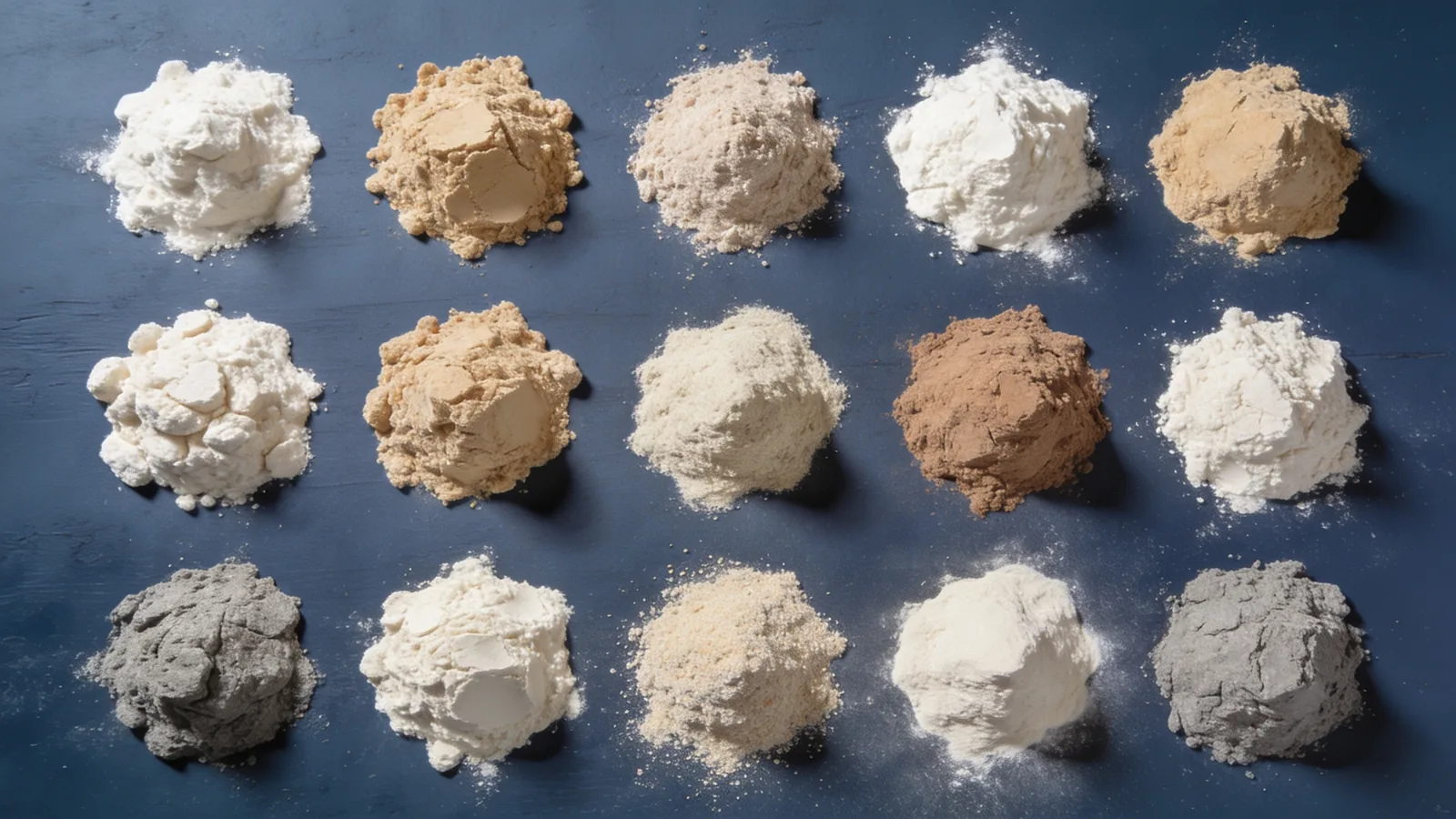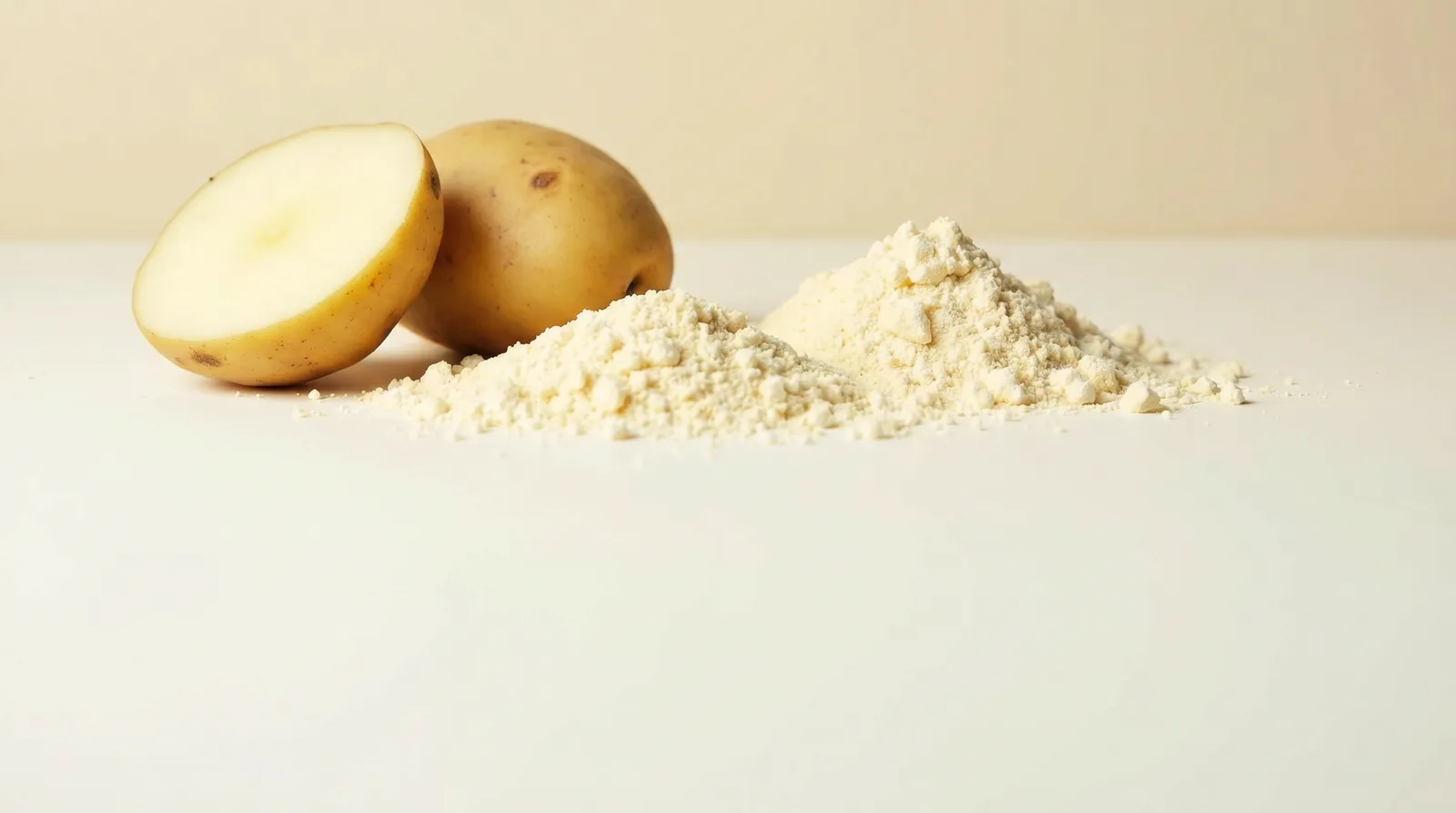
Potato protein is a plant protein extracted from the liquid left over when potatoes are processed into starch. In isolate form it contains 80–95% protein by dry weight, contains all nine essential amino acids, and carries a PDCAAS of 0.92–1.00 — a digestibility score that lands it alongside several animal proteins rather than below them.
Potato protein is a single-ingredient protein extracted from potato fruit juice, a byproduct of starch manufacturing. Potato protein isolate is 80–95% protein by dry weight and contains all nine essential amino acids, with a PDCAAS of 0.92–1.00 and a DIAAS reported as high as 100%. A 2020 study found that 25g of potato protein isolate twice daily stimulated muscle protein synthesis in young women, making it one of the few plant proteins with direct clinical evidence for an anabolic response.
This is the hub page for our potato-protein-science cluster. It covers the whole topic at a level that orients you, then points you to the deeper articles for each piece. If you only read one page about this ingredient, read this one — then follow the links where you want the detail.
Potato Protein at a Glance: How It Compares
The simplest way to understand any protein is to look at three numbers together: how concentrated it is, how well your body digests it, and whether it is a common allergen. Here is potato protein isolate next to the proteins people most often compare it against.
| Protein source | Protein content | PDCAAS | Common allergen? |
|---|---|---|---|
| Potato protein isolate | 80–95% (dry basis) | 0.92–1.00 | No — not on the FDA major-allergen list |
| Whey isolate | 90–95%, <1% lactose | 1.00 | Yes — dairy |
| Soy isolate | ~90% | 1.00 | Yes — soy |
| Egg white | High | 1.00 | Yes — egg |
| Wheat gluten | High | ~0.25 | Yes — wheat |
PDCAAS values for whey, soy, egg, and milk are confirmed at 1.00 (FAO/WHO Protein Quality Evaluation, FAO Food and Nutrition Paper 51, 1991), and the wheat gluten figure of approximately 0.25 comes from the reference table in the Journal of Nutrition. The point of the table is not that potato protein wins — it is that potato protein sits in the high-quality tier while being one of the few entries with no “yes” in the allergen column.
What Is Potato Protein, Exactly?
Potato protein is the protein fraction concentrated from potatoes during industrial starch production. A whole potato is mostly water and starch; a standard 148g serving contains only about 3g of protein (Potatoes USA). To make a protein isolate, that small fraction has to be separated and concentrated dramatically — which is why an isolate ends up at 80–95% protein while the vegetable it came from is barely 2%.
The protein itself is dominated by two families: patatin, a storage protein that makes up the bulk of the material, and a group of smaller protease-inhibitor proteins. Commercial isolates are frequently described as “patatin-rich.” Once isolated, the powder is a pale, faintly potato-tasting solid that contains all nine essential amino acids — the defining trait of a complete protein.
For the arithmetic on how little protein a raw potato actually holds, see our breakdown of how much protein a potato has.
Potato protein is consistently listed as its own category in market research, alongside pea, rice, soy, hemp, and wheat protein (Mordor Intelligence). It is a relatively young ingredient in the consumer supplement world — the global potato protein isolate market is projected to grow at a 6.3% annual rate from 2024 to 2030, according to Mordor Intelligence’s potato protein market report — but it has been used as a functional food additive for years before it reached protein tubs.
How Is Potato Protein Made?
Potato protein is extracted from potato fruit juice (also called potato fruit water), the liquid stream that remains after potatoes are pressed for their starch (Food and Bioprocess Technology, 2012). That liquid was historically treated as a waste stream from starch and food-potato processing; recovering its protein turns a discard into an ingredient.
The challenge is that potato proteins are heat-sensitive. Aggressive heat denatures them and collapses the functional properties — solubility, foaming, gelling — that make the ingredient useful. Modern processes use methods such as controlled precipitation, ion exchange, or membrane filtration to pull the protein out while keeping it intact. The result is an isolate commonly sold at a “90%” protein specification, with named commercial grades on the market from suppliers including Avebe (Solanic) and Tereos (Peptigel).
Because the starting material is a byproduct rather than a dedicated crop, potato protein is often described as having a smaller carbon footprint than animal proteins. That extraction step — how the protein is separated and how gently it is handled — is the single biggest driver of quality and taste in the finished powder. We go through it step by step in our guide to how potato protein isolate is made.
Potato Protein’s Amino Acid Profile and Leucine
Potato protein isolate contains all nine essential amino acids, which makes it a complete protein. By proportion, it is about 37% essential amino acids, compared with roughly 43% in whey isolate. That gap is real but modest, and it is the kind of difference that matters more on paper than at a realistic serving size.
Where the two diverge more noticeably is in specific amino acids. Whey produced a greater GLP-1 response than potato protein in one comparison, a difference linked to potato protein’s lower glutamine content. Leucine — the amino acid most associated with switching on muscle protein synthesis — is generally lower in plant proteins than in whey, which is the usual reason plant proteins are considered weaker stimulators of muscle synthesis.
The practical workaround is straightforward: a slightly larger serving of a complete plant protein closes most of the leucine gap. Potato protein’s amino acid completeness is what separates it from incomplete plant proteins like rice or wheat. If the terms “complete” and “incomplete” are doing a lot of unexplained work in protein marketing you read, our explainer on complete versus incomplete proteins lays out what the distinction does and does not tell you.
How Digestible Is Potato Protein?
Potato protein is highly digestible for a plant protein, with a PDCAAS of 0.92–1.00 — among the highest of any vegetable protein source. Its DIAAS, a newer and arguably more accurate metric, has been reported as high as 100%, putting it in the same range as soy and whey isolates.
Two scores matter here. PDCAAS (Protein Digestibility-Corrected Amino Acid Score) rates a protein against human amino acid requirements and how much actually gets absorbed, capped at 1.00. DIAAS (Digestible Indispensable Amino Acid Score) measures absorption further down the digestive tract and is not capped at 1.00, so it can distinguish between proteins that both “max out” PDCAAS. Animal proteins generally score higher than plant proteins on both metrics — but potato protein is an exception that narrows the gap, with both soy and potato isolates reported at a DIAAS of 100% or higher for children and adults, comparable to whey isolate’s 94–100%.
This matters because a score is not the same as an outcome. Soy and whey can both hold a PDCAAS of 1.00 yet stimulate muscle protein synthesis differently — the number is a starting point, not the whole story. For what these scores actually predict about absorption, see our guide to protein digestibility.
Does Potato Protein Build Muscle?
Yes — potato protein isolate has direct clinical evidence for stimulating muscle protein synthesis. A 2020 study from McMaster University found that 25g of potato protein isolate consumed twice daily increased muscle protein synthesis rates in young women at rest and during recovery from exercise, while a placebo did not produce the same response.
This study is the reason potato protein gets taken seriously. Most plant proteins are assumed to be weaker anabolic stimulators because of their lower leucine content, and that assumption holds in general. Potato protein is one of the few that has been tested directly in humans and shown to produce a measurable response. A separate trial from van Loon’s group at Maastricht University found that 30g of potato protein concentrate also increased muscle protein synthesis rates in young men, both at rest and during recovery from exercise — adding a second line of direct human evidence that potato protein can effectively stimulate muscle protein synthesis.
One honest caveat from the same study: in the leg that had exercised, adding protein did not stimulate muscle synthesis beyond what exercise alone achieved. The protein effect was clearest at rest. That nuance matters more as you age, because the muscle’s responsiveness to protein declines — a phenomenon called anabolic resistance that affects older, sedentary, and obese adults. We cover how protein needs shift with age in our guide to protein after 40.
Is Potato Protein an Allergen?
Potato is not one of the FDA’s major food allergens — the list of milk, eggs, fish, shellfish, tree nuts, peanuts, wheat, soybeans, and (since 2023) sesame. That means potato protein is free of the inputs most allergy households are screening for, and it is widely marketed on its low allergenicity.
That said, “not a major allergen” is not the same as “allergen-free for everyone.” The Center for Research on Ingredient Safety at Michigan State University is blunt about it: if you have a potato allergy, you should not consume potato protein, because the allergenic proteins are still present. The main allergenic components identified in potato are patatin and a 53 kDa protein — the same patatin that makes up the bulk of an isolate. There is also documented cross-reactivity between latex and several potato proteins including patatin, and possible (though not universal) cross-reactivity among nightshade family members like tomato, pepper, and eggplant.
For most people avoiding dairy, soy, egg, gluten, and nuts, a single-ingredient potato protein is a genuinely useful option — which is the whole premise of a single-ingredient protein powder. For the broader landscape of proteins that sidestep the common allergens, see our allergen-free protein guide.
How Potato Protein Compares to Whey, Pea, and Soy
Against whey, potato protein gives up a little on essential amino acid density (37% versus 43%) and leucine, but matches it on completeness and digestibility while removing dairy entirely. Whey isolate is 90–95% protein with under 1% lactose and remains the reference standard for post-exercise muscle synthesis — if you tolerate dairy, it is hard to beat. If you do not, potato protein is one of the closest plant substitutes on the metrics that matter. The full side-by-side is in our potato protein vs whey comparison.
Against pea protein — the dominant plant protein in the supplement aisle — potato protein generally tests higher on digestibility scores and tends to be milder in taste, though both are complete-enough proteins for most purposes. We break down the differences in potato protein vs pea protein. Against soy, the two are remarkably close: both reach a DIAAS of 100% or higher, both are complete, and the main differentiator is that soy is a major allergen and potato is not.
No single protein is best for everyone. Whey for dairy-tolerant lifters, soy for those who want the cheapest complete plant option, potato or pea for allergen avoidance. If you are trying to choose across all of them, start with our best protein powder guide, which weighs cost, taste, digestibility, and ingredient lists together.
How Do You Use Potato Protein?
Potato protein dissolves well at neutral and strongly acidic pH, which makes it workable in both shakes and acidic recipes. As an unflavored, single-ingredient powder it disappears into food rather than dominating it — it goes into smoothies, oatmeal, soups, and baked goods without announcing itself.
In baking it earns its keep. Potato protein isolate is approved as GRAS for use in baked goods at levels from 0.01% to 10%, and adding it to gluten-free formulas can produce softer breads that stay fresh longer and behave more like wheat-based ones. It is also studied as a non-animal replacement for the foaming function of egg white. One formulation note worth knowing: very high-purity isolates can behave differently from concentrates in baking, so recipes sometimes call for a blend.
For everyday cooking ideas, our recipe index collects shakes, baked goods, and savory uses, and our practical primer on how to use potato protein powder covers ratios, mixing, and what to avoid.
Is Potato Protein Safe?
Potato protein is generally regarded as safe and is GRAS-approved for food use, but two things are worth knowing. First, commercial potato protein isolates can contain trace amounts of glycoalkaloids — the bitter compounds naturally present in potatoes. At the trace levels found in finished isolates this is not a concern for typical use, though it is the reason extraction quality and testing matter.
Second, as with any protein powder, the ingredient list around the protein is where most problems hide — added sweeteners, gums, and proprietary blends cause more digestive complaints than the protein itself. A single-ingredient isolate sidesteps most of that. We cover dosage, digestion, and what to watch for in potato protein side effects, and the broader question of supplement safety in is protein powder safe.
References
- Herreman L, et al. Comprehensive overview of the quality of plant- and animal-sourced proteins based on the digestible indispensable amino acid score. Food Sci Nutr (2020). PMID:33133540
- Oikawa SY, et al. Potato Protein Isolate Stimulates Muscle Protein Synthesis at Rest and with Resistance Exercise in Young Women. Nutrients (2020). PMID:32349353
- Schaafsma G. The protein digestibility-corrected amino acid score. J Nutr (2000). PMID:10867064
- Gorissen SHM, et al. Protein content and amino acid composition of commercially available plant-based protein isolates. Amino Acids (2018). PMID:30167963
- Tiekou Lorinczova H, et al. Comparative Assessment of the Acute Effects of Whey, Rice and Potato Protein Isolate Intake on Markers of Glycaemic Regulation and Appetite in Healthy Males. Nutrients (2021). PMID:34201703
- Lim MT, et al. Muscle Protein Synthesis in Response to Plant-Based Protein Isolates With and Without Added Leucine Versus Whey Protein in Young Men and Women. Curr Dev Nutr (2024). PMID:38846451
- Ajomiwe N, et al. Protein Nutrition: Understanding Structure, Digestibility, and Bioavailability for Optimal Health. Foods (2024). PMID:38890999
- Pinckaers PJM, et al. Potato Protein Ingestion Increases Muscle Protein Synthesis Rates at Rest and during Recovery from Exercise in Humans. Med Sci Sports Exerc (2022). PMID:35438672
- Ansari MA, et al. A murine model of wheat versus potato allergy: Patatin and 53kDa protein are the potential allergen from potato. Mol Immunol (2018). PMID:30031281
- Beezhold DH, et al. Latex allergy can induce clinical reactions to specific foods. Clin Exp Allergy (1996). PMID:8732238
- Pennings B, et al. Whey protein stimulates postprandial muscle protein accretion more effectively than do casein and casein hydrolysate in older men. Am J Clin Nutr (2011). PMID:21367943
- van Koningsveld GA, et al. Effects of pH and heat treatments on the structure and solubility of potato proteins in different preparations. J Agric Food Chem (2001). PMID:11600040
- Damhof L, et al. Identifying semi-polar co-passengers in commercial plant protein ingredients. Food Chem (2025). PMID:40627963
- U.S. FDA. GRAS Notice for potato protein isolates (GRN 000447). Use levels in baked goods 0.01%–10%.