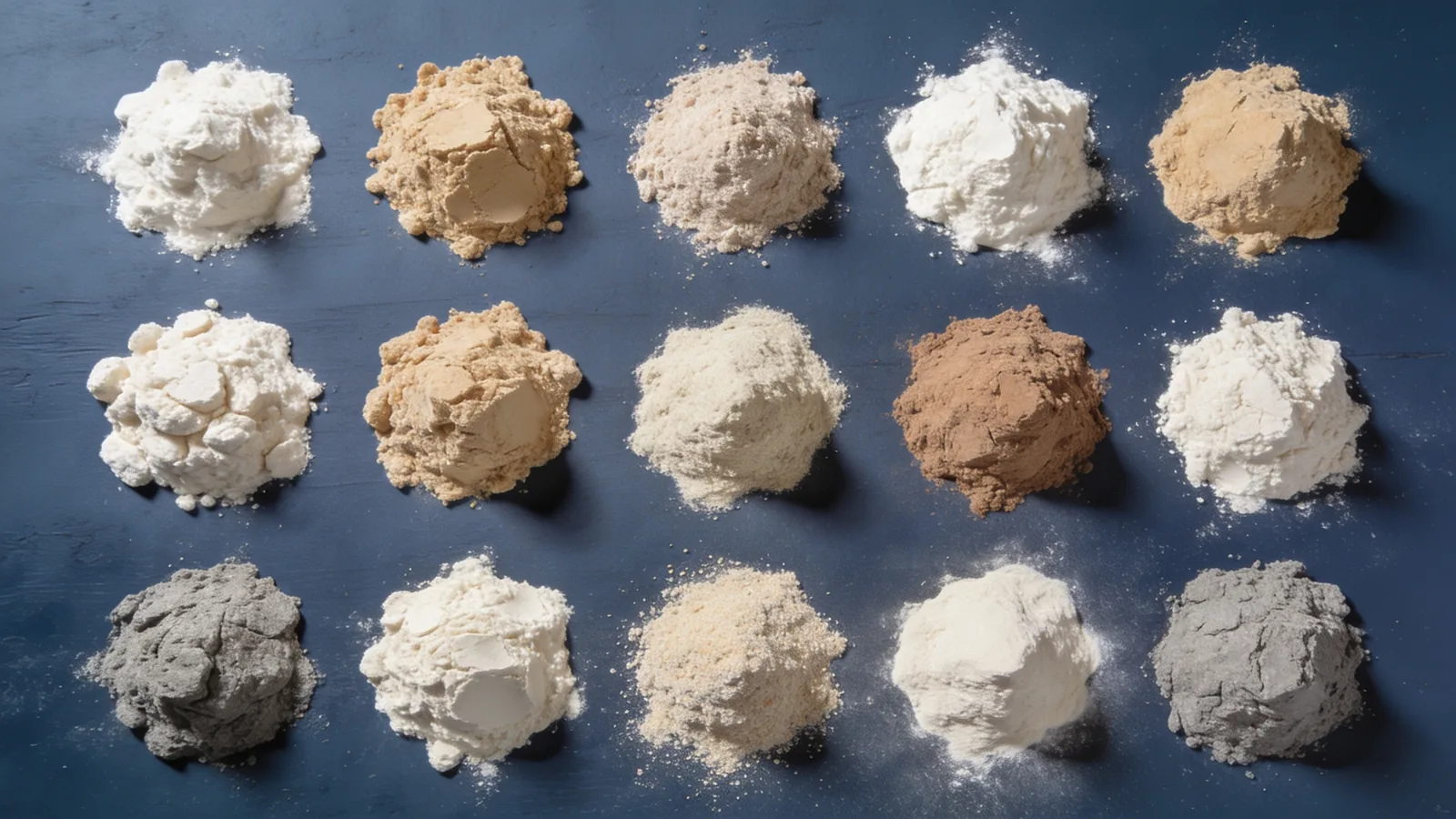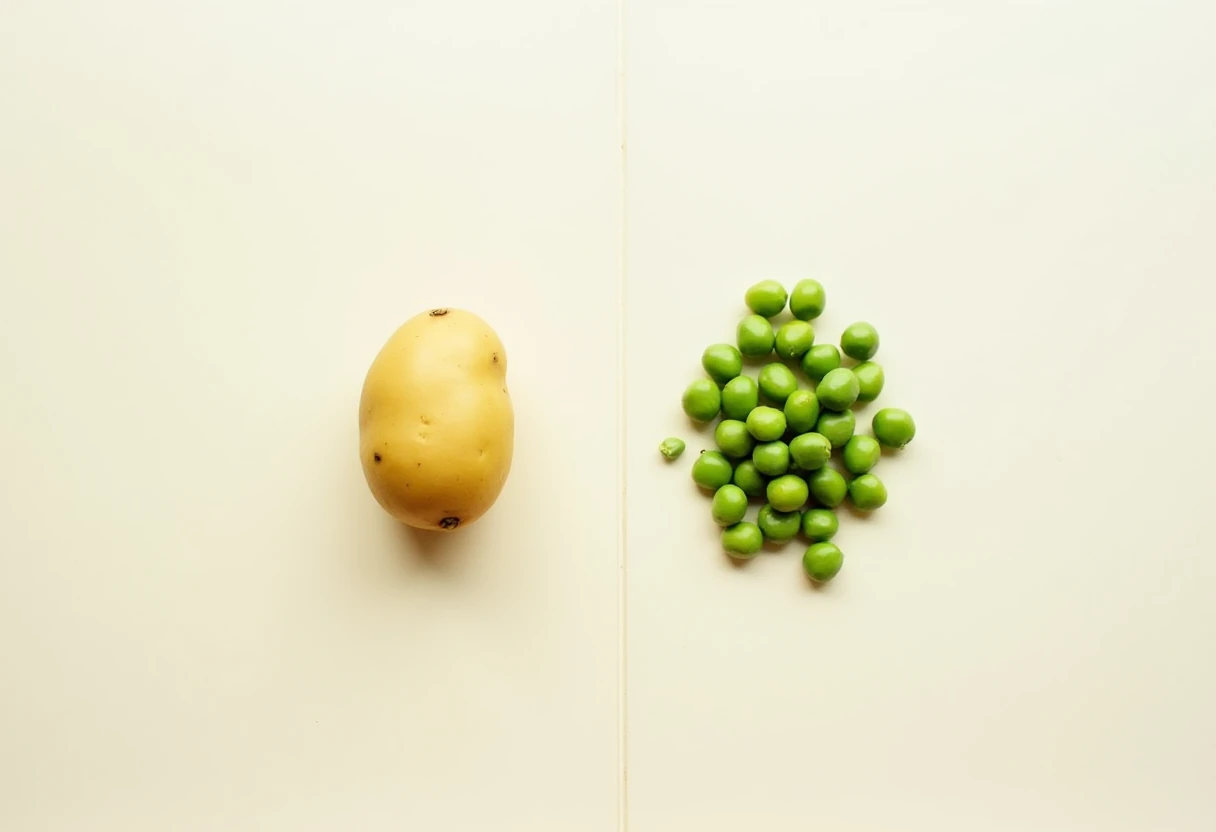
The potato protein vs pea protein decision comes down to three things most labels won’t tell you plainly: allergen risk, leucine signal, and whether the protein has been tested in a human muscle study. Both are complete plant proteins. Both contain all nine essential amino acids. They are not, however, interchangeable.
Potato protein isolate has a PDCAAS of roughly 0.92–1.00 and a reported DIAAS as high as 100% (on the 0–100 scale), putting it on par with several animal proteins, while pea protein isolate scores lower, with a DIAAS classified below 75. Potato is not a legume, so it sidesteps the peanut cross-reactivity that affects some pea-sensitive people. For allergen certainty and documented muscle protein synthesis, potato has the stronger case; pea wins on established availability and familiar flavor.
| Metric | Potato protein isolate | Pea protein isolate |
|---|---|---|
| PDCAAS / DIAAS | PDCAAS 0.92–1.00 (DIAAS up to 100) | PDCAAS ≥0.75 (DIAAS <75) |
| Leucine per 25g serving | Not reliably published; 25g stimulated MPS (McMaster, 2020) | ~1.8g (leucine averages 7.1g/100g protein) |
| Allergen profile | Not a legume; widely described as allergen-free | Legume — peanut cross-reactivity possible |
| Taste / texture | Earthy, can be slightly bitter unflavored | Familiar, well-established flavor masking |
| Price per 25g protein | Higher (newer supply chain) | Lower (mature, large-scale supply) |
| Third-party testing | Varies by brand (third-party testing available) | Varies widely by brand |
The two proteins arrive at completeness by different routes. Pea is rich in lysine but limited in the sulphur amino acids methionine and cysteine. Potato carries all nine essential amino acids with a digestibility that lands near the top of the plant-protein range. If you already read labels by default, the differences below are where the decision actually gets made. For a broader primer, see what potato protein is and how it’s produced.
-
You need allergen-free certainty — no dairy, egg, soy, nut, or gluten
-
You or your child is legume-sensitive or reacts to peanut
-
You want the protein with documented muscle protein synthesis in humans
-
You follow a low-FODMAP approach for IBS
-
You want the widest availability and lowest price per gram
-
You prefer a flavor profile most brands already mask well
-
You have no legume or peanut sensitivity
-
You already use a pea product and tolerate it without bloating
Which Is Higher Quality, Potato or Pea Protein?
Potato protein scores higher on standard quality metrics. Its PDCAAS sits between 0.92 and 1.00, and its DIAAS has been reported as high as 100%. Pea protein isolate scores lower, with a DIAAS classified below 75 (versus a DIAAS of roughly 115 for casein on the same 0–100 scale), with leucine, valine, lysine, and phenylalanine being significantly less digestible than in casein.
The two proteins land on opposite sides of the quality bar in one 2020 review: potato protein was classified as an excellent-quality protein with a DIAAS above 100, while pea (along with canola and several other plant proteins) fell into the no-quality-claim category with a DIAAS below 75. Plant proteins generally score below animal proteins on these scales, but potato narrows that gap further than most. Pea’s documented limitation is the sum of methionine plus cysteine, which averages only 2.6g per 100g of protein — a chemical score of 46%. If you want the mechanics of these scores, read our PDCAAS explainer.
Does Potato or Pea Protein Have More Leucine?
Pea protein has a documented leucine content of roughly 7.1g per 100g of protein, or about 1.8g in a 25g serving. Potato protein’s exact leucine figure per serving is not reliably published, but the more useful signal is functional: 25g of potato protein isolate twice daily measurably increased muscle protein synthesis in young women.
That McMaster finding matters because leucine on a label and leucine doing work in muscle are not the same thing. In the 2020 trial, women who consumed additional potato protein increased their rate of muscle protein synthesis compared with a control group on their habitual diet. Pea has its own human evidence: across an 84-day randomized trial in sedentary adults doing weekly resistance training, pea protein and whey produced comparable gains in muscle mass and strength, with no significant difference between them. Both proteins support muscle. Potato is the one tested as an isolate in a controlled muscle-synthesis study.
Is Pea Protein an Allergen? How Potato Compares
Pea is a legume, and that matters for allergy-sensitive households. People with peanut allergy may also react to pea protein, which is why cross-reactivity assessments are recommended. Potato is not a legume and is widely described in the literature as a high-quality, allergen-free protein source.
This is the cleanest dividing line between the two. For the allergy parent whose child cannot have dairy, eggs, nuts, or soy, a single-ingredient potato isolate removes an entire category of risk. The one caveat is direct: if you have a diagnosed potato allergy, you should not consume potato protein, because the allergen is still present. For most people, though, potato avoids the major allergen families entirely. Our allergen-free protein guide covers the full picture.
Which Is Easier to Digest?
Potato protein is the safer choice for sensitive digestion. Monash University classifies potato protein as a low-FODMAP protein source, while it notes that plant proteins such as soy and pea “can be particularly challenging to purify, and often contain some FODMAPs (eg. GOS and fructan).” Even small amounts can trigger IBS symptoms in susceptible people.
That doesn’t mean every pea product will cause problems — many people tolerate it without issue. But if you have IBS or have noticed bloating from legume-based powders, potato’s low-FODMAP status is a meaningful advantage. For more on digestive reactions to protein powder, see our guide to common protein problems.
Taste, Texture, and Price
Pea protein has the head start on flavor. It has been on shelves long enough that most brands have refined how they mask its taste, and the supply chain is mature, which keeps the price per gram lower. Potato protein is earthier and can read slightly bitter when unflavored, though a single-ingredient isolate disappears into food more readily than its reputation suggests — stirred into oatmeal, soup, or batter, it largely vanishes.
Price follows availability. Pea’s scale makes it the cheaper option per 25g of protein; potato is priced as a newer, lower-volume ingredient. If cost is your deciding factor and you have no legume sensitivity, pea is the pragmatic pick. If you’ve already decided that the shortest possible ingredient list is worth paying for, the math changes. Worth comparing both against the dairy benchmark in our potato protein vs whey breakdown.
Can You Combine Potato and Pea Protein?
Yes — blending plant proteins is a documented strategy for balancing amino acid profiles. Linear programming work has shown that blends of plant proteins can be formulated to match the WHO reference profile or animal protein profiles. Pea’s lysine strength and potato’s broader essential amino acid coverage are complementary on paper.
The trade-off is that a blend reintroduces the legume that allergen-sensitive readers are trying to avoid. If your goal is the fewest possible inputs — the autoimmune-aware adult’s priority — a single-ingredient potato isolate is the simpler answer.
References
- Herreman L, et al. Comprehensive overview of the quality of plant- and animal-sourced proteins based on the digestible indispensable amino acid score. Food Science & Nutrition (2020). PMID:33133540
- Guillin FM, et al. Real ileal amino acid digestibility of pea protein compared to casein in healthy humans: a randomized trial. The American Journal of Clinical Nutrition (2022). PMID:34665230
- Hertzler SR, et al. Plant Proteins: Assessing Their Nutritional Quality and Effects on Health and Physical Function. Nutrients (2020). PMID:33266120
- Fraś A, et al. Nutritional Value Evaluation of New Pea Genotypes (Pisum sativum L.) Based on Their Chemical, Amino Acids and Dietary Fiber Composition. Molecules (2024). PMC11547519
- Oikawa SY, et al. Potato Protein Isolate Stimulates Muscle Protein Synthesis at Rest and with Resistance Exercise in Young Women. Nutrients (2020). PMID:32349353
- Singh RG, et al. Efficacy of Pea Protein Supplementation in Combination with a Resistance Training Program on Muscle Performance in a Sedentary Adult Population: A Randomized, Comparator-Controlled, Parallel Clinical Trial. Nutrients (2024). PMC11243455
- Food Allergy Canada. Pea protein and peanut cross-reactivity (2024).
- Hussain M, et al. Potato protein: An emerging source of high quality and allergy free protein, and its possible future based products. Food Research International (2021). PMID:34507729
- Center for Research on Ingredient Safety, Michigan State University. Potato allergy.
- Monash University. Low FODMAP diet — protein sources.
- Dimina L, et al. Combining Plant Proteins to Achieve Amino Acid Profiles Adapted to Various Nutritional Objectives. Frontiers in Nutrition (2021). PMID:35187024