To buy potato protein powder, you will mostly be shopping online. Single-ingredient potato protein isolate rarely appears on grocery or supplement-store shelves the way whey and pea do, because most potato protein is made for food manufacturers rather than for tubs on a retail wall. A true isolate contains 80–95% protein on a dry basis, supplies all nine essential amino acids, and — in the products worth buying — lists exactly one ingredient.
This guide explains how we evaluated potato protein, what to check on the label, the formats you will actually find, realistic price expectations, and an honest verdict on whether it is worth the search.
How We Evaluated Potato Protein Powder
We judged products and buying routes against five criteria, in this order:
- Ingredient count. The fewer the better. A single-ingredient potato protein isolate is the cleanest signal that you are getting protein and nothing else — no gums, sweeteners, or flavor systems.
- Third-party testing. Independent lab verification for heavy metals and label accuracy matters more for plant proteins, which can concentrate metals from soil. We weighted this heavily.
- Allergen clarity. Honest, specific allergen statements — what the product is free of, and the one allergen it still carries.
- Protein content and quality. Grams of protein per serving, plus protein-quality scores like PDCAAS and DIAAS.
- Availability and price. Where you can actually buy it, and whether the cost is defensible against whey and pea.
These are the same fundamentals covered in our complete buyer’s guide to choosing a protein powder, applied to one narrow ingredient.
What to Look For When You Buy Potato Protein
One Ingredient
The simplest filter is the ingredient list. Potato protein isolate can stand alone — it does not need a flavor system to function in a shake, in oatmeal, or in baking. If the label runs three lines deep, you are paying for additives, not protein. Never squint to read your ingredient label.
Third-Party Testing
Plant proteins draw minerals — and sometimes heavy metals — from the soil their crops grow in. In the Clean Label Project’s 2025 Protein Study 2.0, certified organic protein powders averaged three times the lead of non-organic products, and chocolate-flavored powders contained 110 times more cadmium than vanilla varieties, with 65% of chocolate powders exceeding California Prop 65 levels. That is a strong argument for buying a product that publishes independent test results. We cover what those certifications actually mean in our guide to protein powder without junk ingredients.
Clear Allergen Claims
Potato protein’s main selling point for restricted diets is what it leaves out: no dairy, egg, soy, tree nuts, wheat, or gluten. A 2021 review in Food Research International describes it as a high-quality, allergy-free protein source. The honest caveat: it still contains the potato allergen patatin. The Center for Research on Ingredient Safety states that if you have a potato allergy, you should not consume potato protein, because the allergen is still present. A trustworthy seller says this plainly rather than implying the product is allergen-free for everyone.
Protein Content
A genuine isolate sits at 80–95% protein on a dry basis; products listed as “Potato Protein Isolate 90%” are a common specification. Concentrates and blends contain less. Read the nutrition panel and divide protein grams by serving size — that single calculation separates an isolate from a diluted blend.
Format
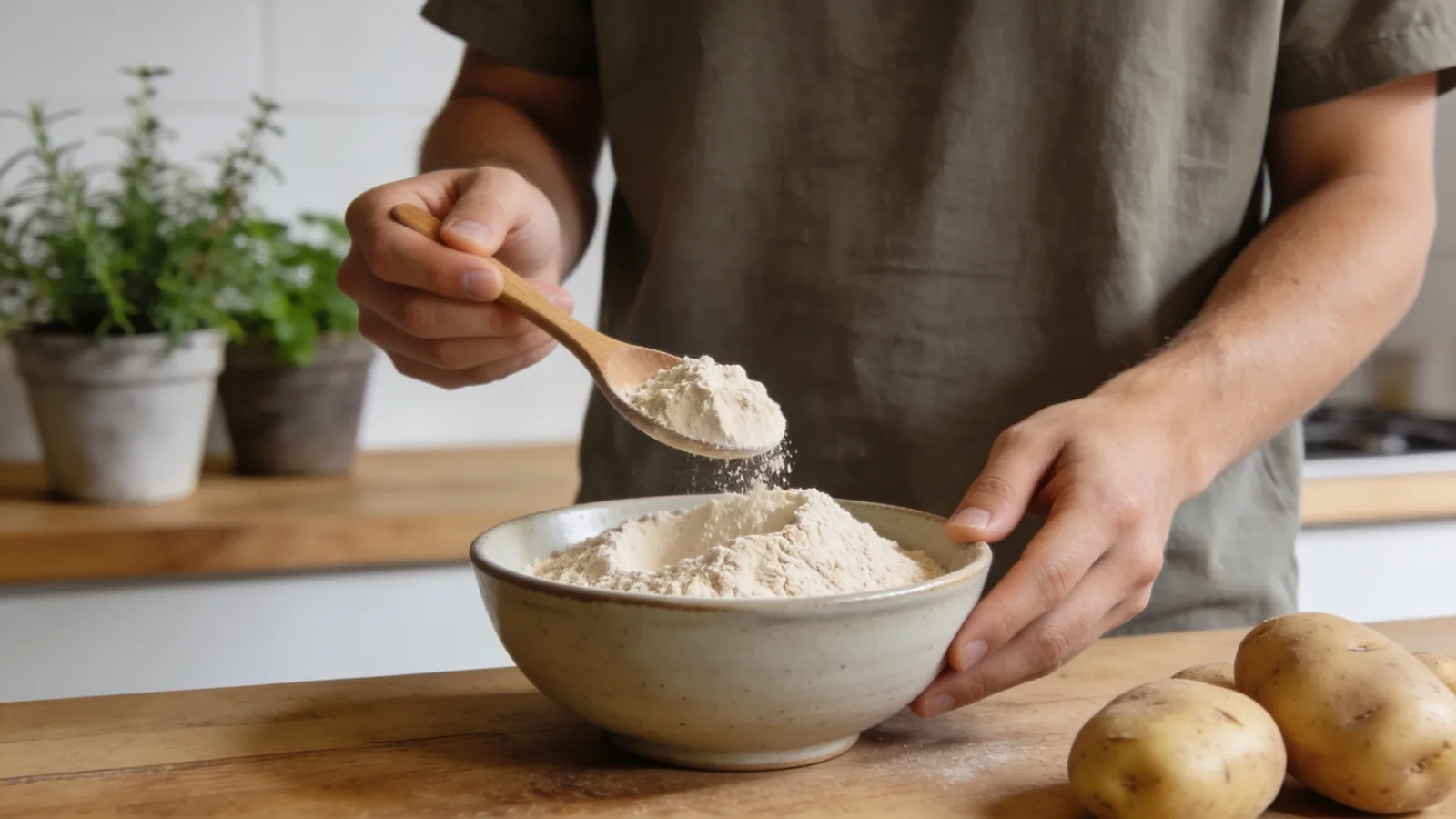
Potato protein is almost always sold as an unflavored powder. It is soluble at neutral and strongly acidic pH, which is why it mixes into shakes and stirs into food rather than clumping. It disappears into your food. You will not find many ready-to-drink or flavored potato options, because the consumer category is still small.
Where Can You Buy Potato Protein?
Online is the practical answer. Single-ingredient potato protein isolate is sold mainly by direct-to-consumer brands; bulk potato protein isolates are sold by industrial ingredient suppliers in large quantities aimed at food makers. Standalone tubs are uncommon in physical stores, where whey, casein, pea, and soy dominate the shelf.
The reason is supply chain, not quality. Potato protein is extracted from potato fruit juice, a byproduct of potato-starch production, and most of it has historically gone into food manufacturing — meat and dairy alternatives, beverages, and gluten-free baked goods. The consumer-facing single-ingredient market is newer and smaller than the one for pea or whey. For background on the ingredient itself, see what is potato protein, the pillar for this topic.
Can You Buy Potato Protein at Grocery Stores?
Usually not as a standalone product. Grocery and supplement shelves are organized around whey, casein, pea, and soy, and potato protein is far more likely to appear as a functional ingredient inside a packaged food than as its own tub. If you want single-ingredient potato protein, ordering online from a direct-to-consumer brand is the reliable route.
The Buying Options, Compared
Below are the realistic ways to buy potato protein, ranked by who each one suits.
| Option | Ingredients | Protein content | Where sold | Best for |
|---|---|---|---|---|
| Single-ingredient isolate (DTC) | One: potato protein isolate | 80–95% | Brand websites online | Label readers, allergen-restricted diets |
| Bulk ingredient-supplier isolate | Potato protein isolate | >90% | Industrial ingredient suppliers, wholesale | Food makers, very high-volume buyers |
| Multi-source plant blend with potato | Several (pea, rice, potato, etc.) | Varies, often lower per gram | Supplement retailers online | Buyers who want a mixed amino profile |
Source note: protein-content ranges per single-ingredient-protein product listings and the manufacturing literature (Food and Bioprocess Technology, 2012); blend protein content varies by formulation.
Best for Label Readers: Single-Ingredient Potato Protein Isolate
This is the option that suits the reader who already reads labels by default. A 2020 study in Nutrients found that 25 g of potato protein isolate consumed twice daily stimulated muscle protein synthesis in young women — evidence that a plant isolate can drive the same anabolic response usually associated with animal protein.
Pros
- Exactly one ingredient: no sweeteners, gums, or flavor systems.
- Free of dairy, egg, soy, tree nuts, wheat, and gluten.
- High protein content (80–95%) and all nine essential amino acids.
- Reputable sellers publish third-party heavy-metal testing.
Cons
- Costs more than whey or pea, and is harder to find.
- Unflavored only, in most cases.
- Still contains the potato allergen patatin, so it is unsuitable for a potato allergy.
If your priority is the shortest possible ingredient list, this is the category to buy. See is potato protein high quality for the PDCAAS and DIAAS detail.
Best for Bulk Buyers: Ingredient-Supplier Isolates
Commercial potato protein isolates are sold through industrial ingredient suppliers, typically in quantities meant for manufacturers. These are the same high-purity isolates (>90% protein) used in research and in packaged foods.
Pros
- Very high purity, often the exact grades cited in studies.
- Lower cost per gram at volume.
Cons
- Sold in large quantities, with minimum-order requirements.
- Documentation and testing are aimed at businesses, not individual buyers.
- No consumer packaging, dosing guidance, or returns.
This route only makes sense if you are buying at wholesale scale.
Best If You Can’t Find Single-Ingredient Potato: Plant Blends With Potato Protein
Potato protein is consistently listed as a distinct protein type in market segmentation alongside hemp, pea, rice, soy, and wheat, and it sometimes appears as one component in a multi-source plant blend. These are easier to find at mainstream online retailers.
Pros
- More widely available than single-ingredient potato powders.
- A mixed amino acid profile across several plant sources.
Cons
- Longer ingredient lists, often with added flavors and sweeteners.
- Less potato protein per serving — you may be buying mostly pea or rice.
- Harder to verify allergen status across multiple inputs.
A blend defeats the main reason to choose potato in the first place, but it is a fallback when a single-ingredient option is unavailable. If your goal is the fewest possible inputs, our allergen-free protein guide explains why single-ingredient products are easier to trust.
How Potato Protein Compares to Other Sources
Protein quality is where potato earns its place. The table below shows where it sits against common alternatives on two measures: PDCAAS, the older digestibility-corrected score, and the share of essential amino acids.
| Protein source | PDCAAS | Essential amino acids | Major allergen |
|---|---|---|---|
| Potato protein isolate | 0.92–1.00 | 37% | Potato (patatin) |
| Whey protein isolate | — | 43% | Milk |
| Egg white protein | 1.00 | — | Egg |
| Soy protein isolate | — | — | Soy |
| Wheat gluten | 0.25 | — | Wheat/gluten |
Source note: PDCAAS values for egg and wheat gluten from Schaafsma G, Journal of Nutrition, 2000 (PMID: 10867064); potato PDCAAS range from published potato-protein data; essential-amino-acid shares from Amino Acids, 2018 (PMID: 30167963). Reliable PDCAAS figures for whey isolate and soy isolate are not consistently established in these sources, shown as em-dashes.
On the newer DIAAS scale, potato protein isolate scores at or above 100% for children and adults, comparable to whey isolate at 94–100%. A separate analysis in Food Science & Nutrition (Herreman et al., 2020) reported potato protein’s DIAAS as high as 100%. For the difference between the two scoring systems, see DIAAS vs PDCAAS and our direct potato protein vs whey comparison.
One honest distinction: whey stimulates a greater GLP-1 response than potato protein, linked to differences in amino acid profile — specifically lower glutamine in potato — according to a 2021 comparative study in Nutrients. Potato protein is also a low-FODMAP source, which can matter if dairy proteins upset your digestion.
Is Potato Protein Powder Worth It?
For people avoiding dairy, egg, soy, and nuts, single-ingredient potato protein isolate is worth it: it is a high-quality, low-FODMAP protein that stimulates muscle protein synthesis and carries one of the highest protein-quality scores among plant sources. The trade-off is price and availability — it costs more than whey or pea and is harder to find.
If you tolerate dairy and your main concern is cost, whey isolate is cheaper, more available, and slightly higher in essential amino acids. We will say that plainly; credibility compounds. But if you read labels, react to common allergens, or simply want the fewest possible inputs in your protein, potato protein delivers exactly what its label says and nothing else.
Buying it well comes down to the same three checks throughout this guide: one ingredient, third-party testing, and a clear allergen statement. Get those right and the rest follows. For dosing, see how much potato protein per day, and for using it in food, our potato protein powder usage guide.