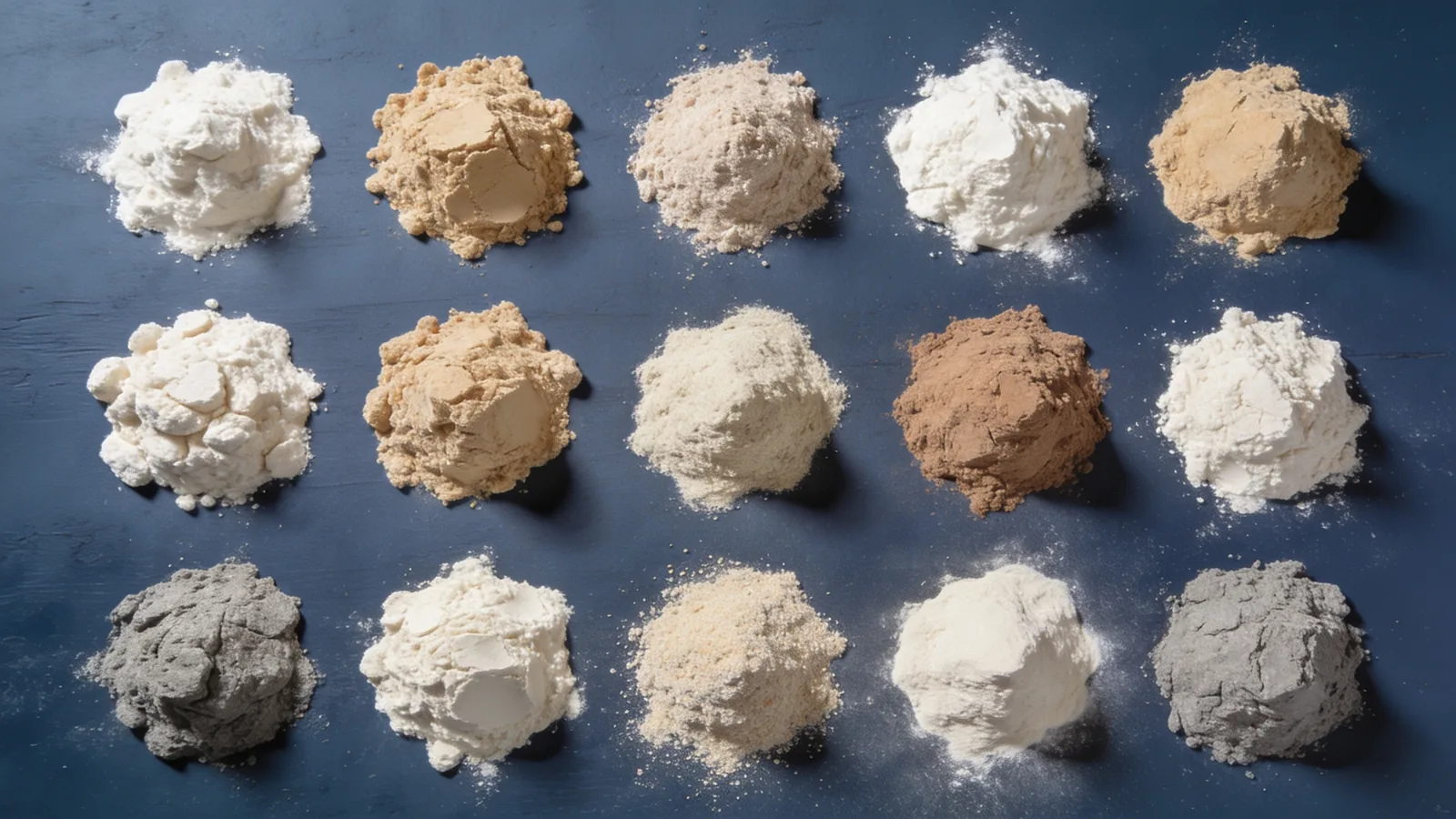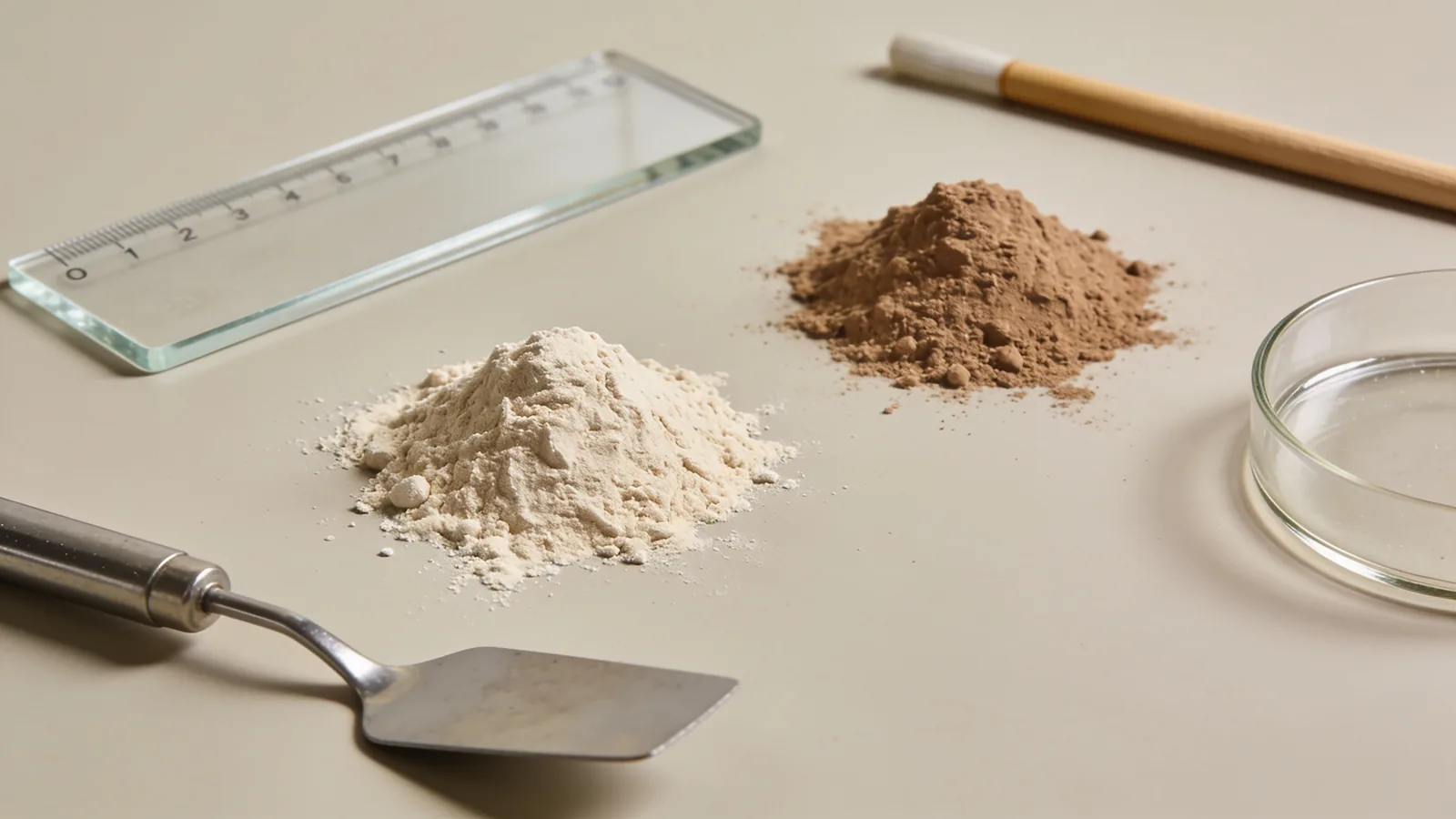
Potato protein is not the same as potato starch. They are two different fractions separated from the same raw potato: one is protein, the other is carbohydrate. Potato protein isolate is a concentrated protein powder containing 80–95% protein on a dry basis, while potato starch is almost entirely starch — a carbohydrate used to thicken sauces and bind baked goods. The confusion is understandable, because both are “from potatoes” and both turn up on ingredient labels. But chemically and functionally they sit at opposite ends of the same potato.
How One Potato Yields Two Different Ingredients
A potato is mostly water, with the dry matter split chiefly between starch and a smaller amount of protein. Industrial processing separates these. Starch is the dense, settle-out fraction; protein stays dissolved in the liquid. When a starch plant crushes potatoes and washes out the starch granules, the remaining liquid — called potato fruit juice (PFJ) or potato fruit water (PFW) — carries the soluble proteins along with sugars and minerals.
Potato proteins are extracted from this potato fruit juice (Food and Bioprocess Technology, 2012). In other words, the protein is recovered from the leftover liquid that the starch process produces. Potato fruit water is essentially a waste stream from the production of potato starch and from the processing of potatoes for consumption. Historically it was discarded; recovering its protein turned a disposal problem into a food ingredient.
So the relationship between the two products is sequential, not interchangeable. First the starch comes out as a solid. Then the protein is concentrated from the liquid that remains and dried into a powder. Same potato, two separate outputs, captured at two different stages.
Potato Protein vs Potato Starch: The Macro Difference
The clearest way to see that these are different ingredients is to compare what each one is actually made of. The table below contrasts potato protein isolate with potato starch on composition and use.
| Property | Potato protein isolate | Potato starch |
|---|---|---|
| Dominant macronutrient | Protein (80–95% dry basis) | Carbohydrate (starch) |
| Protein content | 80–95% | Negligible |
| Source fraction | Potato fruit juice (the liquid byproduct) | The starch granules (the solid fraction) |
| Essential amino acids | All nine present | None of nutritional significance |
| PDCAAS | 0.92–1.00 | Not applicable |
| Primary culinary use | Protein source; foaming, gelling, emulsifying | Thickening, binding, texture |
| Gluten status | Gluten-free | Gluten-free |
Source notes: protein content and PDCAAS from potato protein composition data and the PDCAAS reference framework (Schaafsma G., Journal of Nutrition, 2000, PMID: 10867064); amino-acid completeness from potato protein nutrition data (Amino Acids, 2018, PMID: 30167963); extraction fractions from Food and Bioprocess Technology, 2012.
The numbers make the point that the names obscure. One ingredient is essentially all protein; the other is essentially all carbohydrate. They are not graded versions of the same thing.
Why Potato Protein Is a Byproduct of Starch Production
Most of the world’s potato protein exists because the starch industry exists. Starch is the high-volume product; protein is recovered downstream. For a single-ingredient brand, this matters: the protein is a real, intentionally captured fraction, not a marketing relabel of starch.
Extracting usable protein from potato fruit juice is technically demanding. The proteins are heat-sensitive, and naive processing denatures and aggregates them. Producing a soluble, functional, food-grade potato protein at industrial scale required developing dedicated extraction processes rather than simply drying the juice. That engineering is why early potato fruit water was treated as waste and why a clean protein fraction is a relatively modern ingredient.
If you want to understand the whole category — what the protein is, how it performs, and how it differs from the rest of the potato — the overview at what is potato protein lays out the science, and the process itself is covered in how potato protein isolate is made.
What Each Ingredient Does in Food
Potato starch and potato protein do different jobs, and a recipe usually calls for one specifically.
Potato starch is a thickener and binder. When heated in liquid, its granules swell and gelatinize, increasing viscosity — which is why it appears in sauces, gravies, and gluten-free formulas. Gluten-free baking leans on it heavily: a standard gluten-free bread control formulation uses corn starch (830 g) and potato starch (207 g) per batch, and many commercial gluten-free pancake mixes list potato starch as their first ingredient. The starch contributes structure and chew; it contributes essentially no protein.
Potato protein does something else entirely. Beyond supplying amino acids, it brings functional properties — foaming, emulsification, and gelation — that make it useful in meat and dairy alternatives, beverages, and baked goods. It is recognized as an allergen-free, vegan option for replacing the foaming function of egg white, and enzymatically hydrolyzed potato protein has been shown to improve gluten-free cake texture, reducing batter density and increasing specific volume (Foods, 2025, PMID: 40231977). Notably, potato proteins are soluble at neutral and at strongly acidic pH, which makes them workable in acidic beverages where many proteins drop out of solution.
The practical upshot: you cannot swap one for the other. Potato starch will not add meaningful protein to a shake, and potato protein will not thicken a gravy the way starch does. They are complementary ingredients, sometimes used together in the same gluten-free product for different reasons.
Does Potato Starch Have Any Protein?
Potato starch contains only trace protein, not a usable amount. The starch fraction is washed and refined specifically to isolate the carbohydrate, and the proteins partition into the potato fruit juice that the process discards. If a baked good gets its protein from potatoes, that protein comes from added potato protein isolate, not from the potato starch in the formula.
This is the single most common point of confusion for label readers. Seeing “potato starch” high on an ingredient list does not mean the product is high in protein — it usually signals a thickener or a gluten replacement. To learn what a whole potato actually delivers as food, see how much protein does a potato have and the honest accounting in are potatoes a good source of protein.
Protein Quality: Why the Distinction Matters
For someone tracking protein intake, conflating the two fractions has real consequences. Potato protein isolate is not just protein-dense — it is high quality. It contains all nine essential amino acids, and its PDCAAS falls in the range of 0.92–1.00, placing it on par with several animal proteins. By the newer DIAAS metric, potato protein isolate has been reported as high as 100% (Food Science & Nutrition, Herreman et al., 2020, PMID: 33133540), comparable to whey isolate.
Plant proteins, as a class, generally score lower than animal proteins on these metrics, so potato protein is something of an outlier. In a controlled trial, 25 g of potato protein isolate taken twice daily stimulated muscle protein synthesis in young women, supporting its classification as a high-quality plant protein (Nutrients, 2020, PMID: 32349353). Its essential-amino-acid content sits at about 37%, against roughly 43% for whey isolate (Amino Acids, 2018, PMID: 30167963) — a real difference, but one that has not prevented potato protein from driving muscle protein synthesis in practice.
Potato starch, by contrast, has no PDCAAS or DIAAS because it has no meaningful protein to score. It is a carbohydrate. For a deeper look at how potato protein is graded, see is potato protein high quality and the broader DIAAS vs PDCAAS explainer.
Allergen Considerations
Both fractions are gluten-free, which is part of why both are common in gluten-free products. Potato protein is frequently described in food-science literature as an allergy-free protein source, since it is not derived from dairy, egg, soy, nuts, or wheat — a meaningful point for the allergy-aware (Food Research International, 2021, PMID: 34507729).
One honest caveat: if you have a diagnosed potato allergy, you should not consume potato protein, because the potato allergen is present in the protein fraction. The major potato protein, patatin, has been identified as a potential allergen. This is uncommon, but it is the one population for whom “from potatoes” is a warning rather than a reassurance. For the full picture, see the allergen-free protein guide.
Practical Takeaways
If you remember one thing: same potato, two ingredients, opposite jobs. Potato starch thickens; potato protein supplies protein. They are recovered at different stages of the same processing line, with the protein concentrated from the liquid left after the starch is removed. On a label, “potato starch” signals carbohydrate and texture; “potato protein” signals a complete, high-quality protein.
When a product wants both structure and protein, it may use both — they are not rivals so much as different tools. But for protein intake specifically, only the protein fraction counts. If you are choosing a powder for that purpose, the potato protein powder guide covers how to use it, and the best protein powder guide puts it in context against other sources.