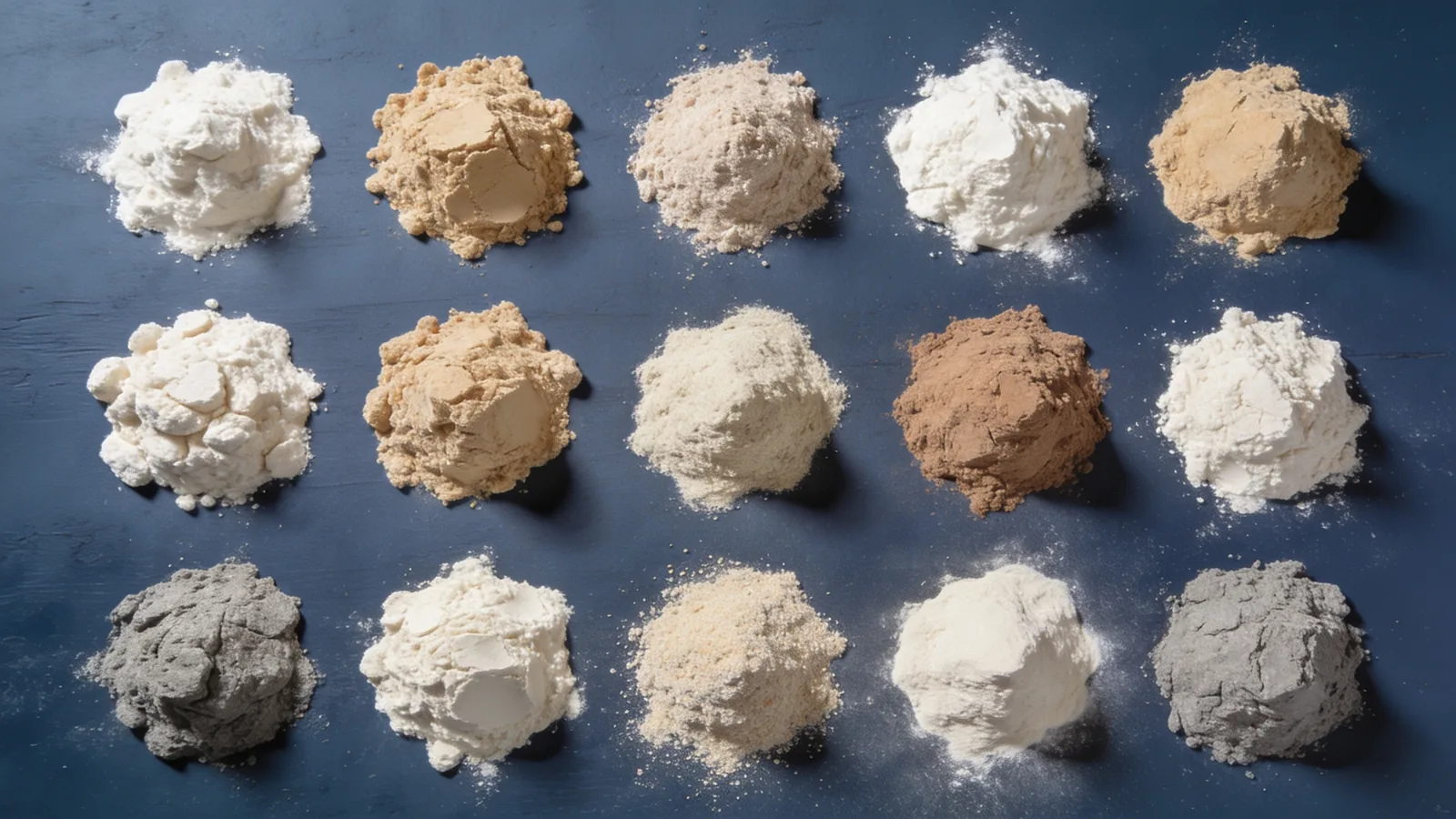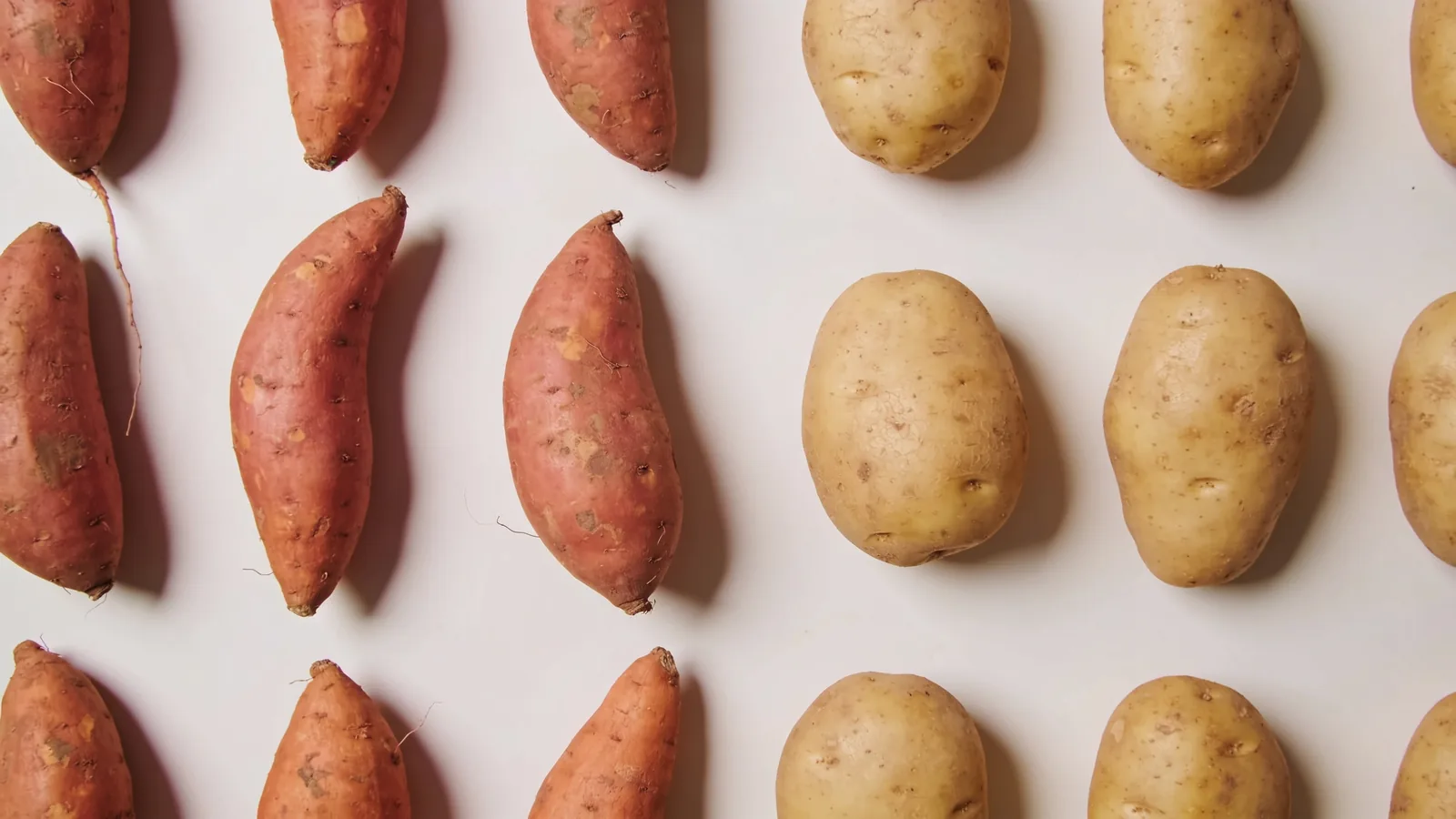
Sweet potato protein powder, as a distinct commercial product, does not really exist. Sweet potato is a carbohydrate-dense root vegetable, not a protein crop, and the isolate that people often picture when they search for “sweet potato protein powder” is actually made from regular potatoes. That distinction matters, because the two plants are not closely related, and only one of them produces a usable protein isolate.
Does Sweet Potato Protein Powder Exist?
No meaningful sweet potato protein isolate exists on the market. The protein powder commonly labeled “potato protein” is extracted from regular potatoes (Solanum tuberosum), specifically from potato fruit juice — a byproduct of potato starch production. Sweet potato, by contrast, is valued for its carbohydrates, fiber, and vitamin A, not its protein content.
The confusion is understandable. Both vegetables share the word “potato,” both are common in protein-conscious diets, and sweet potato shows up constantly in athlete meal plans as a carbohydrate side. But a carbohydrate side and a protein isolate are different things. If you are looking for a concentrated, single-ingredient protein, the relevant product is potato protein isolate from the ordinary potato, not anything derived from sweet potato.
Why Sweet Potato Is a Carbohydrate, Not a Protein Source
Sweet potato is a carbohydrate source first and foremost. Its calories come predominantly from starch and sugars, with only a modest amount of protein per serving — far too little to anchor a protein-forward meal or to justify processing into an isolate. You can read the specifics in our breakdown of how much protein is in a sweet potato.
It helps to put numbers on the gap. A medium sweet potato of roughly 130 grams carries about 2 grams of protein against some 27 grams of carbohydrate — only around 7 percent of its calories come from protein. A regular potato is similar as a whole food: protein is a minor share of either vegetable, so on the plate neither is a protein source in any meaningful sense. The reason a potato protein isolate exists at all has nothing to do with eating the potato — it comes from potato fruit juice, the protein-rich liquid left behind when potatoes are processed for starch. Sweet potato is not processed at industrial scale for its starch in the same way, so there is no equivalent protein-rich side stream to concentrate, and no isolate to sell.
This is not a knock on sweet potato. It is a useful whole food for complex carbohydrates, fiber, and micronutrients. The point is simply categorical: the food does its job as a carbohydrate, and it is not a feedstock that manufacturers turn into a high-purity protein powder. There is no industrial process that takes sweet potato and yields an 80%-plus protein isolate, because the raw material does not contain enough protein to make that practical.
Regular potato is different. Potato proteins are extracted from potato fruit juice (PFJ) or potato fruit water (PFW), the liquid waste stream left over from making potato starch. That stream is protein-rich enough to be concentrated and dried into commercial isolate. Royal Avebe’s Solanic line, for example, is produced at industrial scale from non-GM potatoes, and product listings commonly specify “Potato Protein Isolate 90%.” None of this applies to sweet potato.
Where the “Japanese Sweet Potato Protein” Confusion Comes From
The phrase japanese sweet potato protein circulates mostly because of naming overlap and a handful of animal studies that examine sweet potato extracts, not protein. It does not describe an established protein isolate you can buy and scoop.
Several things feed the mix-up. First, the shared name: a sweet potato is not botanically a close relative of the regular potato, so the linguistic resemblance does more work than the biology supports. Second, sweet potato is so common as an athlete carbohydrate that it gets mentally filed alongside protein. Third, some research has looked at bioactive compounds in sweet potato — for instance, an extract from the aerial parts of “Tongchaeru” sweet potato attenuated muscle atrophy in mice by activating the PI3K/Akt pathway (J Food Sci, 2026; PMID: 41485211). That is an interesting signaling finding, but it concerns a concentrated plant extract and cell pathways, not a dietary protein you would use to hit a daily protein target.
In other words: the muscle-related sweet potato research is real, but it is not evidence of a sweet potato protein supplement. Conflating the two is the core of the “sweet potato and protein powder” mix-up.
Sweet Potato vs Potato Protein Isolate
When you compare the two side by side, the difference between a carbohydrate food and a protein isolate becomes obvious. Reliable, standardized protein-quality scores exist for the commercial isolates; sweet potato is not characterized as a protein product, so quality scores and isolate availability do not apply.
| Source | Protein content | Protein quality (PDCAAS) | Commercial isolate available? |
|---|---|---|---|
| Potato protein isolate (regular potato) | 80–95% (dry basis) | 0.92–1.00 | Yes |
| Whey protein isolate | 90–95% | 1.00 | Yes |
| Egg protein | — | 1.00 | Yes |
| Sweet potato (whole food) | Low (carbohydrate source) | — | No |
Source note: Potato protein as a high-quality, allergen-free isolate from potato fruit juice per Food Research International (2021), PMID: 34507729; potato protein content and PDCAAS from potato-protein composition data; whey isolate composition per mindbodygreen (Meyer, 2023); egg PDCAAS from Schaafsma G, Journal of Nutrition (2000), PMID: 10867064. PDCAAS values of 1.00 are truncated to the 1.00 maximum.
Potato protein isolate contains all nine essential amino acids and has a PDCAAS of 0.92–1.00, which places it on par with several animal proteins. Its Digestible Indispensable Amino Acid Score (DIAAS) has been reported as high as 100% (Food Science & Nutrition, Herreman et al., 2020; PMID: 33133540). For context on why two scoring systems exist, see DIAAS vs PDCAAS. Sweet potato simply is not in this conversation as a protein source.
What Does the Evidence Say About Potato Protein for Muscle?
Potato protein isolate has direct human evidence for stimulating muscle protein synthesis, which sweet potato does not. In a 2020 trial, consuming 25 g of potato protein isolate twice daily effectively stimulated muscle protein synthesis rates in young women (Nutrients, 2020; PMID: 32349353). The researchers concluded it is a high-quality plant-based protein source.
That is a meaningful contrast. Plant proteins, as a group, tend to have lower protein-quality scores than animal proteins, and many contain less leucine and fewer essential amino acids, which can make them less effective at stimulating synthesis. Potato protein is an exception worth noting: it carries 37% essential amino acids versus 43% in whey isolate, and both soy and potato isolates reach a DIAAS of 100% or higher for children and adults — comparable to whey isolate.
If your interest is muscle, then, the practical takeaway is to look at potato protein isolate from regular potato, not a sweet potato product that does not meaningfully exist. Our overview of potato protein benefits and the deeper explainer on what potato protein is cover the mechanism and evidence in full.
Combining Sweet Potato and Protein Powder
The genuinely useful move is to pair sweet potato (the carbohydrate) with a real protein powder (the protein). This gives you complex carbohydrates, fiber, and micronutrients from the vegetable, plus the complete amino acid profile that sweet potato lacks.
A single-ingredient potato protein isolate works well here for a few reasons. It contains all nine essential amino acids, it is considered a low-FODMAP protein source by Monash University (2019), and it is allergen-friendly for people avoiding dairy, eggs, soy, and nuts — useful if you are already managing a restricted diet. One caveat: if you have a potato allergy, you should avoid potato protein, since the allergen patatin is still present. Notably, sweet potato and regular potato are not closely related, so this is a regular-potato consideration, not a sweet potato one.
Practically, mashed or roasted sweet potato alongside a protein shake, or stirring an unflavored isolate into a sweet potato mash, is a low-effort way to build a balanced meal. For more on choosing a powder that does not insult your label-reading instincts, see the best protein powder guide and our allergen-free protein overview.
Limitations and What to Take Away
A few honest caveats. The sweet potato muscle research cited above is from animal and cell models, not human protein-feeding trials, so it should not be read as evidence that sweet potato builds muscle the way a protein source does. And protein powder of any kind does not build muscle on its own — it has to be combined with resistance exercise.
The bottom line is simple. “Sweet potato protein powder” is a category that does not really exist; the searchable phrase points to a confusion between a carbohydrate food and a protein isolate made from a different plant. If you want concentrated protein, look at potato protein isolate from regular potato. If you want sweet potato, enjoy it for what it is — a carbohydrate. And if you want both, put them on the same plate.