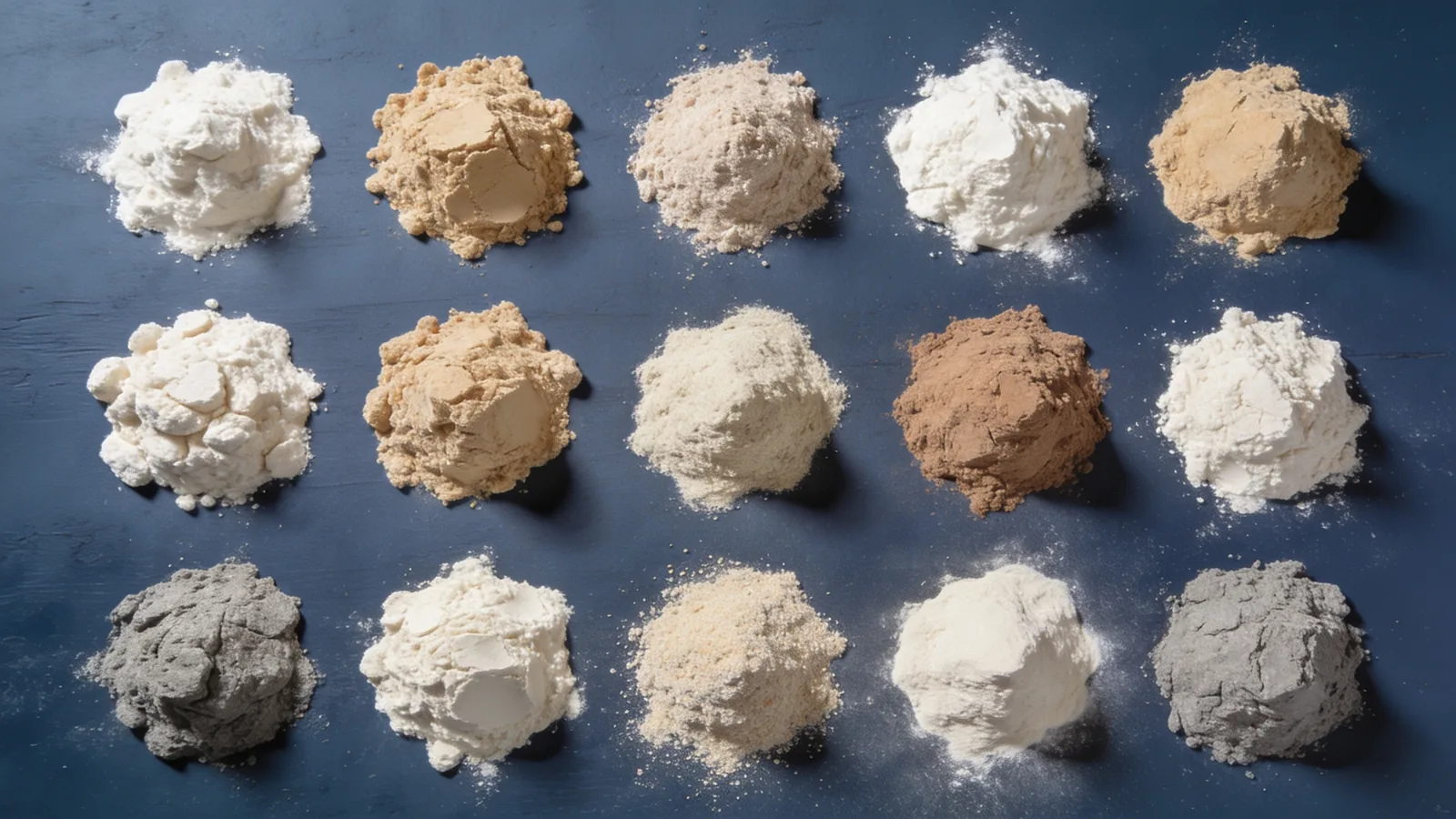
A protein digestibility score measures how completely your body can absorb and use a protein’s amino acids relative to what humans actually require. The two recognized standards are PDCAAS and DIAAS, and by either measure the highest-scoring proteins are animal-based: casein reaches a DIAAS of roughly 145%, while whey, egg, milk, and soy isolate all sit at or near the maximum PDCAAS of 1.00, which truncates any surplus to 100% (Journal of Nutrition, 2000; PMID:10867064). Among plant proteins, potato protein isolate sits unusually close to that ceiling — a PDCAAS of 0.92–1.00 and a DIAAS reported above 100%.
By DIAAS, the highest-scoring single protein is casein at roughly 145%, followed by whey, egg white, and soy isolate. PDCAAS truncates every top protein at 1.00, so it cannot separate them. Among plant proteins, potato protein isolate scores highest — PDCAAS 0.92–1.00 and DIAAS above 100 — and approaches whey isolate.
We ranked common protein sources by their published quality scores, then weighed digestibility against allergen profile and ingredient simplicity, because the single highest number is not always the right pick for a given person.
Scores at a Glance
Both scores agree on the broad ranking — animal proteins lead, with a handful of plant isolates close behind. The difference is resolution: PDCAAS lumps every elite protein together at 1.00, while DIAAS can show that casein actually carries a surplus of digestible amino acids. Reliable, published values for some sources (pea PDCAAS, wheat DIAAS) are not established, so those cells are left without a number.
| Protein source | PDCAAS | DIAAS | Common allergen? |
|---|---|---|---|
| Casein | 1.00 | ~145% | Dairy |
| Whey isolate | 1.00 | high quality | Dairy |
| Egg white | 1.00 | >100% | Egg |
| Soy isolate | 1.00 | ~90% | Soy |
| Potato protein isolate | 0.92–1.00 | >100 | None |
| Pea protein isolate | — | 100% | Legume |
| Wheat gluten | 0.25 | — | Wheat/gluten |
Casein’s DIAAS of 145% and pea’s DIAAS of 100% both come from the same controlled human ileal-digestibility trial (American Journal of Clinical Nutrition, 2021; PMID:34665230). The PDCAAS method caps every elite protein at the maximum of 1.00 by truncating any surplus, and wheat gluten’s PDCAAS of about 0.25 illustrates the bottom of the range (Journal of Nutrition, 2000; PMID:10867064).
Top Options by Category
Potato protein isolate
Best score-to-simplicity ratio
Potato protein isolate is the rare plant source that scores like an animal protein without carrying an animal allergen. Its DIAAS has been reported above 100% (Food Science & Nutrition, Herreman et al., 2020; PMID:33133540), and its PDCAAS lands at 0.92–1.00 — among the highest of any vegetable protein. In a controlled trial, 25 g of potato protein isolate taken twice daily stimulated muscle protein synthesis at rest and after resistance exercise in young women (Nutrients, 2020; PMID:32349353). It is a single-ingredient powder, low-FODMAP (Monash University, 2019), and free of dairy, egg, soy, and gluten. If you want to understand what potato protein actually is and how it is made, the structure explains the score.
Pros:
- DIAAS above 100; PDCAAS 0.92–1.00
- No dairy, egg, soy, nut, or gluten
- Single ingredient — no gums or sweeteners
- Low-FODMAP; gentle for sensitive guts
- Demonstrated muscle protein synthesis in humans
Cons:
- Slower amino acid release than whey
- Earthy taste; needs a flavor partner
- Fewer brands on the market
Casein
Highest absolute score
If the only question is the number, casein wins. Its DIAAS of roughly 145% (American Journal of Clinical Nutrition, 2021; PMID:34665230) reflects a digestible amino acid surplus well beyond human requirements, and its PDCAAS sits at the 1.00 ceiling. The trade-off is that casein is a dairy protein, so anyone with a milk allergy is excluded outright, and its slow digestion suits a sustained release rather than a rapid post-workout spike.
Pros:
- Highest published DIAAS of any common protein
- Sustained amino acid release
Cons:
- Dairy allergen
- Often formulated with additives and sweeteners
Whey protein isolate
Fastest amino acid delivery
Whey isolate hits the maximum PDCAAS of 1.00, and its rapid digestion and high leucine content make it the reference standard for stimulating muscle protein synthesis (American Journal of Clinical Nutrition, 2011; PMID:21367943). Isolate is 90–95% protein with under 1% lactose (mindbodygreen, 2023). The limitation is the obvious one: it is dairy, which rules it out for milk-allergic and many lactose-sensitive users.
Pros:
- Maximum PDCAAS; high leucine
- Fast absorption, well studied
Cons:
- Dairy allergen
- Concentrate versions carry more lactose
Egg white protein
Best egg-based option
Egg protein scores a PDCAAS of 1.00 and a DIAAS above 100% (Food Science & Nutrition, Herreman et al., 2020; PMID:33133540), meaning it supplies a surplus of digestible essential amino acids. It is dairy- and soy-free, which matters for some, but it remains a top-eight allergen and is off the table for egg-allergic households.
Pros:
- DIAAS above 100%
- Dairy- and soy-free
Cons:
- Egg allergen
- Can taste sulfurous
Pea protein isolate
Widely available plant option
Pea isolate posts a DIAAS of 100% versus casein’s 145% in head-to-head testing, with real ileal digestibility of 93.6% (American Journal of Clinical Nutrition, 2021; PMID:34665230). Its weak point is sulfur amino acids: across pea genotypes, methionine plus cysteine is the limiting amino acid at a chemical score near 46% (Molecules, 2024, PMID 39519674). Pea is allergen-friendly but, as a legume, can carry FODMAPs that bother sensitive guts. Our deeper look at pea protein bioavailability covers the trade-offs.
Pros:
- DIAAS of 100%; broadly available
- No dairy, egg, or soy
Cons:
- Limiting methionine and cysteine
- Can carry FODMAPs
What to Look For on Your Own
The single highest score is rarely the right buying criterion in isolation. Here is how to read the numbers without being misled by them.
Decide whether PDCAAS or DIAAS is answering your question
PDCAAS truncates every elite protein at 1.00, so it tells you whether a protein clears the bar but not by how much. DIAAS, recommended by the FAO since 2013, measures digestibility per amino acid in the small intestine and lets scores exceed 100%, which is why it separates casein (145%) from soy or potato. For comparing already-complete proteins, DIAAS is the more informative number. We break down the mechanics in DIAAS vs PDCAAS.
Remember that the same score does not guarantee the same result
Soy and whey can carry identical PDCAAS values yet stimulate muscle protein synthesis differently, because absorption speed and leucine content also matter. Plant proteins generally produce a lower and slower rise in essential amino acids than whey, which is one reason a slightly higher per-serving dose can close the gap. A score is a starting point, not the whole story.
Weigh allergen risk as heavily as the number
For a household where a child cannot have dairy, egg, nuts, or soy, a DIAAS of 145% is meaningless if the source is casein. A single-ingredient potato protein isolate scores within striking distance of the top while removing the four most common allergens at once. If allergen avoidance is your priority, start with our allergen-free protein guide.
Check the ingredient list, not just the score sheet
A high quality score on the protein says nothing about what else is in the tub. Gums, oils, flavors, and sweeteners ride along in most powders. The advantage of a single-ingredient isolate is that there is nothing to read past the protein itself. Never squint to read your ingredient label.