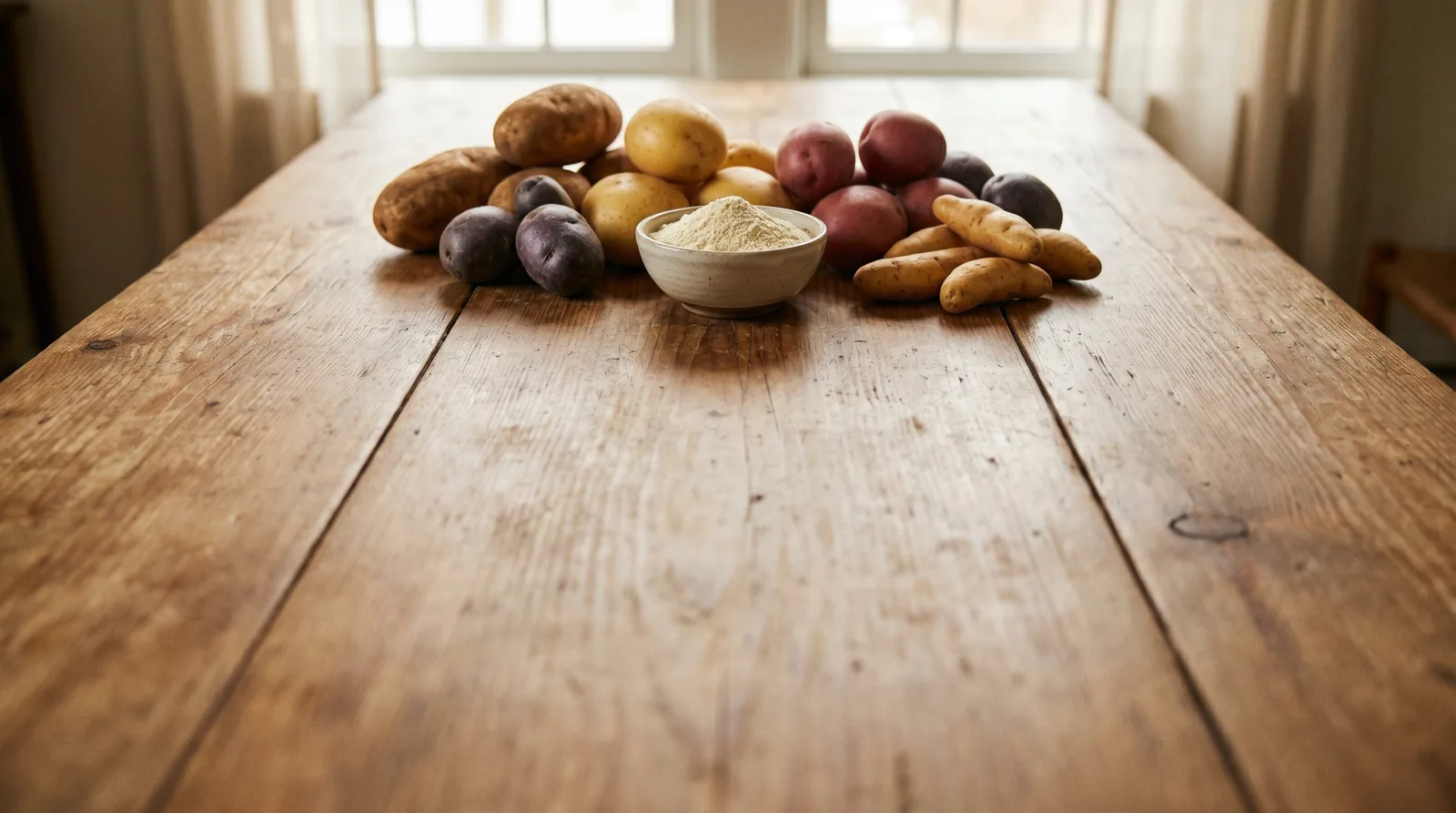
If you are searching for a high protein potato, the disappointing truth is that no fresh variety qualifies. Russets, Yukon Golds, reds, fingerlings, purples — every common potato is roughly 80% water and overwhelmingly starch, with only a small protein fraction by weight. Varietal differences exist, but they are measured in fractions of a gram, not in the range that would make any whole potato a meaningful protein source.
No single potato variety is a genuinely high protein potato. Fresh potatoes of all types contain only a few grams of protein each, and the differences between varieties are small enough to be nutritionally irrelevant. The protein that the food industry actually uses comes from potato protein isolate — extracted from potato fruit juice and concentrated to 80–95% protein, with a PDCAAS of 0.92–1.00, on par with several animal proteins.
So the more useful question is not “which potato has the most protein” but “where does potato protein actually come from, and is it any good.” The answer is that the protein is real, it is high quality, and it is concentrated during starch manufacturing rather than eaten off a plate. This guide covers both — varietal reality and the isolate that matters.
How Much Protein Is in a Potato?
A whole potato is a low-protein food regardless of variety. The tuber is built primarily from starch and water, and protein makes up a small minority of its dry matter. That is why no marketing campaign has ever sold a “high protein” russet — the number simply is not there, and choosing one variety over another does not change the category.
What does change between potatoes is starch character, sugar content, and texture — the things that make a Yukon Gold creamy and a russet fluffy. Protein content tracks within a narrow band across the common table varieties. If your goal is protein, you would have to eat an implausible quantity of any potato to hit a serious target, and you would consume a large amount of carbohydrate doing it. For a fuller treatment of the whole-food side, see our honest take on whether potatoes are a good source of protein.
Where the High Protein Potato Actually Lives: The Isolate
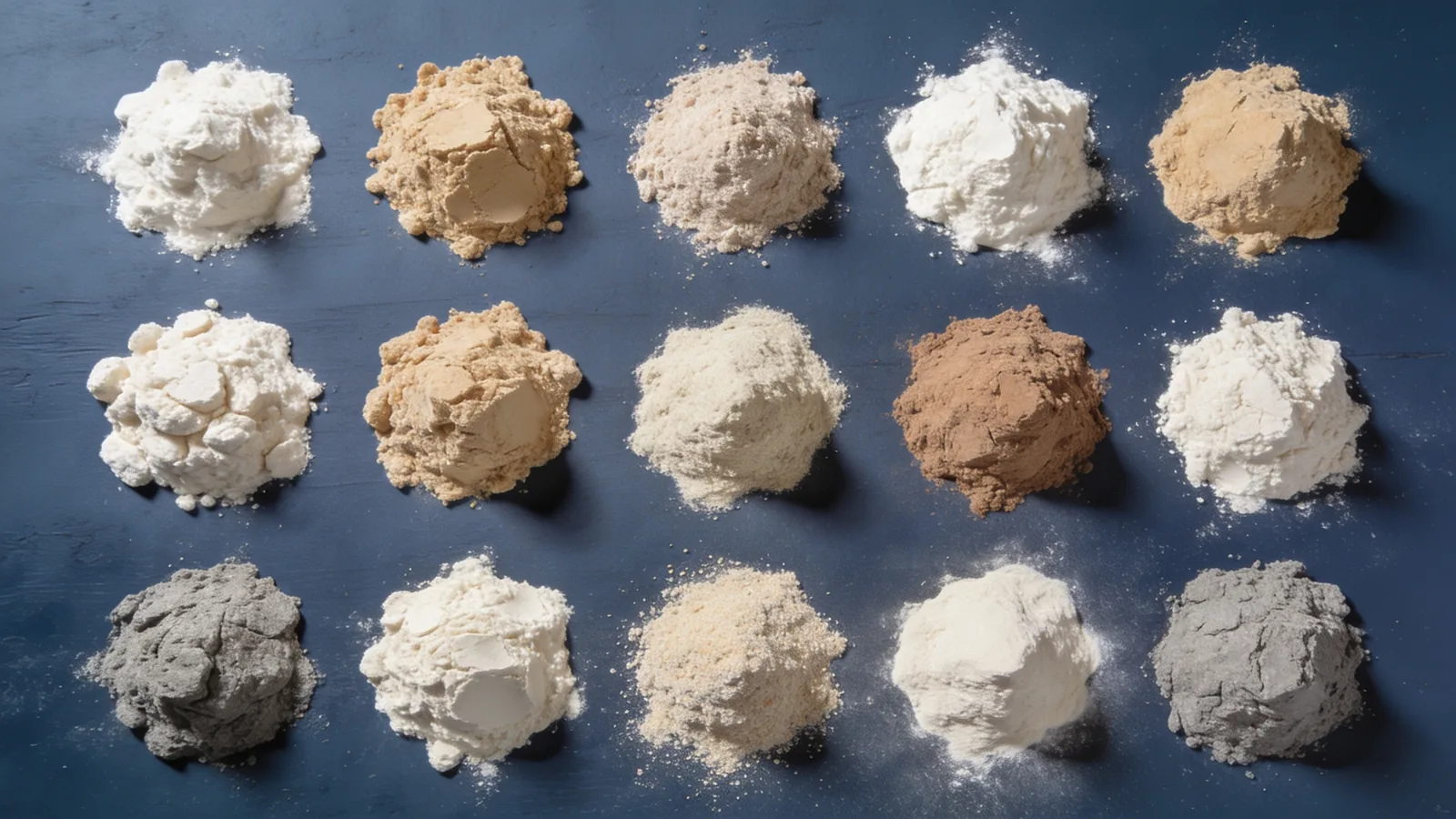
The genuinely high protein potato is not a tuber you roast — it is potato protein isolate, a concentrated fraction containing 80–95% protein on a dry basis. Commercial isolates are commonly sold at a “90%” specification, putting them in the same protein-density range as whey isolate, which is 90–95% protein.
That protein does not come from grinding up whole potatoes. It is recovered from potato fruit juice (also called potato fruit water), a liquid byproduct of industrial starch production that was historically treated as a waste stream. Manufacturers precipitate and dry the protein from that juice, which is why a low-protein vegetable can yield a high-protein ingredient: the starch and water are removed, and what remains is mostly protein. The major protein in that fraction is patatin, alongside protease inhibitors and other components.
If you want the full background on how this ingredient is made and what it is, our cluster guide covers it in depth: What Is Potato Protein? The Complete Guide.
High Protein Potato Sources Compared
The table below puts the forms side by side. Where a reliable figure is not established, the cell shows an em-dash rather than a guessed number.
| Source | Protein (dry basis) | Protein quality | Primary allergen |
|---|---|---|---|
| Potato protein isolate | 80–95% | PDCAAS 0.92–1.00; DIAAS reported as high as 100% | Potato (uncommon) |
| Whey protein isolate | 90–95% | DIAAS 94–100% | Dairy |
| Whole potato (any variety) | — | — | Potato (uncommon) |
Two things stand out. First, the isolate sits in the same protein-density tier as whey isolate. Second, its protein quality is not the weak link that plant proteins are often assumed to be — more on that below.
Is Potato Protein a Complete, High-Quality Protein?
Yes. Potato protein isolate contains all nine essential amino acids and scores at the top end of plant protein quality. Its PDCAAS is 0.92–1.00, and its Digestible Indispensable Amino Acid Score (DIAAS) has been reported as high as 100%, which places it alongside animal proteins rather than below them.
This matters because plant proteins, as a group, generally carry lower quality scores than animal proteins — a real and well-documented pattern. Potato protein is one of the exceptions. A 2020 study reported that soy and potato protein isolates both reach a DIAAS of 100% or greater for children and adults, making them comparable in quality to whey isolate (DIAAS 94–100%). The amino acid profiles are not identical: potato protein isolate is about 37% essential amino acids versus 43% for whey isolate, per data published in Amino Acids (PMID:30167963). But the gap is narrower than the plant-versus-animal stereotype suggests.
For the mechanics of how these scores are calculated and why a number near 1.00 matters, see PDCAAS Explained.
Does Potato Protein Build Muscle?
Yes — potato protein isolate stimulates muscle protein synthesis, the process that repairs and builds muscle tissue. In a 2020 trial published in Nutrients, women who consumed 25g of potato protein isolate twice daily increased their muscle protein synthesis rates at rest and during recovery from exercise, while the placebo group did not (PMID:32349353).
A later study from the same research direction concluded that potato protein isolate is a high-quality plant-based protein capable of effectively stimulating muscle protein synthesis (Medicine & Science in Sports & Exercise, 2022, PMID:35438672). This is meaningful for anyone who has spent decades under-eating protein and is now trying to hold onto muscle — a concern that becomes more pressing with age. If that describes you, our guide to protein after 40 puts the muscle-synthesis research in context.
Is Potato Protein Safe for Allergies?
Potato protein is widely described as an allergen-free protein source, and it sidesteps the most common allergens entirely — no dairy, egg, soy, nut, or gluten. That makes it a practical option for an allergy parent or an autoimmune-aware adult who needs the fewest possible inputs. A 2024 review concluded that potato proteins are high-quality and allergen-free, and supplier Avebe markets its Solanic® potato proteins specifically on the combination of high functionality and low allergenicity.
The honest caveat: potato itself can be an allergen, even if rarely. The Center for Research on Ingredient Safety at Michigan State University states plainly that if you have a potato allergy, you should not consume potato protein, because the allergen is still present. Patatin — the major potato protein — has been identified as a potential allergenic component. For most people without a potato allergy, though, the single-ingredient profile is exactly the point. Our allergen-free protein guide compares the options.
Does Cooking or Variety Change the Protein?
Choosing a different potato variety will not turn a low-protein food into a high-protein one — the band is too narrow to matter. Cooking does not add protein either, though it changes digestibility: protein and starch digestibility of processed potato flour has been measured significantly higher than that of raw potatoes (PMID:9839814).
If your aim is more protein from potatoes on the plate, the realistic move is to pair them with a concentrated protein source or to add potato protein isolate to a dish. It disappears into food without flavor, which is why it shows up in high-protein mashed potatoes and similar recipes. The variety in the pot is a texture decision, not a protein one.
Low-FODMAP Profile
Potato protein isolate is also a low-FODMAP protein source, per Monash University, which makes it relevant for sensitive stomachs where pea and soy isolates can carry FODMAPs. You can read more on that fit in our guide to protein powder for IBS.