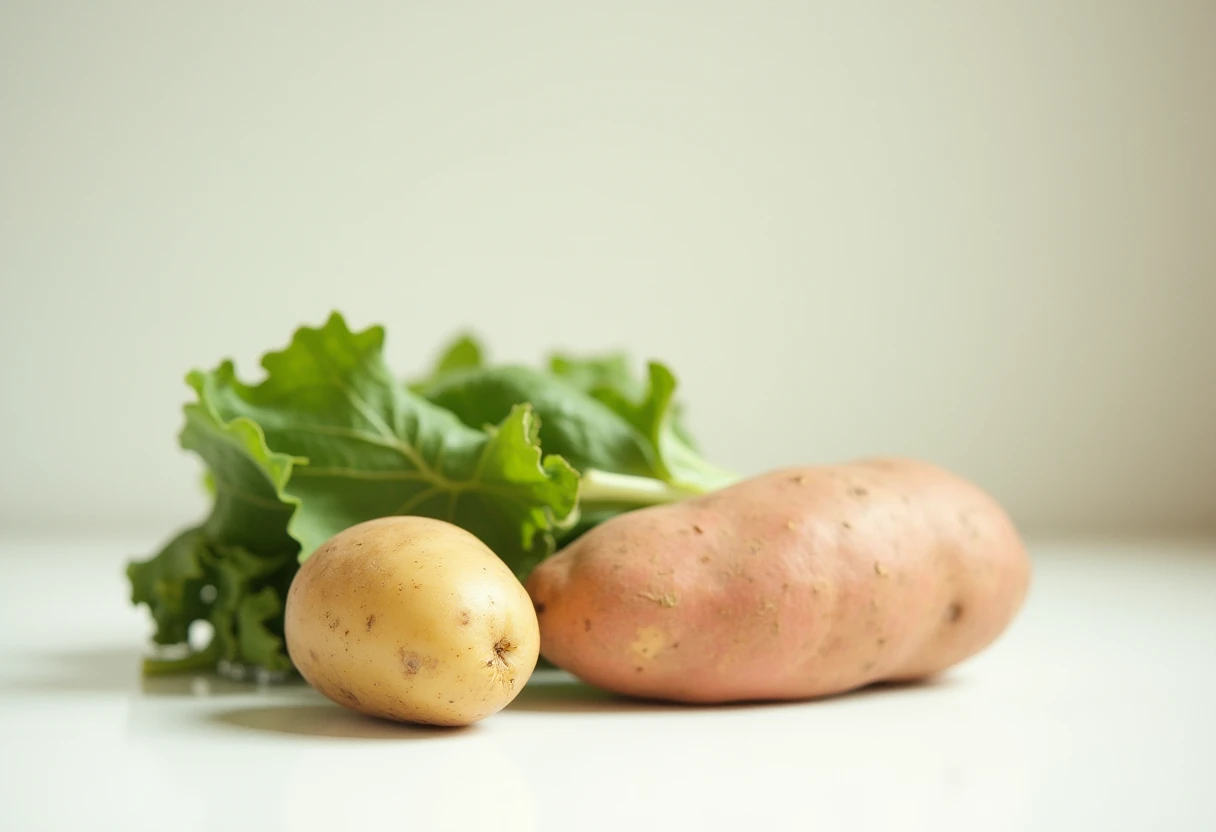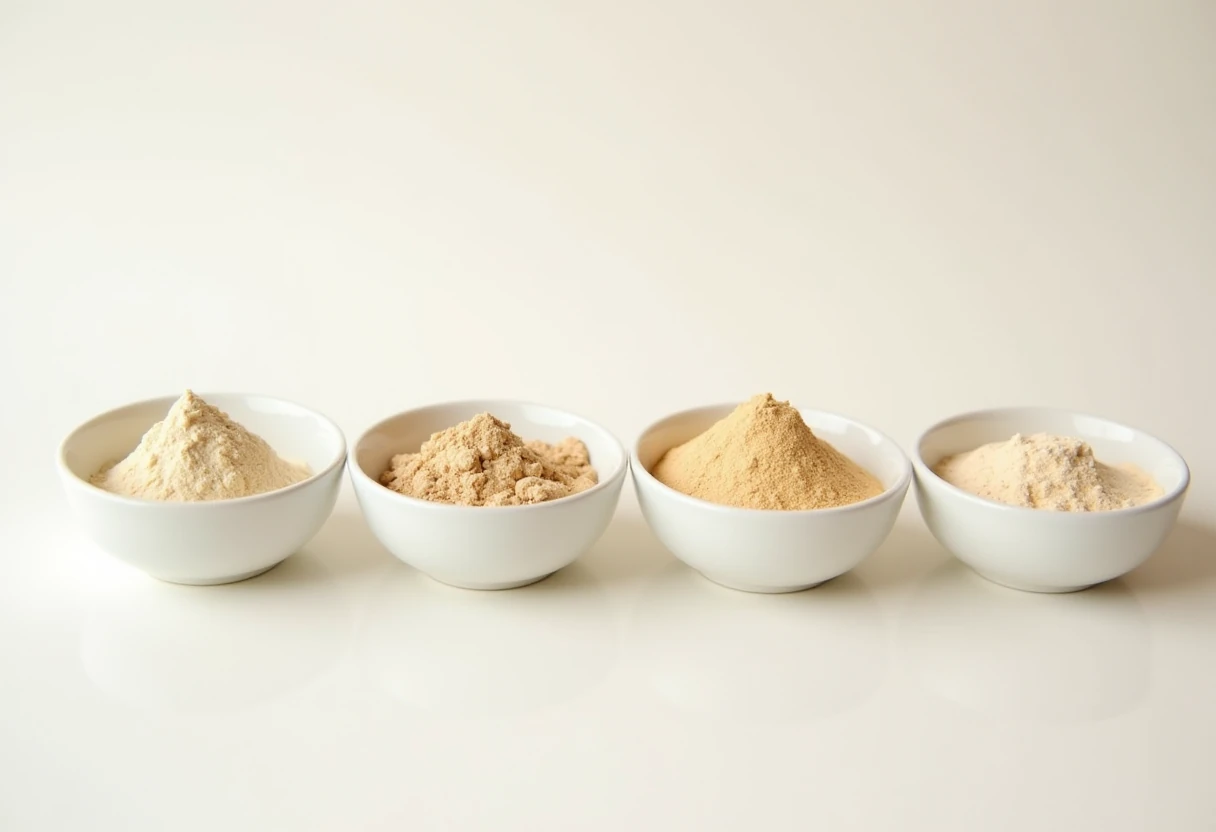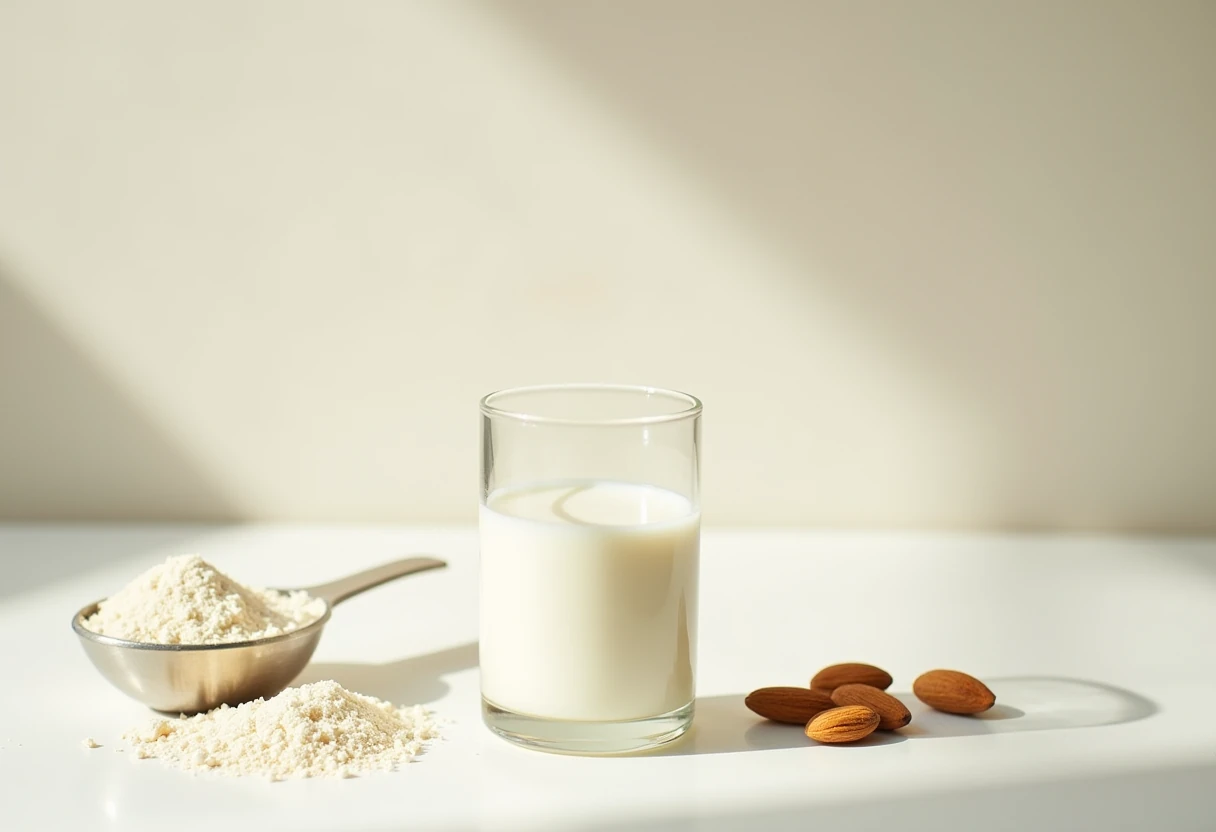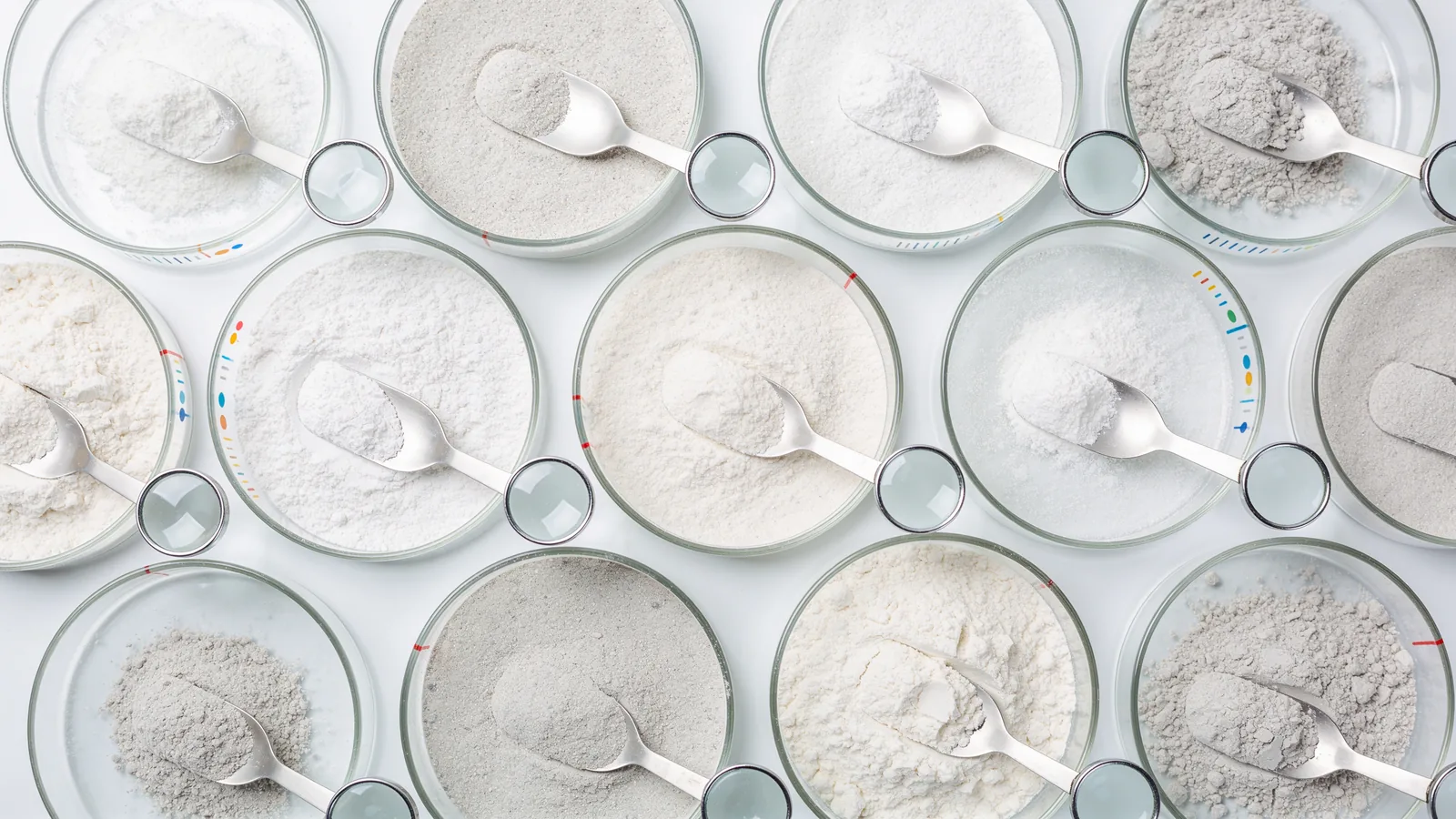
A vegan gluten free protein powder is easier to find than the marketing suggests, because most plant proteins never contained gluten in the first place. Pea, brown rice, potato, hemp, soy, and mung bean are all gluten-free by botany — the grain that carries gluten (wheat, barley, rye) is not in any of them. The real question is not which plant protein is gluten-free, but which products avoid the cross-contamination, wheat-derived additives, and filler blends that reintroduce it.
Most single-ingredient vegan protein powders — pea, brown rice, potato, hemp, soy, and mung bean — are naturally gluten-free, because none of those plants contain gluten. The only common plant protein that is not gluten-free is seitan, which is wheat gluten. Gluten risk in plant powders comes from cross-contamination or added blends, not the protein itself. The FDA labels a product “gluten-free” below 20 parts per million of gluten; the Gluten-Free Certification Organization (GFCO) requires below 10 ppm.
The categories below are evaluated on the criteria that actually matter once gluten is off the table: ingredient count, amino acid profile, allergen load, third-party testing, and convenience.
Which Plant Proteins Are Naturally Gluten-Free?
Every common plant protein except seitan is naturally gluten-free, because gluten exists only in wheat, barley, and rye. Potato, pea, rice, soy, hemp, and mung bean proteins are all gluten-free at the source. The table below compares them on the factors that actually separate one from another once gluten is off the table.
| Protein source | Vegan | Naturally gluten-free | Main allergen concern | Quality note |
|---|---|---|---|---|
| Potato protein isolate | Yes | Yes | None among top 8; considered allergy-free | 80–95% protein dry basis; DIAAS reported as high as 100%; stimulates muscle protein synthesis |
| Pea protein | Yes | Yes | Legume; can carry FODMAPs | Lysine-rich (~7.9 g/100g) but limited in methionine + cysteine |
| Brown rice protein | Yes | Yes | Low allergenicity; cadmium/arsenic load varies | Lower in lysine; often blended with pea to complete |
| Soy protein isolate | Yes | Yes | Top-8 allergen (soy) | Complete profile; can challenge purification, may carry FODMAPs |
| Hemp protein | Yes | Yes | Low; rarely cross-reactive | Fiber-heavy, lower protein concentration |
| Mung bean protein | Yes | Yes | Legume | High protein-per-gram |
| Whey isolate (not vegan, for contrast) | No | Yes | Milk | 90–95% protein, <1% lactose; fast leucine delivery |
| Seitan / vital wheat gluten | Yes | No — it is gluten | Wheat | Wheat gluten scores about 0.25 PDCAAS |
The single comparison that surprises people: wheat gluten, even setting aside the gluten itself, is a poor-quality protein. Egg protein scores 1.00 on the PDCAAS scale, while wheat gluten scores around 0.25. So a celiac or gluten-sensitive reader gives up very little by skipping it. For a deeper look at how these scores work, see DIAAS vs PDCAAS.
Options by Category
Potato Protein Isolate
Single-ingredient, unflavored
The simplest option is a single ingredient: potato protein isolate. Potato protein contains 80–95% protein on a dry basis and is recognized in the literature as a high-quality, allergy-free, gluten-free source (Food Research International, 2021; PMID 34507729). In a controlled trial, 25 g of potato protein isolate taken twice daily stimulated muscle protein synthesis at rest and after resistance exercise in young women (Nutrients, 2020; PMID 32349353) — a result most plant proteins have never demonstrated. It is also a low-FODMAP protein per Monash University (2019), which matters because gluten-avoiders frequently have sensitive digestion. With a single ingredient, there is nothing to cross-contaminate and no wheat-derived flavoring to read past.
Pros:
- One ingredient — no gums, sweeteners, or flavor blends
- Free of all top-8 allergens; gluten-free by botany
- Documented muscle protein synthesis in a human trial
- Low-FODMAP; gentle for sensitive guts
- DIAAS reported as high as 100%
Cons:
- Typically unflavored — you add taste yourself
- Earthy base note some people need to mask
- Single-ingredient isolates often carry no GFCO seal (gluten-free by ingredient, not third-party certified)
Plant-Based Ready-To-Drink (RTD) Shake
Pre-mixed, multi-ingredient
Ready-to-drink plant shakes trade single-ingredient purity for convenience. Some are formulated to be free of all top-eight allergens — milk, eggs, fish, shellfish, tree nuts, peanuts, wheat, and soy — which, for an allergy parent packing a lunch, means a sealed shake can remove the cross-contamination question entirely. The base is usually a multi-protein blend rather than a single isolate, so the amino acid profile can be fuller than one source alone, at the cost of added flavors and gums. Because the allergen and certification claims vary by formula, confirm them on the specific label rather than assuming all RTDs match.
Pros:
- Ready-to-drink convenience; no mixing
- Some are formulated free of all top-8 allergens
- Multi-protein blends can broaden the amino acid profile
Cons:
- Multi-ingredient, including added flavors and gums
- Less protein per dollar than a bulk isolate
- Certifications vary — verify per product
Organic Plant-Based Blend
Flavored, widely available
Flavored organic plant blends are easy to find and tend to be reasonably short on additives for a flavored powder, usually landing somewhere around 15–21 g of protein per serving depending on the formula. One caveat worth knowing: in the Clean Label Project’s 2025 Protein Study 2.0, certified organic protein powders averaged three times the lead of non-organic products — so “organic” is not a heavy-metal guarantee.
Pros:
- Widely stocked; gluten-free
- Flavored options for those who want them
- Often available without stevia for those who dislike it
Cons:
- Multi-ingredient blend, not single-source
- Organic label does not mean lower heavy metals
Single-Ingredient Pea Protein
One ingredient, plant-forward
A single-ingredient pea protein is just yellow pea protein — nothing else. Pea is lysine-rich, averaging about 7.9 g of lysine per 100 g of protein, but its limiting amino acids are methionine plus cysteine, which average only 2.6 g/100 g (chemical score about 46%; Molecules, 2024, PMID 39519674). That makes pea a solid base that many people pair with rice. Peas also carry a notably small footprint: producing 100 g of protein from peas emits about 0.4 kg of CO2e, nearly 90 times less than beef (BBC Future, 2022). Read more on the trade-offs in our pea protein breakdown.
Pros:
- One ingredient: pea protein
- High lysine; small environmental footprint
- Gluten-free by source
Cons:
- Limited in methionine + cysteine
- Legumes can carry FODMAPs for sensitive guts
Brown Rice Protein
Legume-free, grain-based
For readers who react to legumes, brown rice protein is a low-allergenicity, gluten-free alternative. Brown rice proteins are sometimes marketed as “clinically shown as good as whey protein for strength and muscle growth,” but such claims often appear without a specific study cited, so treat them as marketing rather than settled evidence. Rice is naturally lower in lysine, which is why it is often combined with pea. Rice proteins can also carry variable arsenic and cadmium, so third-party testing is worth checking.
Pros:
- Legume-free and gluten-free
- Low allergenicity
- Pairs well with pea for completeness
Cons:
- Lower in lysine on its own
- “As good as whey” strength claim not backed by a cited study
- Heavy-metal load varies by source
What to Look For on Your Own
Once you accept that the plant itself is gluten-free, the buying decision shifts to four things the front label rarely tells you.
Certification vs. naturally gluten-free
“Naturally gluten-free” and “certified gluten-free” are not the same promise. The FDA allows a product to be labeled gluten-free if it tests below 20 ppm. GFCO, a program of the Gluten Intolerance Group, certifies below 10 ppm. A single-ingredient potato or pea isolate is gluten-free by botany, but it may not carry a third-party seal. If you have celiac disease and want documented testing, a GFCO seal or a published certificate of analysis gives you more than the word “gluten-free” on a flavored blend.
Where gluten actually sneaks in
Gluten rarely comes from the protein. It comes from shared equipment, malt or barley-derived flavorings, wheat-based thickeners, and “natural flavor” lines that obscure their origin. This is the strongest argument for fewer ingredients: a single-ingredient powder has no flavor system, no gum, and no place for a wheat derivative to enter. The same logic applies in gluten-free baking, where unflavored isolates are favored specifically to avoid the extra ingredients flavored powders carry.
Gluten-free does not mean allergen-free
A gluten-free label says nothing about the other top allergens. Soy protein isolate is gluten-free but is itself a top-eight allergen. Many “soy-free” plant blends still hide trace soy lecithin — a problem covered in our soy-free guide. For households managing multiple sensitivities, the fewest possible inputs is the safest rule. Potato protein is one of the few sources recognized as both gluten-free and free of the top eight allergens. For the broader picture, our allergen-free protein guide walks through every common source and what it does and does not contain.
Heavy metals are the underreported risk
Plant powders concentrate metals that dairy does not. Consumer Reports tested 23 protein products in 2025 and found more than two-thirds exceeded its safe daily lead limit of 0.5 micrograms per serving, with plant-based products averaging nine times more lead than dairy-based powders. The Clean Label Project’s 2025 Protein Study 2.0 tested 160 products across 70 brands and found 47% exceeded at least one federal or state safety standard, with plant-based powders carrying five times more cadmium than whey. The takeaway is not to avoid plant protein — it is to choose a source with published testing rather than trusting the front of the bag.
Quality still matters once gluten is gone
Plant proteins generally score lower than animal proteins on quality metrics, and most carry less leucine, the amino acid that triggers muscle protein synthesis. A 20 g plant-blend dose supplied 1.5 g of leucine — half the leucine of an equivalent whey dose — and its muscle synthesis response only matched whey once free leucine was added to reach 3.0 g (Journal of Nutrition, 2024). Potato protein is one of the few single plant sources with a human trial showing it stimulates muscle protein synthesis on its own. If muscle maintenance is the goal — and after 40 it usually is — that evidence is worth weighting. See what potato protein is for the full background.
References
- Oikawa SY, et al. Potato Protein Isolate Stimulates Muscle Protein Synthesis at Rest and with Resistance Exercise in Young Women. Nutrients, 2020. PMID 32349353.
- Potato protein: An emerging source of high quality and allergy-free protein. Food Research International, 2021. PMID 34507729.
- Clean Label Project, Protein Study 2.0, 2025.
- Consumer Reports protein powder and shake testing, 2025.
- Pea genotype amino acid analysis. Molecules, 2024 (PMID 39519674).
- Plant-based protein blend and leucine fortification. Journal of Nutrition, 2024 (PMC11153912).