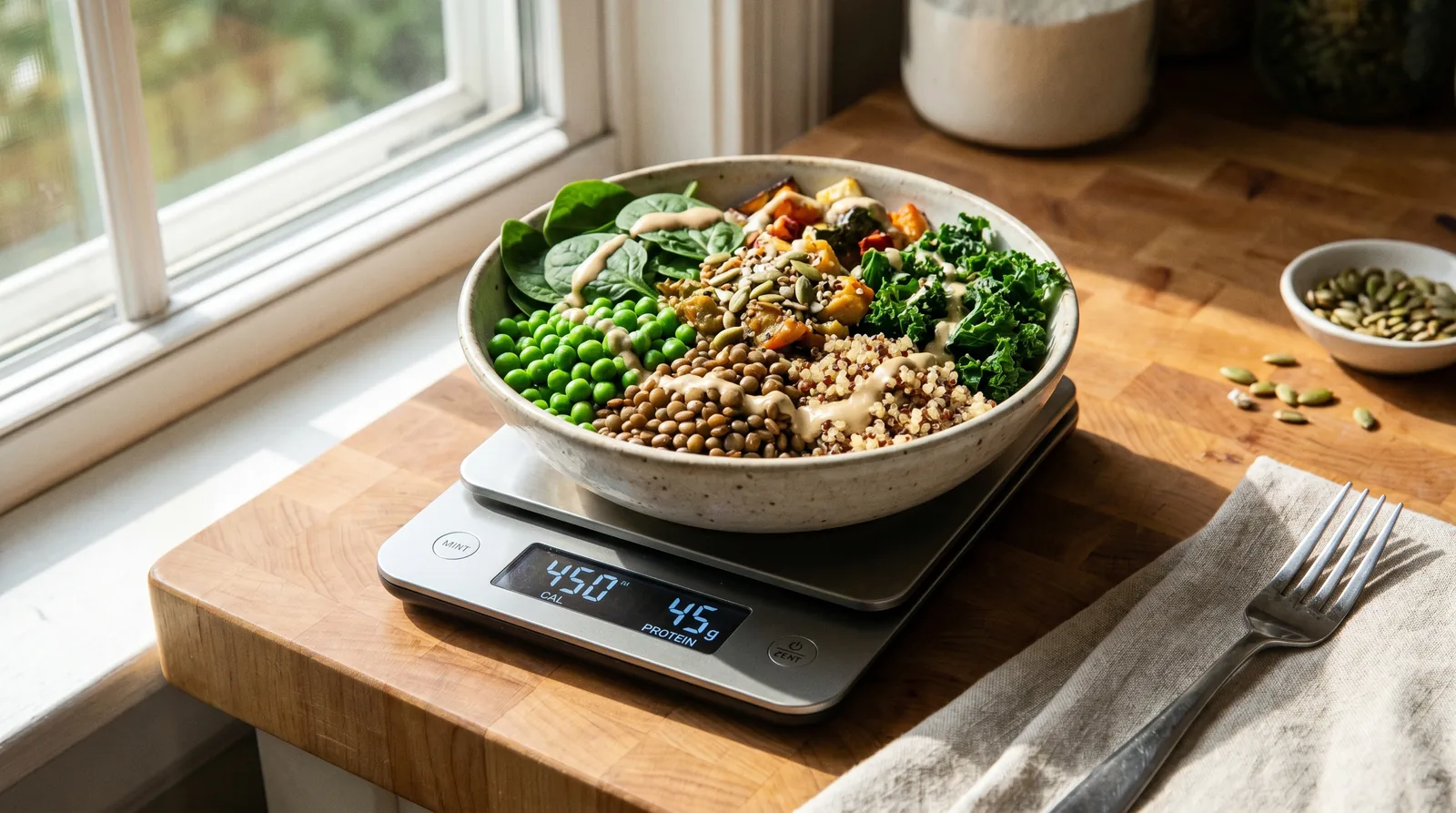
The best vegan protein powder for weight loss is the one that delivers the most protein per calorie, adds nothing you have to look up, and has been tested for heavy metals. Those three things matter more than the flavor on the front of the tub. We evaluated single-ingredient and minimal-additive plant powders against the metrics that actually move the needle when you are eating in a deficit: protein density, satiety, ingredient count, and contaminant testing.
The best vegan protein powder for weight loss has the highest protein-per-calorie ratio, no added sugar, and verified low heavy-metal content. A single-ingredient potato protein isolate fits this profile: 80–95% protein by dry weight, low-FODMAP, and free of sweeteners and fillers. Pea and potato isolates both help preserve muscle in a calorie deficit, but plant powders average higher heavy-metal levels than dairy ones, so third-party testing is non-negotiable.
One sentence on method: we ranked these powder types on protein density, amino acid completeness, additive load, digestibility, and published contaminant testing — not on taste or marketing.
Top Options by Category
Potato Protein Isolate (single ingredient)
Single-ingredient, no sweeteners
One ingredient: potato protein isolate, 80–95% protein by dry weight. There is no added sugar, no sweetener, and no gum — which is exactly what you want when you are counting calories and reading labels. Potato protein isolate has been shown to stimulate muscle protein synthesis at rest and after resistance exercise in young women at 25g per serving, twice daily (Nutrients, 2020, PMID:32349353), so it protects lean mass in a deficit rather than just adding protein to a shake. It is also a low-FODMAP source (Monash University, 2019), which matters because bloating is the fastest way to abandon a routine. If you want the longer science, start with what potato protein actually is.
Pros:
- One ingredient, zero sweeteners or fillers
- Among the highest protein-quality scores of any vegetable protein
- Low-FODMAP and dairy-, soy-, egg-, nut-, gluten-free
- A single-line label is the easiest thing to verify
Cons:
- Plain — it disappears into food, but it is not a dessert flavor
- Less widely stocked than mass-market plant blends
Single-Ingredient Pea Protein
Single-ingredient, widely available
A single-ingredient pea protein is just yellow pea protein — nothing else — which makes it a credible, minimal-additive choice. Pea protein is high in lysine (averaging 7.9 g/100g of protein) and reasonably high in leucine (about 7.1 g/100g), the amino acid most tied to muscle protein synthesis. Its weak point is the sum of methionine plus cysteine, which averages only 2.6 g/100g of protein (a chemical score of about 46%) in new pea genotypes (Molecules, 2024, PMID 39519674). That is the classic pea limitation, and it is why pairing pea with another source — or rotating it — is sensible.
Pros:
- Single ingredient, no sweeteners
- High in leucine and lysine
- Widely available
Cons:
- Limited in sulfur amino acids (methionine + cysteine)
- Pea is among the plant sources that can carry FODMAPs
Organic Plant-Based Blend (Stevia-Free)
Multi-ingredient, flavored, stevia-free
Stevia-free plant-based blends typically supply somewhere around 15–21g of protein per serving and appeal to people who find stevia’s aftertaste off-putting. A blend is not a single ingredient, so the label is longer than a single-ingredient isolate — but an honest, third-party-tested blend is a reasonable choice if you want a flavored powder without stevia. The trade-off is that you have more to read and more variables to verify.
Pros:
- Flavored without stevia, for those who dislike its aftertaste
- Easy to find
- Often built around complementary plant sources for a fuller amino acid profile
Cons:
- Multi-ingredient blend, not single-source — longer label to verify
- Protein-per-serving varies by formula; check it against the calorie count
Organic Plant-Based Blend (Zero Sugar)
Multi-ingredient, zero added sugar
Zero-sugar plant-based blends prioritize a clean macro line, often landing around 13–17g of protein and 0g of sugar per serving. The protein-per-serving figure tends to run lower than a concentrated isolate, so you may need a larger scoop to hit a 25–30g target — but a zero-sugar formula is a reasonable pick for a calorie-controlled plan if it is honestly tested.
Pros:
- No added sugar
- Often stevia-free and organic
Cons:
- Lower protein per serving than a concentrated isolate
- Blend with more ingredients on the label
How the picks compare
The table below puts these four category options side by side on the metrics that matter for weight loss. Reliable PDCAAS figures are not published for every product, so protein quality is described in plain terms rather than forced into a single number.
| Category | Protein source | Protein/serving | Added sugar | Sweetener | Notable trait |
|---|---|---|---|---|---|
| Potato protein isolate | Potato (single ingredient) | 80–95% by dry weight | 0g | None | Low-FODMAP; single ingredient |
| Single-ingredient pea protein | Pea (single ingredient) | ~80% by dry weight | 0g | None | High leucine; lower in sulfur amino acids |
| Organic plant-based blend (stevia-free) | Plant blend | ~15–21g | Varies | Stevia-free | Flavored, multi-source |
| Organic plant-based blend (zero sugar) | Plant blend | ~13–17g | 0g | Often stevia-free | Zero added sugar |
What to Look For on Your Own
If none of these four suit you, the criteria still apply. Here is how to read any vegan protein label through a weight-loss lens.
Protein per calorie, not protein per scoop
“25g of protein” tells you nothing until you see the calorie count beside it. A single-ingredient isolate gives you protein with almost nothing else attached, which is the point in a deficit. Protein raises satiety and energy expenditure more than carbohydrate or fat (Journal of the American College of Nutrition, 2004, PMID:15466943), and it reduces subsequent energy intake more than the other macronutrients (PMID:18469287). That is the mechanism behind every “protein helps you lose weight” headline — it is about eating less without feeling deprived, not about burning fat directly. For the full framework, see our pillar on protein for weight loss.
Muscle preservation matters more than the number on the scale
Losing weight is easy; losing fat while keeping muscle is the actual goal. Plant proteins generally produce a lower, slower rise in essential amino acids than whey, and a 20g dose of a plant-protein blend raised muscle protein synthesis to 0.041%/h versus whey’s 0.046%/h in young adults (The Journal of Nutrition, 2024) — close, but not identical. Potato protein isolate, by contrast, stimulated muscle protein synthesis at rest and after resistance exercise at a 25g dose (Nutrients, 2020, PMID:32349353). Whichever you choose, pair it with resistance training: protein powder alone does not build or hold muscle. See how to lose fat without losing muscle for the protocol.
Heavy-metal testing is the hidden differentiator
This is where vegan protein needs extra scrutiny. Consumer Reports tested 23 protein powders and shakes in 2025 and found lead levels in plant-based products averaged nine times higher than dairy-based powders. The Clean Label Project’s 2025 Protein Study 2.0 tested 160 products and found plant-based powders contained five times more cadmium than whey-based varieties, that 47% of products exceeded at least one federal or state safety standard, and that chocolate-flavored powders contained 110 times more cadmium than vanilla. Two practical takeaways: favor vanilla or unflavored over chocolate, and buy from a maker that publishes its results. A tub that hides its testing is asking you to assume the best.
Additives and sweeteners
“No added sugar” is the floor, not the ceiling. Beyond sugar, scan for gums, oils, and a sweetener you would rather skip. The single-ingredient route sidesteps all of it. If you want a deeper comparison across formats, our best protein powder guide covers the full landscape.