The best protein powder for menopause weight loss is the one that lets you reach roughly 1.0–1.2 grams of protein per kilogram of body weight per day without adding sugar, sweeteners, or a label you have to squint at. Research on older adults points to that range — higher than the 0.8 g/kg RDA — to counter the muscle loss that accelerates around midlife (Clinical Nutrition, 2014, PMID:24814383). Protein matters here for two reasons at once: it preserves the lean muscle that keeps your resting metabolism up, and it increases satiety so you eat less without willpower carrying the whole load.
For menopause weight loss, the most useful protein powder is a single-ingredient isolate that helps you hit 1.0–1.2 g of protein per kg of body weight daily — the intake research links to muscle preservation in older adults. Protein increases satiety and the thermic effect of digestion more than carbohydrate or fat (PMID:18469287), which makes a calorie deficit easier to hold. Look for no added sugar, third-party heavy-metal testing, and an ingredient list short enough to read in one breath.
Here is the part standard diet advice gets wrong for you. “Eat less, move more” assumes a metabolism that responds the way it did at 35. During perimenopause and menopause, declining estrogen shifts where fat is stored and quietly speeds the loss of skeletal muscle — and muscle is the tissue that sets your resting energy expenditure. Cut calories without protecting muscle and you lose the very tissue that makes weight loss sustainable. The goal is not a smaller number on the scale at any cost; it is a body that keeps more muscle while it loses fat. Protein is the single dietary lever with the most evidence behind it for that outcome, which is why it sits at the center of any honest protein-for-weight-loss strategy.
What Makes Weight Loss Harder During Menopause
Three things change at once around midlife, and each one raises your protein requirement rather than lowering it. None of them is a character flaw. They are physiology.
Muscle becomes harder to keep
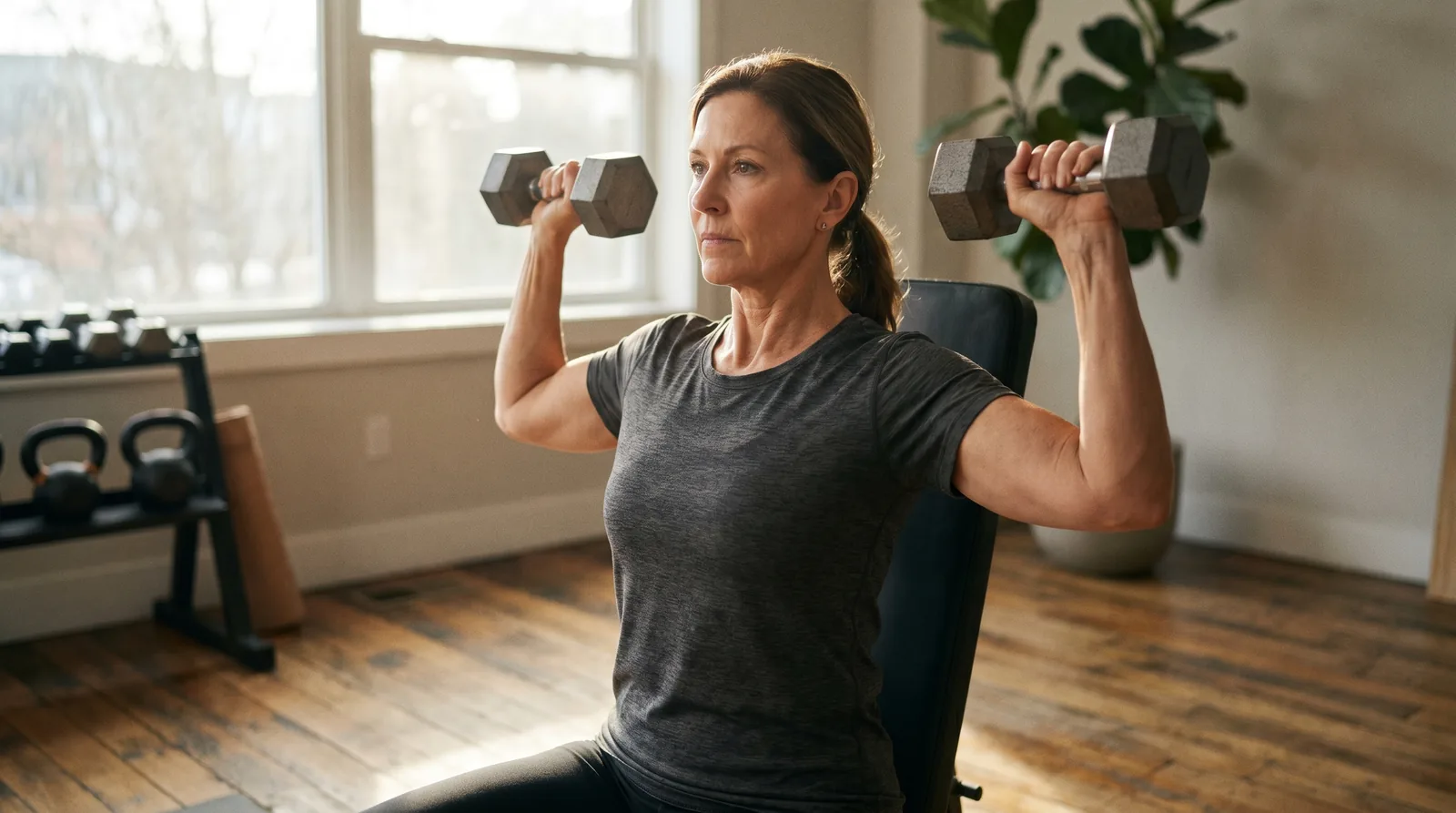
Aging is associated with anabolic resistance — a blunted rise in muscle protein synthesis after you eat protein, compared with a younger body (PMID:23558692). The same meal that maintained muscle at 30 does less at 52. The practical answer is not to give up; it is to eat more protein per meal and to keep lifting something heavy. Research on older adults suggests 1.0–1.2 g/kg daily to offset this drift (Clinical Nutrition, 2014, PMID:24814383), distributed across meals rather than loaded into one.
A lower-muscle body burns fewer calories at rest
Skeletal muscle is metabolically active tissue. As it declines, resting energy expenditure declines with it, which is part of why the same diet that held your weight steady now slowly adds to it. Protein does not magically reverse this, but it does two measurable things: it stimulates muscle protein synthesis to inhibit further loss, and its digestion carries a higher thermic cost than carbohydrate or fat (Journal of the American College of Nutrition, 2004, PMID:15466943). You spend more energy processing it.
Appetite and afternoon snacking get louder
Protein increases satiety and reduces subsequent energy intake more than carbohydrate or fat, through diet-induced thermogenesis and gut hormone responses (PMID:18469287). If your 4 p.m. crash sends you to crackers, the most reliable fix is front-loading protein at breakfast and lunch so hunger is quieter later. This is mechanical, not motivational — you are changing the input, not your discipline.
Digestion gets less forgiving
Many women find that powders which once sat fine now cause bloating. A large share of that comes from added sweeteners, gums, and the FODMAPs that ride along in some plant and whey-concentrate products. Whey concentrate carries more lactose than isolate, and several plant proteins are hard to purify and “often contain some FODMAPs,” per Monash University’s FODMAP team. If protein is supposed to make your day easier, it should not cost you an afternoon.
What Actually Works for Women in Menopause
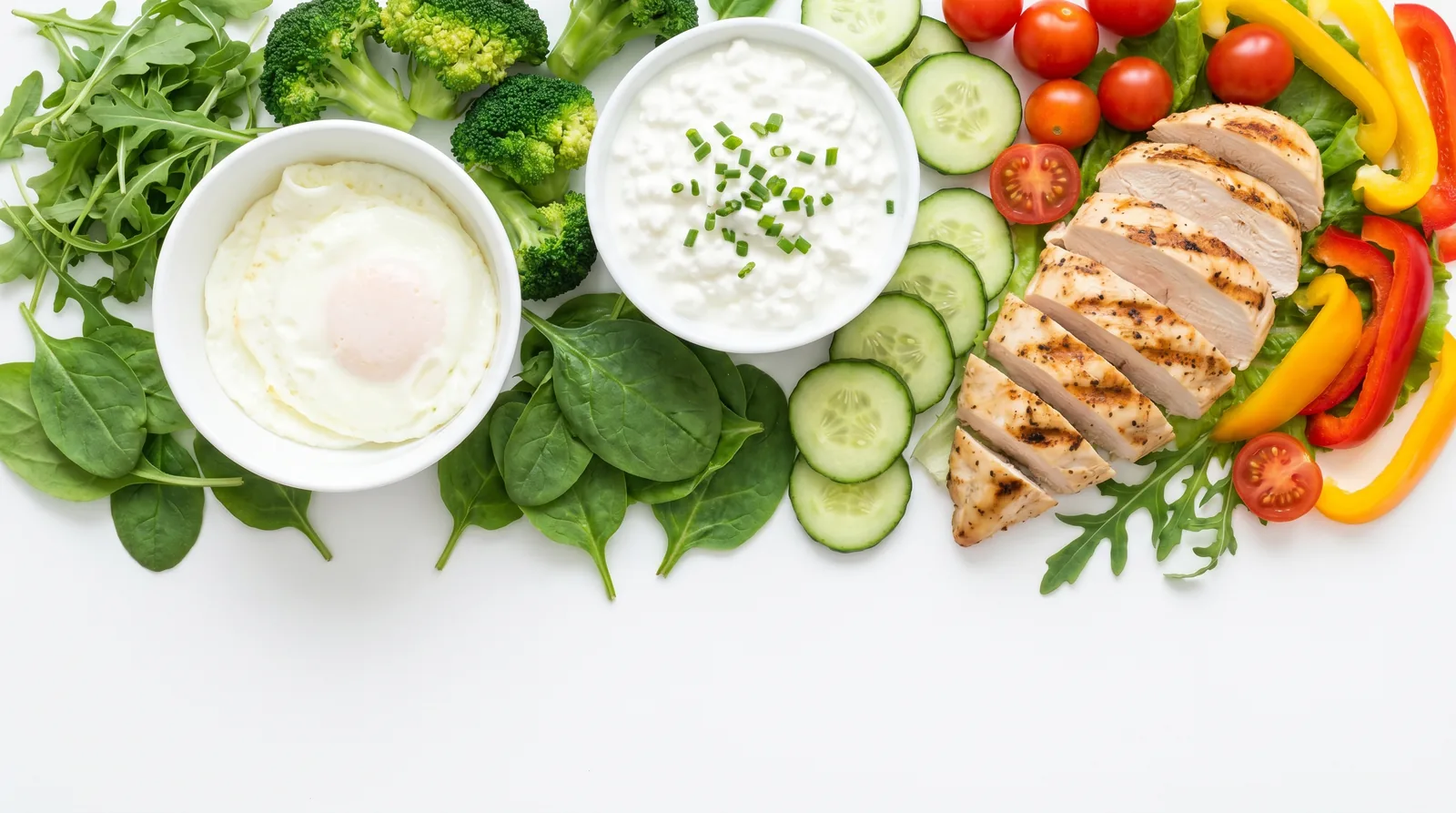
The advice that holds up is unglamorous. Hit a protein target you can actually sustain, spread it across meals, keep resistance training in the week, and choose a powder whose ingredient list does not work against you. A powder is a tool to close the gap between what you eat and what you need — whole foods like chicken breast, egg whites, and cottage cheese remain the foundation, and Harvard Health notes supplements help most when food alone falls short.
On protein source: animal proteins generally score higher on quality metrics like PDCAAS and DIAAS, and whey’s leucine content makes it a strong choice for stimulating muscle protein synthesis. That is the honest baseline. But plant options have closed more of the gap than the old reputation suggests. Potato protein isolate, in particular, has the data to back it: a 2020 trial found that 25 g of potato protein isolate taken twice daily stimulated muscle protein synthesis in young women (Nutrients, 2020, PMID:32349353), and DIAAS for potato protein isolate has been reported as high as 100% (Food Science & Nutrition, Herreman et al., 2020, PMID:33133540). It is also a low-FODMAP protein source per Monash University (2019), which matters for the digestion problem above. If you want the longer version of why source quality matters more after midlife, the protein after 40 guide covers it.
There is a quieter reason to favor plant protein at this stage. A 2024 analysis across three prospective cohorts found that people who ate the highest ratio of plant-to-animal protein had a 19% lower risk of cardiovascular disease (American Journal of Clinical Nutrition, 2024, PMID:39631999) — a risk that rises for women after menopause. You do not have to go all-plant to benefit from shifting the ratio.
On what to avoid: contamination is not a fringe worry. The Clean Label Project’s 2025 Protein Study 2.0 tested 160 products from 70 brands and found 47% exceeded at least one federal or state safety standard, with plant-based powders averaging five times more cadmium than whey-based ones, and chocolate flavors carrying 110 times more cadmium than vanilla. Consumer Reports’ 2025 testing of 23 products found more than two-thirds exceeded its safe daily lead limit, with plant-based products averaging nine times the lead of dairy-based powders. The takeaway is not “avoid plant protein” — it is “demand third-party testing.” A published Certificate of Analysis is the difference between a marketing claim and a verified one. This is also why fewer ingredients is genuinely safer: every added input is another thing to test, react to, or get wrong.
If bloating has been your sticking point, start with the common protein problems guide and a powder with no added sweeteners before you assume protein itself is the issue. It usually is not. For more on the ingredient itself, see what potato protein actually is.