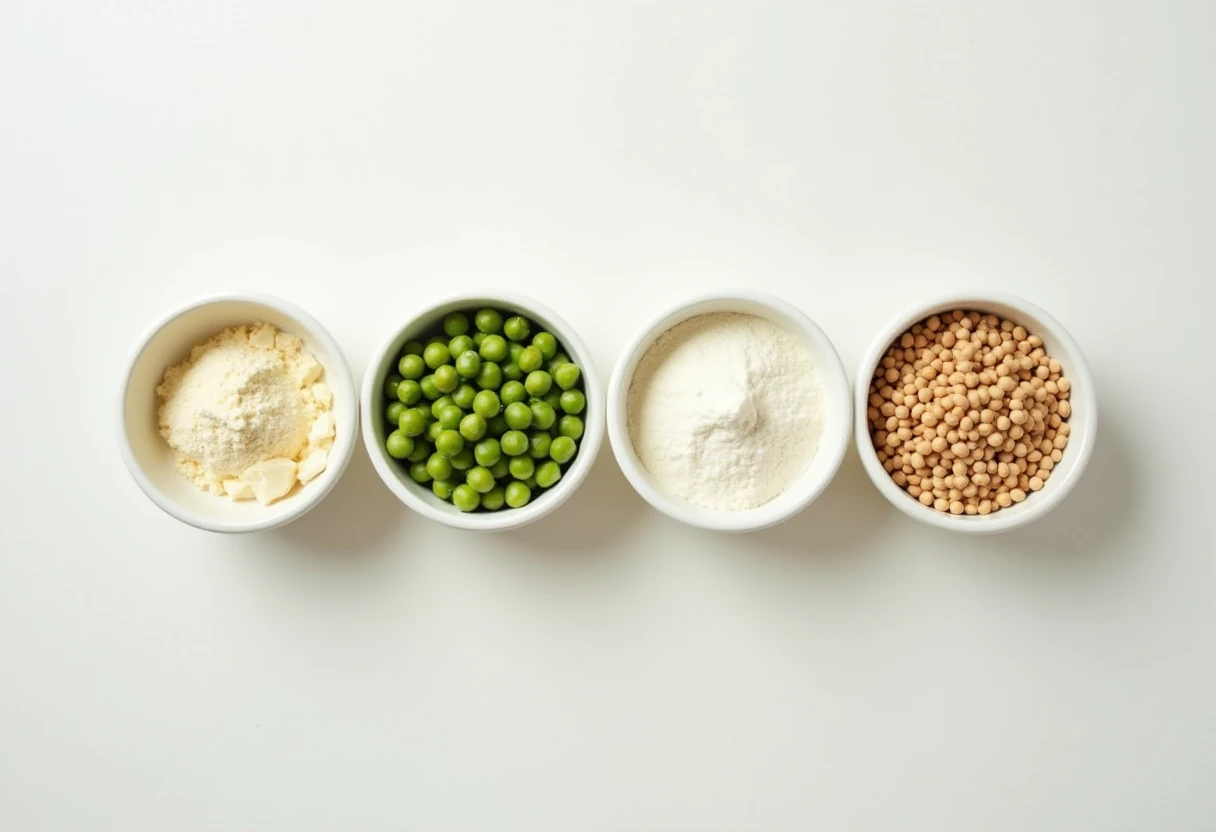
The phrase “protein powder unprocessed ingredients” usually means one thing in practice: a short list you can read without a chemistry degree. The shortest possible list is one item — the protein itself. Everything past that is a flavor, a sweetener, a thickener, or a filler, and each addition is something a sensitive gut, an allergic kid, or a label-reader has to evaluate. The 2025 Clean Label Project Protein Study 2.0 tested 160 products from 70 brands across 35,862 data points and found 47% exceeded at least one federal or state safety standard, which is the strongest argument there is for keeping the ingredient list — and the supply chain behind it — as short as you can verify.
A protein powder with minimal ingredients ideally lists one to three recognizable items: the protein source, and at most a no-artificial sweetener and a flavor. Avoid artificial sweeteners, sugar alcohols, vegetable gums, seed oils, and proprietary blends. Single-ingredient powders eliminate guesswork entirely. Because the Clean Label Project’s 2025 testing found 47% of 160 products exceeded a Prop 65 safety standard, ingredient simplicity should be paired with published third-party heavy-metal results before you buy.
We evaluated powders the way a careful shopper does — by reading the back panel first, the front second, and the certificate of analysis last.
Top Options by Category
Potato Protein Isolate
Single-ingredient, unflavored
There is no flavor system, no sweetener, no gum, and no proprietary blend to evaluate — which means there is nothing to cross-reference against an allergy list. Potato protein isolate runs 80–95% protein on a dry basis, and its DIAAS has been reported as high as 100% (Food Science & Nutrition, Herreman et al., 2020). A 2020 trial found 25 g of potato protein isolate taken twice daily stimulated muscle protein synthesis at rest and after exercise in young women (Nutrients, 2020, PMID:32349353), so the short list does not cost you quality. Potato protein is also classified as low-FODMAP (Monash University, 2019), which matters if gums and certain plant proteins leave you bloated.
Pros:
- Single ingredient — no sweetener, gum, or flavor to react to
- DIAAS reported as high as 100%; muscle-synthesis data in humans
- Free of dairy, egg, soy, wheat, and nuts
- Low-FODMAP
Cons:
- Unflavored and earthy — you flavor it yourself
- Plant proteins, in general, score below whey on some quality metrics
Single-Ingredient Pea Protein
Single-ingredient, unflavored
A single-ingredient pea protein is exactly that: yellow pea protein, nothing else. Pea is a credible choice — lysine is its most abundant amino acid at roughly 7.9 g per 100 g of protein — but its limiting amino acids are methionine plus cysteine, averaging only about 2.6 g per 100 g (a chemical score near 46%) across studied genotypes (Molecules, 2024, PMID 39519674). One honest caveat applies to all plant powders: the Clean Label Project found plant-based powders carried about five times more cadmium than whey-based ones, so the published testing matters more here, not less.
Pros:
- True single ingredient; soy- and dairy-free
- High lysine; established muscle-synthesis track record for pea
Cons:
- Methionine + cysteine limiting; chemical score near 46%
- Plant powders averaged ~5x the cadmium of whey in 2025 testing
Organic Plant-Based Blend (Lightly Sweetened)
Multi-ingredient, flavored
A lightly sweetened organic plant-based blend is not a single-ingredient powder — it combines pea and other plant proteins and adds flavor, typically delivering somewhere around 15–21 g of protein per serving. It lands here as the category for someone who wants a ready-to-drink taste profile while still avoiding the common allergens. One organic-specific note from the 2025 testing: certified organic powders averaged three times the lead of non-organic products, which is a reminder that “organic” describes farming, not heavy-metal content.
Pros:
- Designed to avoid the major allergens; ready-to-drink flavor profile
- Wide availability and an easier first impression than unflavored powders
Cons:
- Multi-ingredient blend, not single-source — more inputs to evaluate
- Organic certification does not guarantee lower lead
Organic Plant-Based Blend (Stevia-Free)
Multi-ingredient, flavored without stevia
Some people simply do not like stevia’s aftertaste, and some react to it. A stevia-free organic plant-based blend uses flavor without the sweetener many tubs default to, generally landing in the same low-teens-to-low-twenties grams-of-protein range as other blends while keeping added sugar at or near zero. Stevia alternatives in this category include monk fruit and coconut sugar. It is a blend rather than a single ingredient, so read the panel if you have a specific seed or legume allergy — but for the stevia-sensitive shopper it solves a real problem.
Pros:
- Flavored without stevia; little to no added sugar
- Organic, plant-based, soy- and dairy-free
Cons:
- Per-serving protein often lower than concentrated single-ingredient isolates
- Multi-ingredient blend
Pick Comparison
The clearest way to see the trade-offs is side by side. Reliable PDCAAS figures are not established for every blend below, so a column reads as an em-dash where no verified value exists.
| Product | Ingredients | Protein quality | Allergen notes | Sweetener |
|---|---|---|---|---|
| Potato Protein Isolate | 1 (potato protein) | DIAAS reported as high as 100% | No dairy, egg, soy, wheat, nuts; low-FODMAP | None |
| Single-ingredient pea protein | 1 (pea protein) | Limiting AA: methionine + cysteine | Soy- and dairy-free | None |
| Organic plant-based blend (lightly sweetened) | Blend + flavor | — | Designed to avoid major allergens; read panel | Varies; stevia-free versions exist |
| Organic plant-based blend (stevia-free) | Blend + flavor | — | Soy- and dairy-free | No stevia; little to no added sugar |
What to Look For on Your Own
Most tubs are sold on the front of the package and judged on the back. Train yourself to flip it first. Here is the checklist we apply, in order.
Read the ingredient list before anything else
A defensible list reads like food: a protein, maybe a named flavor, maybe a named sweetener. If you need to squint past a paragraph of gums, oils, and “natural flavors” to find the protein, that is a signal. Never squint to read your ingredient label. The fewer the inputs, the fewer the ways a product can go wrong — for your gut, your allergies, or your supply chain. For a fuller walkthrough of how the major protein types compare, our best protein powder guide lays out the categories side by side.
Treat heavy-metal testing as non-negotiable
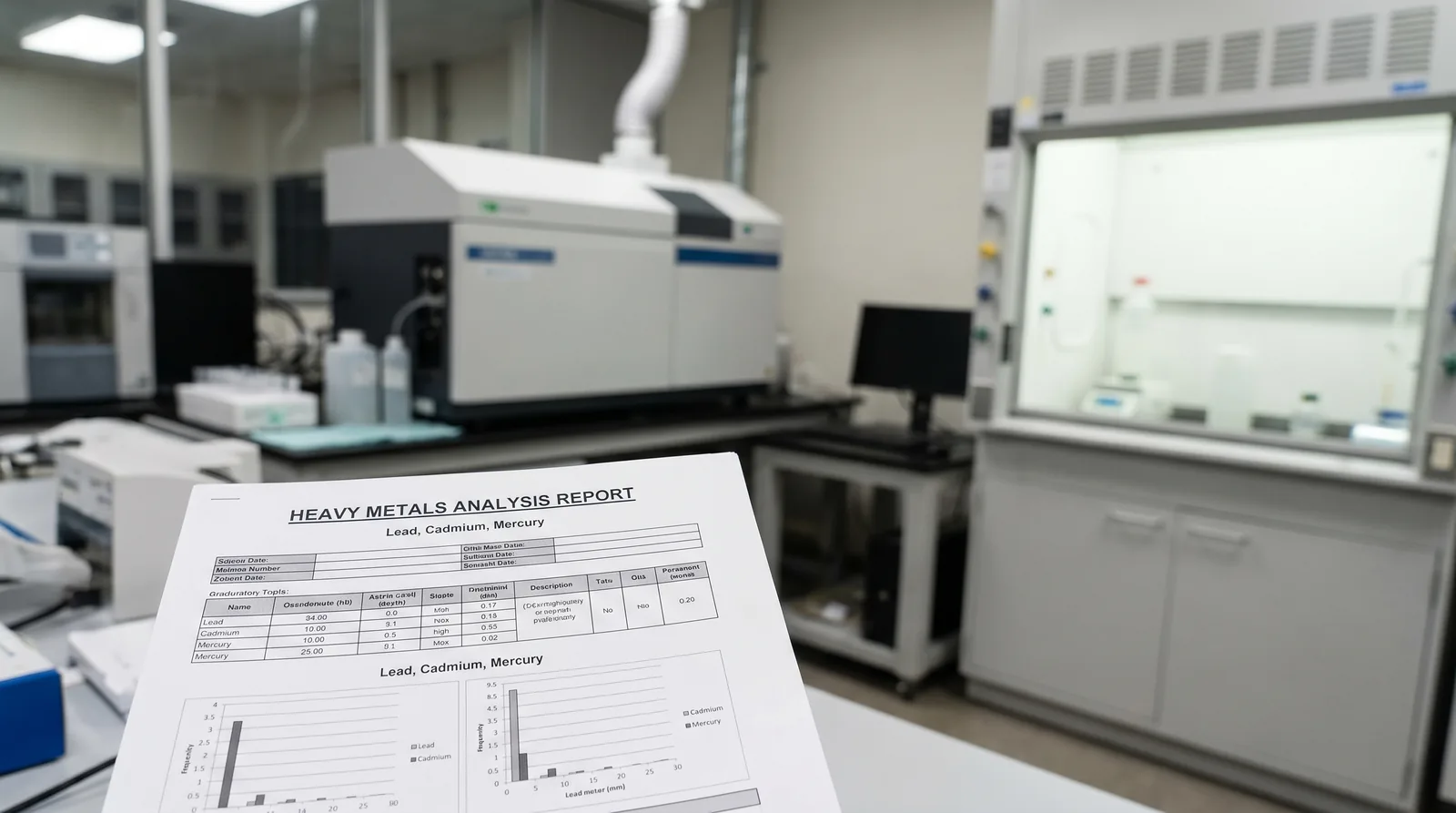
This is where simplicity alone is not enough. The Clean Label Project’s 2025 Protein Study 2.0 tested by independent laboratory Ellipse Analytics using ICP-MS and found 21% of samples exceeded twice the California Prop 65 levels, with chocolate powders containing 110 times more cadmium than vanilla and 65% of chocolate products exceeding Prop 65. Consumer Reports’ October 2025 testing of 23 products found more than two-thirds carried more lead per serving than its 0.5-microgram daily limit, with plant-based products averaging nine times the lead of dairy-based ones. The takeaway is not “avoid plant protein” — it is “demand published results.” A brand that posts a current certificate of analysis has given you the only honest answer. If you want a method for verifying this yourself, see how to verify a powder has no heavy metals.
Decide your sweetener line in advance
There is no single right answer, only your answer. Some people avoid artificial sweeteners and sugar alcohols outright; some react specifically to stevia. Named sweeteners — stevia, monk fruit, coconut sugar — are easier to evaluate than a blanket “natural flavors.” Unflavored single-ingredient powders sidestep the question entirely, at the cost of having to flavor your shake yourself.
Match the allergen profile to your household
For the allergy parent, single-ingredient is the safest default, because there is nothing hidden to cross-react with. Cross-reactivity in plant proteins can involve PR-10 proteins, profilins, and lipid transfer proteins, so a child reacting to one legume may react to another. Potato protein is described as a high-quality, allergy-free protein source, which is why it appears so often in the allergen conversation — our allergen-free protein guide goes deeper on building a safe rotation. If you are troubleshooting symptoms rather than allergies, common protein problems covers bloating, clumping, and aftertaste.
Don’t assume fewer ingredients means lower quality
It is a common worry and the data does not support it. Whey protein isolate runs 90–95% protein with under 1% lactose, and potato protein isolate runs 80–95% protein — both are concentrated specifically because processing strips away the non-protein material, not because anything was added. Plant proteins do, on average, score below animal proteins on PDCAAS and DIAAS, but potato protein’s PDCAAS is among the highest of the vegetable sources, and its anabolic data in humans is real. Short and high-quality are not opposites.