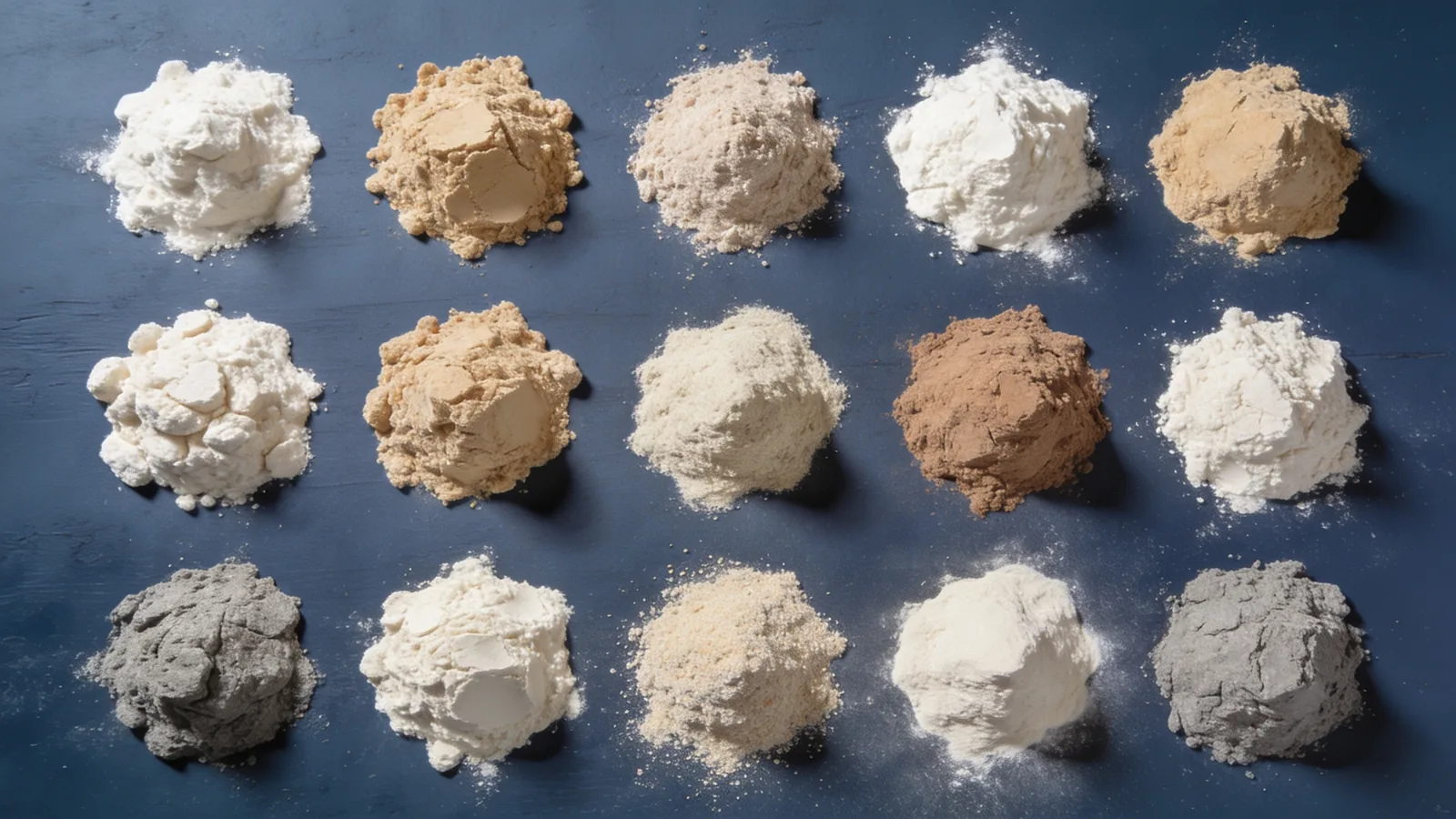
No protein powder can honestly claim zero heavy metals, because arsenic, cadmium, lead, and mercury exist at trace levels in soil and water everywhere. The question that matters for protein powder heavy metals is not “which has none” but “which one publishes its per-batch testing so you can see the numbers.” We evaluated powders the way a label-reader would: by what the manufacturer is willing to show you.
No protein powder is entirely free of heavy metals, but the levels in most products fall within safety thresholds. In the Clean Label Project’s 2025 Protein Study 2.0, 47% of 160 tested products exceeded at least one federal or state safety standard, with plant-based powders averaging five times more cadmium than whey and chocolate flavors carrying 110 times more cadmium than vanilla. The reliable way to verify a powder is to read its Certificate of Analysis showing ICP-MS results for arsenic, cadmium, lead, and mercury — choose unflavored, low-ingredient products that publish per-batch testing.
This is a guide to verification, not alarm. A 2020 human health risk assessment of protein-powder consumers concluded that exposure to arsenic, cadmium, mercury, and lead did not pose an increased health risk (Hazard Index below 1), with modeled blood lead levels staying below the CDC guidance threshold of 5 micrograms per deciliter in every scenario (Bandara et al., Toxicology Reports, 2020, PMID 33005567). The risk is real but manageable — and the tool for managing it is documentation.
What the 2025 Testing Data Actually Found
Three large 2025 datasets reshaped this conversation. The Clean Label Project’s Protein Study 2.0 tested 160 protein powder products from 70 brands across 35,862 data points and found that 47% exceeded at least one federal or state safety standard (California Proposition 65), while 21% of samples exceeded twice the Prop 65 levels (Clean Label Project, Protein Study 2.0, 2025). The same study reported that certified organic protein powders averaged three times the lead of non-organic products, and chocolate-flavored powders contained 110 times more cadmium than vanilla varieties — with 65% of chocolate protein powders exceeding Prop 65 cadmium levels.
The heavy-metal analysis, performed by independent laboratory Ellipse Analytics using Inductively Coupled Plasma-Mass Spectrometry (ICP-MS), found plant-based powders contained five times more cadmium than whey-based varieties (Clean Label Project, Protein Study 2.0, 2025). Consumer Reports, testing 23 protein powders and ready-to-drink shakes, reported that more than two-thirds contained more lead per serving than its 0.5-microgram safe daily limit, with lead in plant-based products averaging nine times higher than dairy-based powders (Consumer Reports, 2025).
For balance: a 2025 peer-reviewed analysis of 22 protein powders on the Hungarian market — whey, vegan, and beef-based — used laser-induced breakdown spectroscopy and ICP-MS to test 16 elements and found that neither method detected heavy metal content above regulatory limits in any sample. The authors still recommended mandatory heavy-metal quality-control testing, because the supplement industry relies on voluntary compliance (Journal of Nutritional Science, 2025, PMID 40703701). The takeaway is consistent across all three: contamination is variable, category-dependent, and only knowable per product through testing.
Options by Category
No single powder “wins” heavy-metal testing for everyone, because the right choice depends on your allergen profile and what documentation you can get. Below are the categories that survive the criteria above.
Single-Ingredient Potato Protein Isolate
Single-ingredient, unflavored plant option
One ingredient: potato protein isolate. That is the entire supply chain you have to scrutinize. It is unflavored, so there is no cocoa adding cadmium and no colorant adding inputs. As a plant protein it deserves the same scrutiny any plant powder does — the answer to that scrutiny is a published per-batch Certificate of Analysis listing ICP-MS results. On quality, potato protein isolate scores well: a Digestible Indispensable Amino Acid Score (DIAAS) as high as 100% has been reported (Food Science & Nutrition, Herreman et al., 2020, PMID 33133540), and 25 g doses stimulate muscle protein synthesis in young women (Nutrients, 2020, PMID 32349353). If you want the background, see what potato protein actually is.
Pros:
- One ingredient — single supply chain to audit
- Unflavored, no cocoa, no added color
- Free of dairy, egg, soy, nuts, and gluten
- High protein quality (DIAAS reported as high as 100%)
Cons:
- As a plant protein, warrants the same metal scrutiny as any — verify the COA, do not assume
- Unflavored means you mix your own taste
- Lower leucine and glutamine than whey
Unflavored Whey Isolate
Lowest category baseline for cadmium
If your only concern is the statistical baseline, dairy wins. Whey-based powders averaged five times less cadmium than plant-based ones and nine times less lead in the 2025 datasets (Clean Label Project, 2025; Consumer Reports, 2025). Whey protein isolate is also 90–95% protein with less than 1% lactose, and its rapid digestion and leucine content stimulate muscle protein synthesis effectively (American Journal of Clinical Nutrition, 2011, PMID 21367943). The catch is allergens: whey is a dairy product, so it is off the table for the dairy-free household. Single-ingredient versions with third-party testing are available.
Pros:
- Lowest cadmium and lead category averages
- High leucine, fast absorption
- Single-ingredient versions exist with testing
Cons:
- Dairy allergen — not for milk-free diets
- Contains lactose, a FODMAP that can trigger IBS
- Choose unflavored; chocolate whey still adds cadmium from cocoa
Single-Ingredient Pea Protein Isolate
Single-ingredient legume option
Pea protein earns a place because of its cardiovascular profile — a higher plant-to-animal protein ratio is associated with a 19% lower risk of cardiovascular disease (American Journal of Clinical Nutrition, Glenn et al., 2024, PMID 39631999). But it sits squarely in the plant category that tested higher for cadmium and lead, so it belongs here only when ICP-MS results are published. Choose the unflavored single-ingredient version — just yellow pea protein, nothing else — and read the document before you commit. Pea’s limiting amino acids are methionine plus cysteine, which average only about 2.6 g per 100 g of protein (Foods, 2024).
Pros:
- Plant-to-animal ratio linked to lower CVD risk
- Single-ingredient, allergen-friendly versions available
- Commonly third-party tested
Cons:
- Plant category averaged higher cadmium and lead in 2025 testing
- Limiting in methionine and cysteine
- Only worth it if the COA is published — verify, do not assume
Organic Plant-Based Blend
Multi-ingredient, allergen-friendly
Multi-ingredient organic plant blends are a common starting point for allergy-conscious buyers, since they typically avoid dairy, egg, soy, and gluten. We include the category with one honest caveat from the data: certified organic protein powders averaged three times the lead of non-organic products in the 2025 Clean Label Project testing. “Organic” describes farming inputs, not finished-product metal content — so even here, the COA is the deciding document, not the label claim.
Pros:
- Multi-allergen-friendly formulation
- Stevia-free and gum-free options exist if you read the label
Cons:
- Organic certification correlated with higher lead, not lower
- Multi-ingredient blend — more inputs to vet
- Avoid chocolate variants for cadmium reasons
What to Look For on Your Own
Once you stop trusting front-of-package language, the decision gets simpler. A few patterns hold across every dataset.
Demand the actual numbers. “Third-party tested” with no document is a claim, not evidence. The 2025 Hungarian analysis testing 16 elements found no exceedances yet still called for mandatory quality control, precisely because the industry runs on voluntary compliance (Journal of Nutritional Science, 2025, PMID 40703701). A published Certificate of Analysis with ICP-MS results for arsenic, cadmium, lead, and mercury — dated, batched — is what separates a verifiable product from a hopeful one.
Skip chocolate. The single most reliable way to lower your cadmium exposure is to avoid cocoa-based flavors. Chocolate powders carried 110 times more cadmium than vanilla, and 65% exceeded Prop 65 cadmium limits (Clean Label Project, 2025). Cocoa concentrates cadmium; this is a flavor problem, not a brand problem.
Treat “organic” as a farming term, not a safety term. Organic powders averaged three times the lead of non-organic ones in 2025 testing. It is a counterintuitive finding worth internalizing: certification governs pesticides and inputs, not soil metal uptake.
Count the ingredients. Every added input — flavor, gum, sweetener, color, a second or third protein source — is another supply chain that can carry trace metals. This is the structural case for single-ingredient powders. If you want a wider view of formulation red flags, our guide to which protein powders to stay away from covers the rest, and the best protein powder guide compares categories head to head.
Keep the dose in perspective. The 2020 risk assessment found Hazard Index below 1 and modeled blood lead below the CDC’s 5 micrograms-per-deciliter threshold across scenarios (Toxicology Reports, 2020, PMID 33005567). Verification is about reducing avoidable exposure over years of daily use — not about a single dangerous scoop.
| Category | Relative cadmium | Relative lead | Allergen status | Verify via |
|---|---|---|---|---|
| Potato protein isolate | Plant category — verify per batch | Plant category — verify per batch | Dairy/egg/soy/nut/gluten-free | Look for published per-batch COA |
| Whey protein isolate | ~5× lower than plant average | ~9× lower than plant average | Contains dairy | Third-party COA |
| Pea protein isolate | Higher plant-category average | Higher plant-category average | Dairy/egg/soy-free (legume) | Published COA required |
| Organic blends | — | ~3× higher than non-organic | Varies by blend | Published COA required |
| Chocolate-flavored (any base) | ~110× higher than vanilla | — | Varies | Avoid; choose unflavored |
Figures reflect category averages from the Clean Label Project (2025) and Consumer Reports (2025). They describe baselines, not any individual product — which is why the right-hand column always comes back to the document.