The healthiest premade protein shake is the one with the shortest ingredient list, a complete amino acid profile, and no added sugar — and almost no shelf-stable, bottled RTD shake meets all three at once. Shelf stability requires gums, emulsifiers, and a longer ingredient list than a powder needs, which is the central trade-off you are buying into the moment you reach for a bottle.
No bottled RTD shake is single-ingredient, because shelf stability requires stabilizers, emulsifiers, and added sweeteners. The healthiest premade option is one you make ahead yourself from a single-ingredient protein isolate, then refrigerate. Among true grab-and-go bottles, the best choices use a complete protein, contain no added sugar, and are third-party tested for heavy metals — a real concern given the Clean Label Project’s 2025 finding that 65% of chocolate protein powders exceeded California Prop 65 levels.
Evaluate a bottled RTD shake the way a label-reader would: ingredient by ingredient, not by the marketing on the front. Here is how to judge the main categories, and how to vet any shake on a shelf yourself.
Top Options by Category
One honest finding up front: the single healthiest “premade” shake is one you premake yourself the night before. A bottle bought for convenience will always carry the additives that convenience requires. With that stated plainly, here are the main categories — including real bottled options for the days you need grab-and-go.
Single-ingredient potato protein isolate, blended and refrigerated
Fewest additives — make-ahead plant option
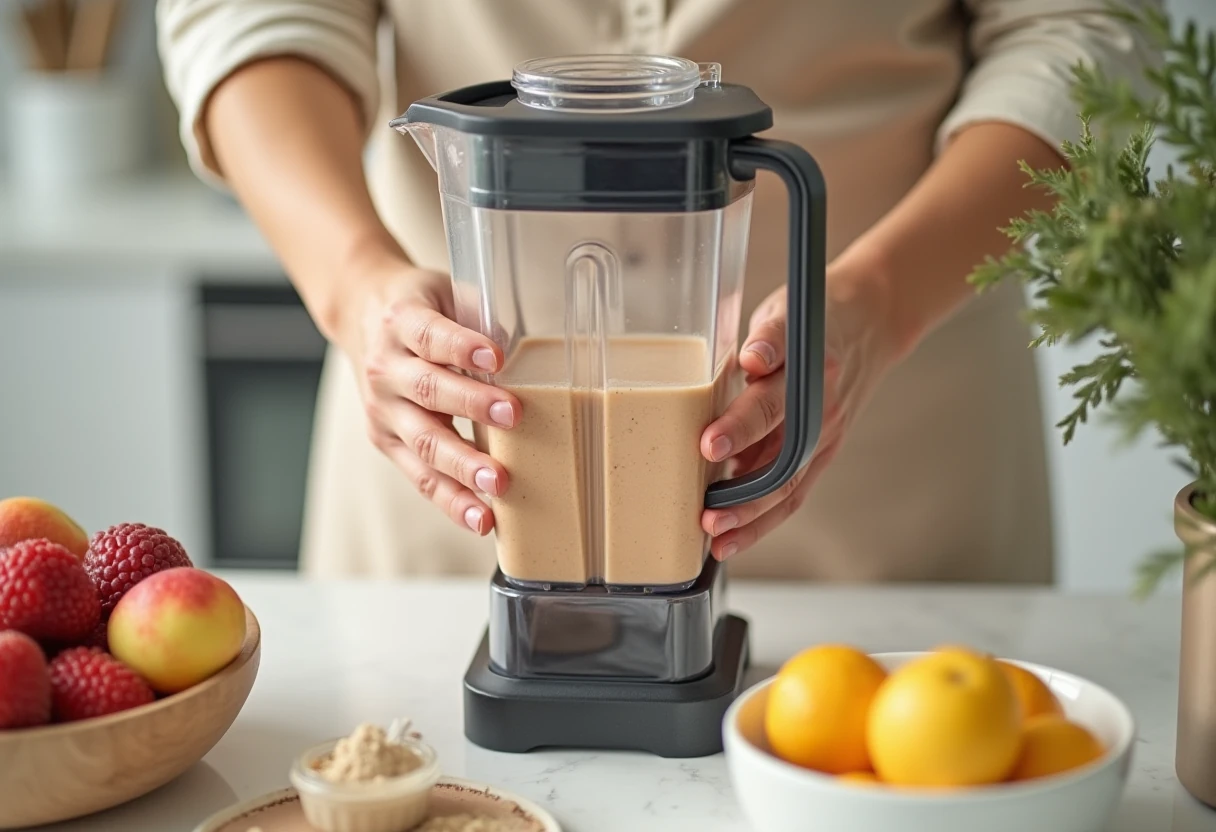
If “premade” can mean “made ahead,” this wins on every criterion. One ingredient — potato protein isolate, typically 80–95% protein on a dry basis — blended with water or milk and kept cold for a day or two. No gums, no emulsifiers, no shelf-stabilizing chemistry, because you skip the year-long shelf life entirely. The protein is high quality: a 2020 trial found 25g of potato protein isolate stimulated muscle protein synthesis at rest and after resistance exercise in young women (Nutrients, PMID:32349353), and its PDCAAS lands at 0.92–1.00, on par with several animal proteins. It is also a low-FODMAP, allergen-friendly source — useful background if you want the longer story in our guide to what potato protein is.
Pros:
- One ingredient — never squint to read the label
- No added sugar or sweetener unless you add it
- Complete enough to drive muscle protein synthesis (PMID:32349353)
- Low-FODMAP and free of dairy, soy, egg, and nuts
Cons:
- Not actually grab-and-go — requires 60 seconds and a blender
- Needs refrigeration; not shelf-stable
- Plant proteins raise blood leucine more slowly than whey
Plant-based ready-to-drink (RTD) shake
Bottled, allergen-conscious
For an actual bottle you can keep in a bag, a plant-based ready-to-drink (RTD) shake is the strongest plant-based option among the bottles. The better ones are formulated to be a complete protein providing all nine essential amino acids, and are built to avoid the most common allergens — relevant if a dairy or soy reaction is what pushed you away from whey in the first place. A plant-based RTD still contains the stabilizers and sweeteners every RTD needs, so it is not single-ingredient, but the front-of-label promises hold up better than most when you flip the bottle over.
Pros:
- Complete plant protein, all nine essential amino acids
- Free of the major allergens, including dairy and soy
- No added sugar in the unsweetened-style lines
Cons:
- Multi-ingredient list with gums and emulsifiers
- Plant blends raise blood amino acids more slowly than whey
Whey or milk-protein ready-to-drink (RTD) shake
Highest protein quality (dairy)
If you tolerate dairy, milk- and whey-based RTDs deliver the best-scoring protein on the shelf. Whey, milk, and casein all score 1.00 on PDCAAS, and whey’s rapid digestion and high leucine content stimulate muscle protein synthesis more effectively than casein or soy (Journal of Applied Physiology, PMID:19589961). Whey isolate is roughly 90–95% protein with less than 1% lactose, so isolate-based bottles sit easier than concentrate-based ones. The catch is the rest of the label: many bottles lean on sucralose and acesulfame potassium and carry a long stabilizer list.
Pros:
- Top-tier protein quality — PDCAAS 1.00
- Fast-digesting leucine for muscle protein synthesis
- Widely available and inexpensive per serving
Cons:
- Contains dairy — not for the lactose-sensitive or dairy-allergic
- Often sweetened with sucralose and acesulfame potassium
- Long additive list for shelf stability
Organic plant-based RTD shake
Plant blend with an organic certification
An organic plant-based RTD shake is a plant blend that also carries an organic certification — a reasonable bottled choice for shoppers who want both. One caveat from the heavy-metal data is worth flagging: in the Clean Label Project’s 2025 testing, certified organic protein powders averaged three times the lead of non-organic products, so “organic” is not a substitute for an actual certificate of analysis. Choose vanilla over chocolate where you can.
Pros:
- Organic, plant-based, broadly allergen-conscious
- Complete amino acid coverage from a blend
Cons:
- Organic certification does not guarantee lower heavy metals
- Multi-ingredient formula with gums and sweeteners
How the categories compare
| Category | Format | Protein source | Complete protein? | PDCAAS | Major allergens |
|---|---|---|---|---|---|
| Potato protein isolate (make-ahead) | Powder you blend | Potato | Yes | 0.92–1.00 | None of the common allergens |
| Plant-based RTD | RTD bottle | Pea-based blend | Yes (all 9 EAAs) | — | Formulated free of major allergens |
| Whey / milk RTD | RTD bottle | Milk / whey | Yes | 1.00 | Milk (dairy) |
| Organic plant-based RTD | RTD bottle | Plant blend | Yes | — | Varies by line |
Reliable published PDCAAS figures for the specific multi-source blends in plant-based and organic plant-based RTDs are not established, so those cells are left without a number rather than filled with a guess.
What to Look For on Your Own
You do not need a buying list to vet a shake — you need to read the back of the bottle in a specific order. Here is an order that works.
Start with the protein source, not the gram count. A bottle advertising 30 grams of protein tells you nothing about quality. Whey, milk, casein, egg, and soy isolate score 1.00 on PDCAAS, while wheat gluten scores around 0.25. Plant blends raise blood amino acids more slowly than whey: in one trial, a 20g plant blend raised myofibrillar muscle protein synthesis to 0.041%/h versus 0.046%/h for whey. That gap is real but modest, and a complete plant protein still does the job. If protein-quality scoring is new to you, our pillar overview in the best protein powder guide walks through how the numbers are calculated.
Count the ingredients. A liquid that survives a warehouse for a year needs carrageenan or gellan gum, an emulsifier, a preservative system, and usually a sweetener. None of these are harmful at the doses used, but each is a reason a bottle can never be single-ingredient. The longer the list, the further you are from drinking protein and the closer you are to drinking a stabilized food product. If a sensitive gut is the issue, a shorter list and a low-FODMAP source matter more than any front-label claim — see our notes on protein powder for IBS, SIBO, and Crohn’s.
Find the added sugar and the sweetener. No added sugar is the target. If a bottle is sweetened, decide whether you want sucralose and acesulfame potassium or stevia and monk fruit — that is a personal preference, not a health ranking, but you should know which one you are drinking.
Ask whether it is tested. Heavy metals are the part of the label you cannot see. The Clean Label Project’s 2025 Protein Study 2.0 found chocolate-flavored powders carried 110 times more cadmium than vanilla, and 65% of chocolate products exceeded California Prop 65 levels. A product that publishes a certificate of analysis is telling you something a product that does not cannot.
Then weigh convenience honestly. A bottle you actually drink beats a homemade shake you skip. If a tested, complete, no-added-sugar RTD is what keeps your protein intake on track, that is a defensible choice. Just do not confuse it with the fewest-additive option.