Healthy shakes with protein powder come down to five checks: your goal, the protein source, the ingredient count, the additives, and whether one serving moves you toward your daily protein target. You can run all five in about five minutes, and you do not need to read thirty labels to do it.
To choose a healthy protein shake, pick a powder whose protein source scores high on PDCAAS or DIAAS, has eight or fewer ingredients, and contains no fillers or artificial sweeteners you do not want. Match one serving to roughly a quarter to a third of your daily protein target — most people land near 20–30g per shake. Single-ingredient powders make every one of these checks faster because there is nothing to decode.
Choose the right protein shake without reading thirty labels. What you need: A nutrition label · A daily protein target · Five minutes · Time: 5 min
How to Choose a Healthy Protein Shake in Five Steps
Define your goal first
Decide which of four goals you are buying for: muscle, weight loss, allergen-free, or convenience. The goal changes which numbers matter, so settle it before you read a single label.
For muscle, leucine content and protein quality lead. For weight loss, protein per calorie matters most — higher-protein meals increase satiety and thermogenesis more than standard-protein meals (Journal of the American College of Nutrition, 2004, PMID:15466943). For allergen-free, the ingredient list is the whole decision. For convenience, you want something that mixes fast and tastes like nothing in particular. If your goal is weight management specifically, our protein for weight loss guide covers the per-calorie math in more detail.
Evaluate the protein source by PDCAAS or DIAAS
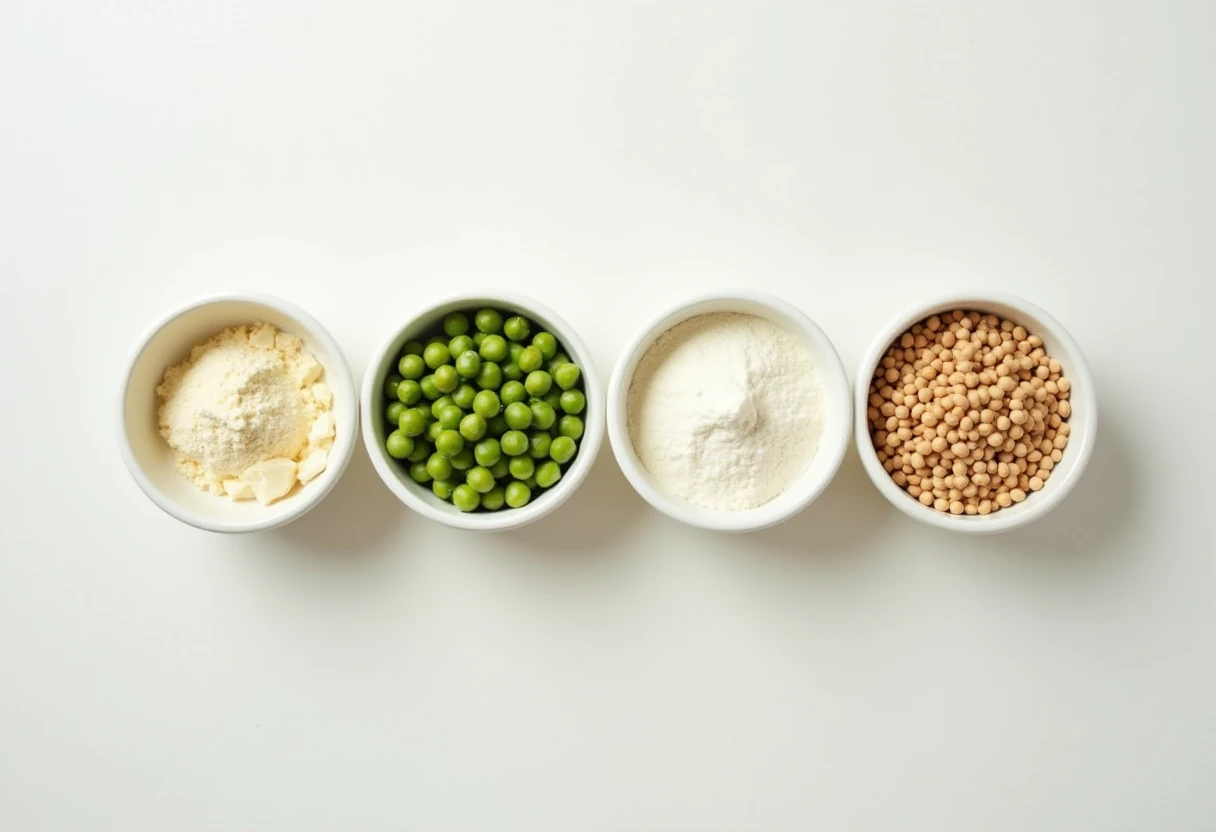
Look up the protein quality score before you look at anything else. PDCAAS runs from 0 to 1.00, and DIAAS is its successor — both measure how much usable amino acid you actually absorb. Egg protein scores a PDCAAS of 1.00; wheat gluten scores around 0.25 (FAO/WHO, 1991).
Animal proteins generally score higher than plant proteins, and that gap is real — it is not marketing. The exception worth knowing: potato protein isolate. Its DIAAS has been reported as high as 100% (Food Science & Nutrition, Herreman et al., 2020, PMID:33133540), and a 25g dose stimulated muscle protein synthesis at rest and after exercise in a controlled trial (Nutrients, 2020, PMID:32349353). For a fuller breakdown of how potato protein compares to whey and pea, see what is potato protein.
Tip: A high PDCAAS does not guarantee identical results — soy and whey can share a score yet stimulate muscle protein synthesis differently. Use the score to screen out the weak options, not to settle ties.
Count the ingredients
Read the ingredient list and count the items. More than eight is a signal — not an automatic disqualification, but a reason to ask what each addition is doing. Gums, oils, flavors, sweeteners, and “proprietary blends” stack up quickly, and each one is something an allergy-prone or autoimmune-aware reader has to vet.
At the far end, single-ingredient powders exist precisely so there is nothing to decode. You should never squint to read your ingredient label. A single-ingredient protein is just the protein and nothing else; potato protein isolate is another route to the same idea.
Check for fillers, additives, and contaminants
Scan for artificial sweeteners, fillers, and a third-party testing certificate. Sweetener tolerance is personal — some readers avoid stevia, in which case stevia-free options exist, such as an organic plant-based blend (lightly sweetened, 20g protein per serving) or another organic plant-based blend (stevia-free, 15g protein, 0g sugar). Monk fruit and coconut sugar are common alternatives.
Contaminant testing deserves more attention than flavor. A 2025 Clean Label Project report (Protein Study 2.0) tested 160 products across 70 brands and found 47% exceeded at least one federal or state safety standard, with plant-based powders averaging five times more cadmium than whey. A separate 2025 Consumer Reports analysis of 23 products found more than two-thirds exceeded its safe daily lead limit of 0.5 micrograms, with plant-based products averaging nine times the lead of dairy-based ones. The takeaway is not “avoid plant protein” — it is “buy from brands that publish results.”
Pitfall: Chocolate is the riskiest flavor for heavy metals: the same Clean Label Project work found chocolate powders averaged 110 times more cadmium than vanilla, with 65% of chocolate products exceeding California Prop 65 levels. If you drink one shake a day, the flavor adds up.
Match the serving to your daily target
Divide your daily protein target across your meals, then check that one scoop fills the gap a shake is meant to cover. Most people aim for 20–30g per shake, which is roughly a quarter to a third of a typical daily target. A powder that delivers 15g per serving is not wrong — it just means you may need a scoop and a half, which changes the cost and calorie math.
This is where label-reading turns concrete. A scoop listed as “30g” is the powder weight, not the protein weight. Find the protein grams on the nutrition panel and compare that to your gap. For a wider comparison of powders by protein-per-serving and price, our best protein powder guide lays out the options side by side.
Tip: Prioritize quality first, flavor second. A powder you trust on sourcing and ingredients but find slightly plain is a better daily habit than a delicious one you stop trusting. The best protein shake is the one that disappears into your food — it adds protein and gets out of the way.
Checklist
- Goal defined: muscle, weight loss, allergen-free, or convenience.
- Protein source scores high on PDCAAS or DIAAS.
- Eight ingredients or fewer.
- No fillers or sweeteners you want to avoid.
- Third-party testing published, not just claimed.
- One serving covers a meaningful share of your daily target.
A Simple Healthy Protein Shake Recipe
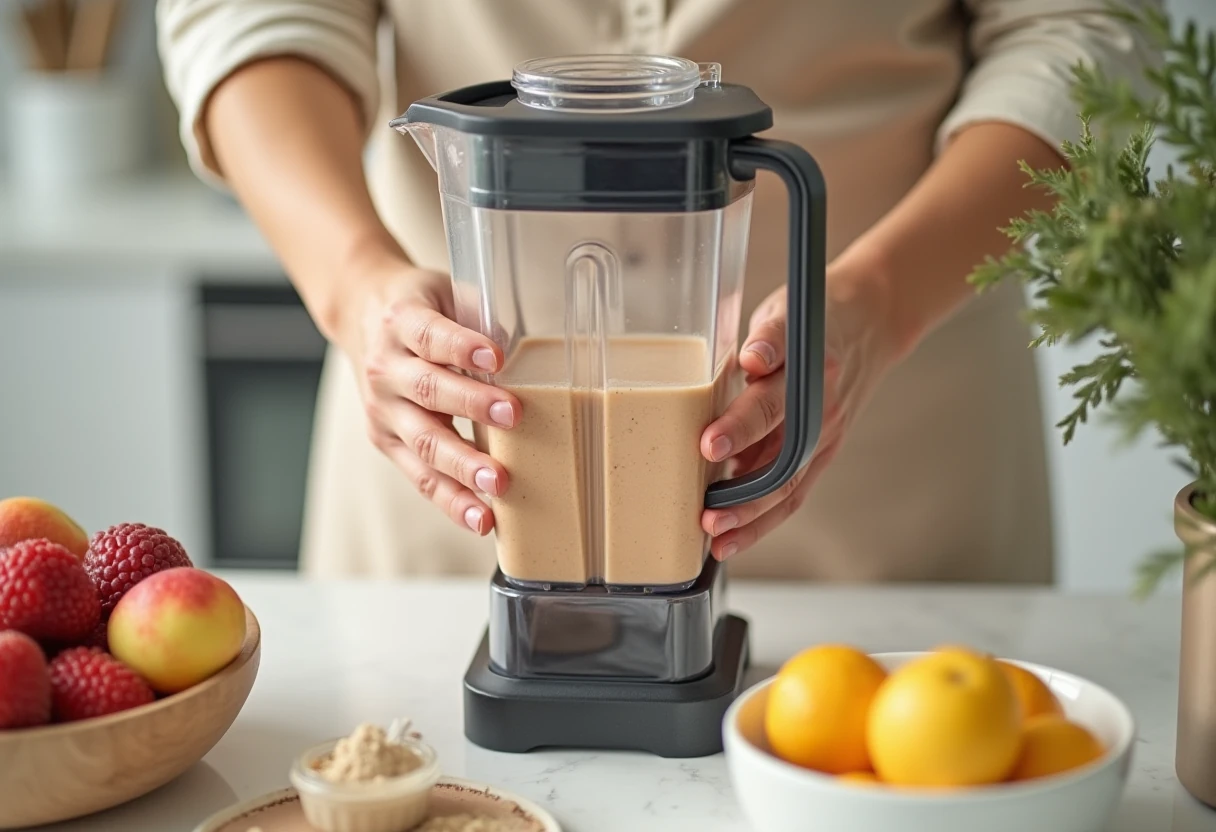
A healthy protein shake recipe does not need fifteen components. One scoop of a high-quality, single-ingredient protein powder, 250ml of your milk of choice, a handful of frozen berries, and ice. That is a complete shake with one decision behind it — the powder — and everything else is groceries you already understand. Potato protein isolate works here for a specific reason: it is low-FODMAP (Monash University, 2019), so it tends to sit easier than pea or whey concentrate for people prone to bloating.