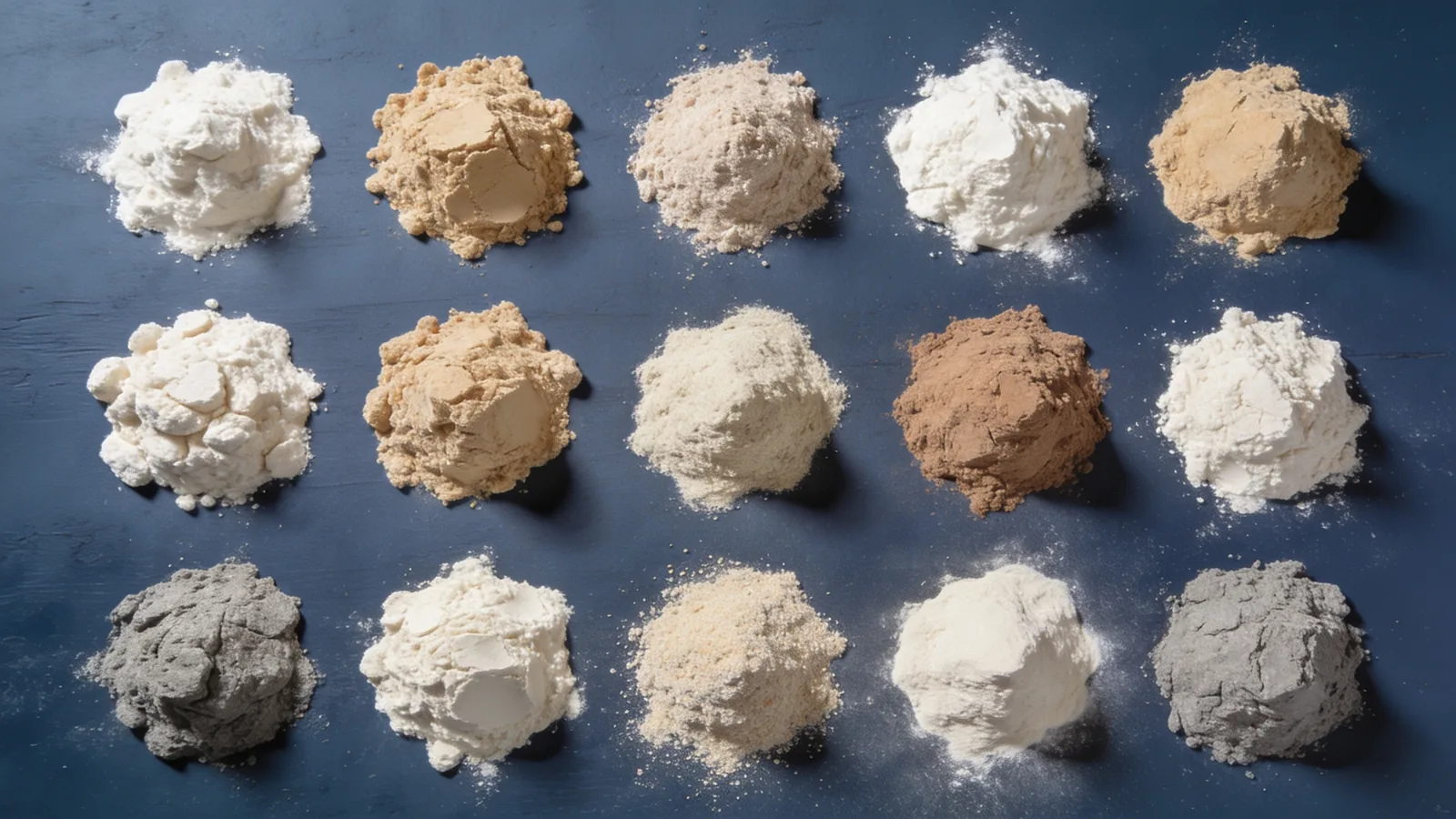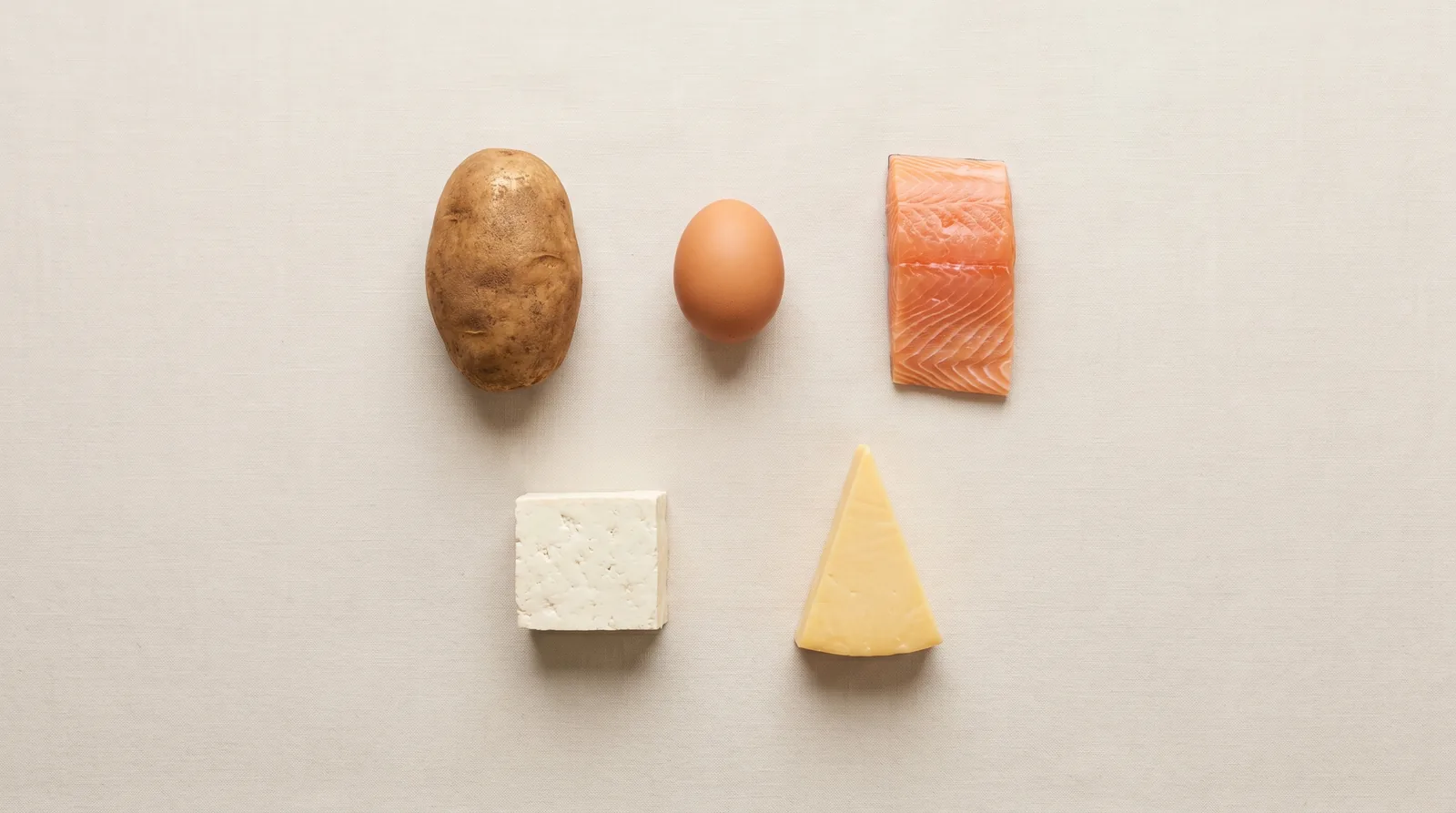
The phrase essential amino acid powder describes a supplement built around the nine amino acids your body cannot make on its own. Those nine — histidine, isoleucine, leucine, lysine, methionine, phenylalanine, threonine, tryptophan, and valine — must come from food. A food that supplies all nine in adequate proportion is called a complete protein, and the list of foods that qualify is both longer and more nuanced than the usual “animal good, plant bad” shorthand suggests.
Foods that contain all nine essential amino acids in adequate amounts include eggs, dairy, whey, meat, fish, soy, and — among single plant ingredients — potato protein isolate, which supplies all nine essential amino acids and reaches a DIAAS as high as 100%. Most other single plant foods are limited in one amino acid (grains tend to be low in lysine, legumes low in methionine), but a varied plant diet eaten across a day provides all nine.
What Makes a Protein “Complete”?
A complete protein contains all nine essential amino acids in amounts that meet human requirements. The body uses twenty amino acids to build muscle, blood, skin, enzymes, and hormones; eleven of them it can manufacture internally. The other nine are dietary obligations. Three of the nine — leucine, isoleucine, and valine — are the branched-chain amino acids (BCAAs), and they matter disproportionately for muscle.
“Complete” does not mean “equal.” Two proteins can both qualify as complete and still differ in how much of each amino acid they carry. Potato protein isolate is roughly 37% essential amino acids by weight; whey protein isolate is roughly 43%. Both clear the bar for completeness, but the whey skews higher in absolute EAA density. That difference is part of why protein-quality scoring exists.
Two scoring systems dominate. PDCAAS (Protein Digestibility-Corrected Amino Acid Score) compares a food’s amino acid profile against a reference pattern and corrects for digestibility, capping the result at 1.00. Milk, whey, egg, casein, and soy protein isolate all score the maximum 1.00. DIAAS (Digestible Indispensable Amino Acid Score), proposed by the FAO in 2013 as a successor, measures digestibility at the end of the small intestine and does not truncate scores at 100% — so it can distinguish a surplus protein from a merely adequate one. If you want the longer version, our explainer on DIAAS vs. PDCAAS walks through why the newer score matters.
Which Foods Have All Nine Essential Amino Acids?
Animal foods — eggs, dairy, whey, meat, and fish — are complete by default. Among plant foods, soy and potato protein isolate are complete single ingredients; most grains, legumes, nuts, and seeds are each limited in at least one essential amino acid. The table below compares common sources by completeness and quality score.
| Source | All 9 EAAs? | Quality score | Limiting amino acid |
|---|---|---|---|
| Egg / egg white | Yes | PDCAAS 1.00 | None |
| Whey isolate | Yes | PDCAAS 1.00 | None |
| Soy protein isolate | Yes | PDCAAS 1.00 | None |
| Potato protein isolate | Yes | DIAAS up to 100% | None (AAS 65%) |
| Pea protein | Yes, but low in one | — | Methionine + cysteine (chemical score 46%) |
| Rice protein | Yes, but low in one | — | Lysine |
| Wheat gluten | Yes, but low in one | PDCAAS ~0.25 | Lysine |
| Collagen | No | Incomplete | Tryptophan (0.00 g/100 g) |
A few entries deserve a note. Pea protein is technically complete but its first limiting amino acids are methionine plus cysteine, which average only 2.6 g per 100 g of protein — a chemical score of roughly 46%. Rice runs the opposite way: lower in lysine but, as brown rice protein is typically characterized, slightly higher in cystine and methionine, which makes pea and rice complementary. Collagen is the cautionary tale — it lacks tryptophan entirely, scoring 0.00 g per 100 g, which disqualifies it as a complete protein under PDCAAS no matter how much you eat.
Do You Have to Combine Plant Proteins in One Meal?
No. You do not need to combine complementary plant proteins within a single meal. The Academy of Nutrition and Dietetics states that an assortment of plant foods eaten over the course of a day provides all essential amino acids and supports adequate nitrogen retention in healthy adults. The older idea that rice and beans must be eaten together at the same sitting has not held up.
That said, amino acid profile still matters for muscle. Plant proteins generally produce a lower and slower rise in blood essential amino acids and leucine after a meal than whey does. Leucine carries particular weight here: the International Society of Sports Nutrition’s position stand reviews the evidence that essential amino acid supplementation increases muscle protein synthesis, with emphasis on the role of leucine. A single plant food that is low in lysine or methionine simply contributes less of the limiting amino acid per gram, which is the practical argument for either eating variety or choosing a complete single-ingredient isolate.
You do not need to combine rice and beans at one sitting. You need a varied day — or one complete protein that does the work in a single scoop.
Where an Essential Amino Acid Powder Fits
An essential amino acid powder earns its place when whole-food variety is hard to hit — for older adults facing anabolic resistance, for people managing allergies, or for anyone who needs a complete amino acid profile without managing a grocery list of complements. Among single-ingredient options, potato protein isolate is notable: it contains all nine essential amino acids and reaches a DIAAS as high as 100%, placing it alongside soy and whey for protein quality.
The muscle data backs this up. A 2020 study found that potato protein isolate stimulated muscle protein synthesis at rest and after resistance exercise in young women, with anabolic properties comparable to whey. Worth stating plainly: protein alone does not build muscle — it has to be paired with resistance exercise. If you want the full background on the ingredient itself, see what potato protein is and how it is made. For the broader complete-protein landscape, our guide to which plant-based proteins are complete covers the full list.
Limitations and Caveats
Protein-quality scores describe averages, not your dinner plate. PDCAAS truncates at 1.00, which hides real differences between high-quality proteins; DIAAS does not truncate but reliable values are not published for every food, which is why several cells in the table above carry an em-dash rather than a number. Reliable DIAAS figures for rice and pea, for instance, are not consistently established in the literature.
Source quality is its own variable. The Clean Label Project’s 2025 Protein Study 2.0 tested 160 products from 70 brands and found that 47% exceeded at least one federal or state safety standard, with plant-based powders averaging five times more cadmium than whey-based varieties. Completeness on the amino acid front does not guarantee a contaminant-free product. Finally, none of this is medical advice: amino acid needs shift with age, kidney function, and training load, and protein restriction is appropriate in some clinical situations.
References
- International Society of Sports Nutrition Position Stand: Effects of essential amino acid supplementation on exercise and performance (2023). PMID:37800468.
- Craig WJ & Mangels AR. Position Paper, Journal of the American Dietetic Association (2009). PMID:19562864.
- Amino Acids (2018). PMID:30167963.
- Herreman et al. Food Science & Nutrition (2020). PMID:33133540.
- Paul C, Leser S, Oesser S. Nutrients (2019), 11(5):1079. PMID:31096622.
- Foods (2024). PMC11547519.
- Schaafsma G. The Protein Digestibility-Corrected Amino Acid Score. Journal of Nutrition (2000). PMID:10867064.
- Potato protein isolate stimulates muscle protein synthesis at rest and with resistance exercise in young women. Nutrients (2020). PMID:32349353.
- Clean Label Project, Protein Study 2.0 (2025).