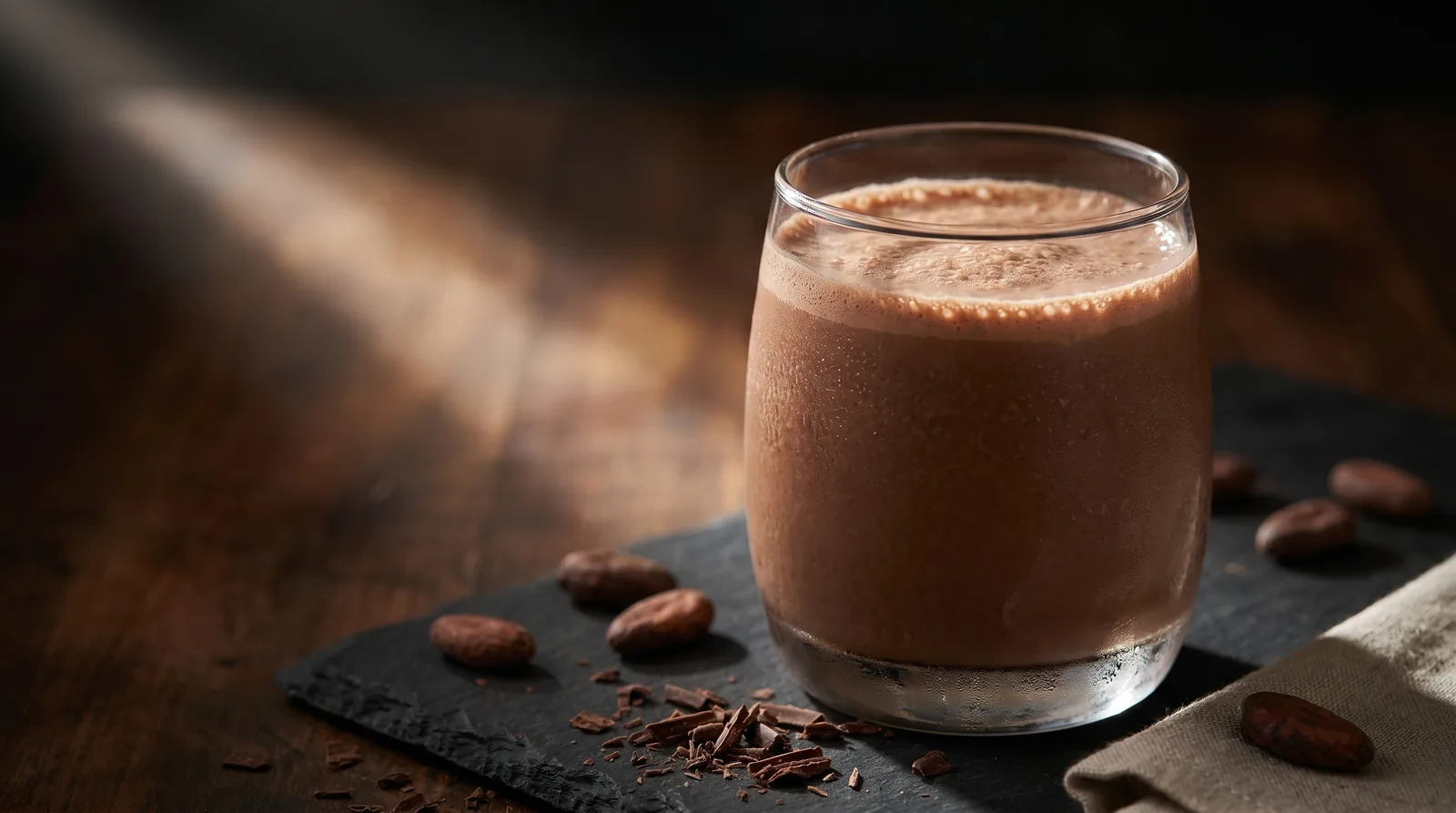
Chocolate milk for muscle recovery earned its reputation for a simple reason: it pairs carbohydrate with a high-quality milk protein in one drink, and the two-hour window after hard exercise is when muscles are most receptive to both (Memorial Hermann). The carbohydrate helps replace glycogen; the protein supplies the amino acids muscle repair relies on. That part holds up. The part that does not hold up as well is the claim that chocolate milk reduces soreness or speeds recovery faster than other options.
Chocolate milk is a reasonable post-workout recovery drink because it combines carbohydrate with milk protein, which contains the leucine that triggers muscle protein synthesis. However, a 2019 Harvard Health review cites a study finding post-workout protein drinks did not reduce muscle soreness or speed recovery any faster than a plain carbohydrate drink, and a 2022 meta-analysis found protein supplementation had no significant effect on soreness. Chocolate milk helps you refuel and repair — it is not a unique remedy for sore muscles.
Why Chocolate Milk Became a Recovery Drink
Chocolate milk became a recovery staple because it happens to contain the two things that matter most after exercise: carbohydrate and complete protein. Milk protein — a mix of whey and casein — scores 1.00 on PDCAAS, the maximum (Nutrients, 2021), and whey’s rapid digestion and high leucine content make it especially effective at stimulating muscle protein synthesis (Journal of Applied Physiology, 2009). Add carbohydrate from the milk sugars and the added cocoa sugar, and you have a drink that addresses repair and refueling at once.
This is genuinely useful. Protein stimulates muscle protein synthesis and inhibits breakdown, which is the basis of repair after training-induced damage. For a quick comparison of milk-based and water-based options, see our guide on protein powder with water vs milk. And for the bigger picture on how much protein active people actually need, our protein for athletes pillar covers the targets in detail.
Does Chocolate Milk Reduce Muscle Soreness?
No — chocolate milk does not reliably reduce muscle soreness. A 2019 Harvard Health article cites a study finding post-workout protein drinks did not reduce soreness or speed recovery any faster than a carbohydrate drink, and a 2022 meta-analysis in the European Journal of Clinical Nutrition found protein supplementation had no significant effect on soreness versus control (PMID:36513777). The carbohydrate may matter more than the chocolate-milk label suggests.
The nuance worth keeping: a 2014 systematic review concluded that the benefits of protein — including reduced soreness — become more evident when protein is consumed consistently after daily training sessions rather than as a single acute dose (PMID:24435468). In other words, what you do every day matters more than what you drink immediately after one session. Chocolate milk fits into that daily pattern fine. It is not a switch that turns soreness off.
What Chocolate Milk Does and Doesn’t Do for Recovery
| Recovery function | What the evidence shows |
|---|---|
| Glycogen replenishment | The carbohydrate component helps. Protein itself has little effect on glycogen unless carbohydrate intake is low (Sports Medicine, 2025). |
| Muscle protein synthesis | Milk protein’s leucine content stimulates synthesis effectively (Journal of Applied Physiology, 2009). |
| Reducing soreness | No significant effect versus control in meta-analysis (PMID:36513777). |
| Faster recovery of performance | Not faster than a plain carbohydrate drink in the study Harvard Health cited (2019). |
The Lactose and Sugar Problem
A standard glass of milk delivers roughly 12 grams of lactose, which is right at the threshold most people with lactose intolerance can tolerate at one time; symptoms typically appear within half an hour and peak around 1.5 to 2 hours after drinking it (IQWiG, 2024). That timing collides directly with the post-workout window, which is the worst possible moment for an upset stomach. If you are lactose intolerant and choosing chocolate milk specifically for recovery, you may be trading one problem for another.
Chocolate milk also carries added sugar on top of the milk sugars. That is fine if you are an endurance athlete trying to replace glycogen after a long effort, and less fine if you are a strength trainee whose main goal is protein. If dairy is the issue rather than the sugar, our breakdown of a whey allergy versus lactose intolerance explains the difference and what each one rules out.
The Chocolate Flavor Itself Carries a Risk
This one is easy to miss. In the Clean Label Project’s 2025 Protein Study 2.0, chocolate-flavored protein powders contained 110 times more cadmium than vanilla varieties, and 65% of chocolate protein powders exceeded California Prop 65 levels (Clean Label Project, 2025). The cadmium concentrates in cocoa, not in dairy, so the finding applies to chocolate-flavored products broadly — chocolate protein powders most directly, and it is a reasonable flag for anyone reaching for chocolate flavoring repeatedly as a daily recovery habit. Cocoa is the variable, not the protein.
None of this makes one glass of chocolate milk a hazard. It is a reason to be skeptical of “chocolate recovery shake” marketing that treats the flavor as free.
Timing Matters Less Than You’ve Been Told
The classic chocolate-milk pitch leans hard on the post-workout “anabolic window.” The evidence has softened that idea considerably. A widely cited review concluded that total daily protein and energy intake matter more than precise timing, and that the window for stimulating muscle protein synthesis is several hours wide, not 30 to 60 minutes (Journal of the International Society of Sports Nutrition, 2013). The two-hour receptive period is real, but it is forgiving.
What this means in practice: you do not need to chug anything in the parking lot. Hitting your overall protein target across the day does more than any single drink. If you want help building that habit around training, how much protein after a workout is optimal walks through the dose and timing questions.
How Chocolate Milk Compares to Other Recovery Options
Chocolate milk is convenient and complete, but it is not the only way to combine carbohydrate and protein after training. The table below compares it with a whey shake and a single-ingredient potato protein isolate mixed with a carbohydrate source like fruit.
| Option | Protein quality | Carbohydrate | Common allergens |
|---|---|---|---|
| Chocolate milk | PDCAAS 1.00 (Nutrients, 2021) | Milk sugars + added sugar | Milk (lactose ~12 g per glass) |
| Whey shake | PDCAAS 1.00; high leucine (Journal of Applied Physiology, 2009) | Add your own | Milk (whey) |
| Potato protein isolate + fruit | DIAAS reported as high as 100% (Food Science & Nutrition, 2020) | From the fruit you add | None of the Big 9 (FDA) |
Two studies from 2020 found that 25 g of potato protein isolate consumed twice daily effectively stimulated muscle protein synthesis at rest and during recovery from exercise in young women, with the researchers describing it as a high-quality plant protein (Nutrients, 2020; PMID:32349353). In that trial, the women who consumed additional potato protein increased their rate of muscle protein synthesis while the placebo group did not (McMaster University, 2020). Potato is not among the FDA’s Big 9 allergens, which is why a single-ingredient potato protein works for people who cannot drink milk at all. If you want the full background, start with what potato protein is.
Honesty matters here: milk protein and whey are excellent recovery proteins, and for most people without a dairy issue, chocolate milk is a perfectly good choice. The case for an alternative is strongest when lactose, the added sugar, or the chocolate-flavor cadmium finding is a genuine concern for you. If digestion is the sticking point, our overview of common protein problems covers the usual culprits.
References
- Potato Protein Isolate Stimulates Muscle Protein Synthesis at Rest and after Recovery from Exercise in Young Women. Nutrients (2020). PMID:32349353.
- Ingestion of whey hydrolysate, casein, or soy protein isolate: effects on mixed muscle protein synthesis at rest and after resistance exercise in young men. Journal of Applied Physiology (2009). PMID:19589961.
- The impact of dietary protein supplementation on recovery from resistance exercise-induced muscle damage: a systematic review with meta-analysis. European Journal of Clinical Nutrition (2023). PMID:36513777.
- Effects of protein supplements on muscle damage, soreness and recovery of muscle function and physical performance: a systematic review (2014). PMID:24435468.
- Nutrient timing revisited: is there a post-exercise anabolic window? Journal of the International Society of Sports Nutrition (2013). PMID:23360586.
- Herreman et al., DIAAS of potato protein isolates. Food Science & Nutrition (2020). PMID:33133540.
- Clean Label Project, Protein Study 2.0 (2025).