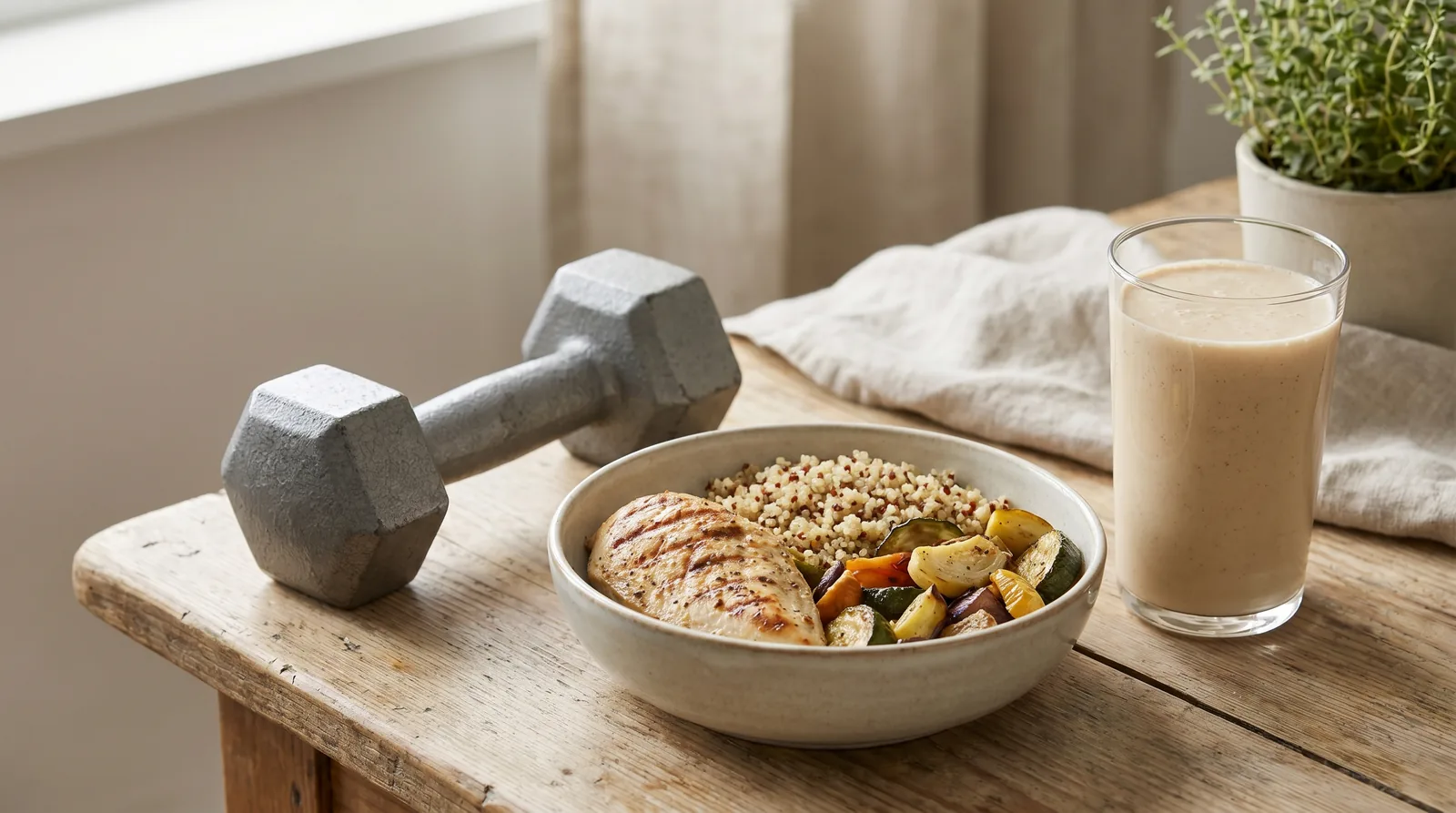
A protein shake for after a workout should deliver roughly 20–40g of protein, and for most people the sweet spot sits around 25–30g. Muscle protein synthesis (MPS) — the process that repairs and adds muscle tissue — climbs steeply up to about 20–25g of a high-quality protein and then flattens. So 40g is not dangerous, but for a younger person training a single muscle group, most of that extra protein is doing something other than building muscle.
The optimal protein shake after a workout provides about 20–40g of protein, with 25–30g being enough to maximize muscle protein synthesis in most adults. In one trial, 25g of potato protein isolate raised muscle protein synthesis rates in young women (Nutrients, 2020). 40g is not harmful, but it offers diminishing returns for muscle building unless you are older, training large muscle groups, or eating in a calorie deficit. What matters more than the exact gram count is leucine content, total daily protein, and consistency.
Put together a post-training shake that actually maximizes muscle repair — without overthinking the gram count or chasing a 30-minute deadline that does not exist. What you need: A complete protein powder (20–40g) · Liquid (water or milk) · Optional carbs · A blender or shaker · Time: 5 min
How to Build Your Post-Workout Shake
Stop panicking about the 30-minute window
The “anabolic window” is wider than the supplement industry implied for years. Your muscles stay sensitive to protein for hours after training, so you do not need to drink a shake before you have unlaced your shoes. Timing matters more in one specific case: if you trained fasted — first thing in the morning before eating — getting protein in soon afterward is more useful, because you are starting from an amino-acid deficit. Otherwise, anytime within a couple of hours is fine.
Measure 20–40g of protein
Aim for 20–30g if you are under 40 and training one or two muscle groups. Go toward 40g if you are older, did a full-body or leg session, or are eating in a deficit. The reason for the range: muscle protein synthesis rises sharply up to roughly 20–25g of a complete protein and then plateaus. In a randomized trial, 30g of whey after resistance exercise raised myofibrillar protein synthesis above placebo (0.041 vs 0.032 %·h⁻¹), while 30g of collagen did not — because collagen lacks the amino acids that trigger the response (Med Sci Sports Exerc, 2023, PMID 37202878).
Tip: Aging changes the math. Older muscle shows “anabolic resistance” — a blunted response to protein intake (PMID 23558692). That is the main reason a 55-year-old benefits from a larger post-workout dose than a 25-year-old. More on this in our guide to protein after 40.
Choose a complete protein with enough leucine
Leucine is the primary amino acid that switches on muscle protein synthesis. This is where protein quality matters more than the brand on the tub. Whey is the reference standard because it digests quickly and is high in leucine. Among plant options, the quality gap is real but smaller than people assume: a 25g serving of potato protein isolate raised muscle protein synthesis rates in young women, both at rest and after resistance exercise (Nutrients, 2020, PMID 32349353). Potato protein isolate has been reported with a DIAAS as high as 100% (Food Science & Nutrition, 2020, PMID 33133540) — a quality score that puts it among the better plant proteins. If you want the full breakdown of how plant and animal sources compare for recovery, see our overview of protein for athletes.
Pitfall: Watch the gap between fast and slow plant proteins. In a 2024 study, 20g of a plant-protein blend raised muscle protein synthesis to 0.041 %/h versus whey’s 0.046 %/h — whey was about 12% higher on average (J Nutr, 2024). Plant proteins generally cause a lower and slower rise in essential amino acids, which is why pairing or slightly larger doses can help close the gap.
Add liquid — and carbs if you want them
Blend or shake your protein into 8–12 oz of water or milk. Single-ingredient potato protein isolate dissolves into liquid without the gritty residue some plant powders leave. Carbohydrate is optional: it helps replace muscle glycogen after long or hard sessions, but it is not required to maximize muscle protein synthesis. If your goal is recovery between two-a-day training sessions, add a banana or some oats. If your goal is muscle building on a calorie budget, you can skip the carbs.
Repeat it consistently — daily total wins
One perfect post-workout shake matters far less than hitting your protein target every day. Active adults generally do well around 1.6–2.2g of protein per kilogram of body weight, spread across the day rather than crammed into one meal. The post-workout shake is one convenient deposit, not the whole account. Distributing protein across meals appears to matter as much as the total for maintaining muscle, especially with age.
Is 40g Too Much Protein After a Workout?
No, 40g is not too much, but it is more than most people need to maximize muscle protein synthesis from a single dose. Research consistently shows the MPS response plateaus around 20–25g of a high-quality protein for a younger trainee. Extra protein beyond that point is still used — for energy, for other tissues, or oxidized — but it is not adding proportionally more muscle from that one serving.
There are real reasons to go higher. Older adults need more per dose to overcome anabolic resistance. A whole-body or heavy leg session recruits more muscle and can use more protein. And if you are dieting, a larger dose protects against muscle loss and increases satiety. As for safety: a 2018 meta-analysis of 28 trials and 1,358 participants found that higher protein intake did not adversely affect kidney function (measured by GFR) in healthy adults (J Nutr, 2018, PMID 30383278). If your kidneys are healthy, 40g after a workout is a non-issue.
Does a Post-Workout Shake Reduce Muscle Soreness?
Not really. Protein supports muscle repair, but it does not noticeably reduce next-day soreness. A 2019 Harvard Health review cited research finding that post-workout protein drinks did not reduce muscle soreness or speed recovery any faster than a carbohydrate drink. So drink your shake to support muscle protein synthesis and hit your daily target — not because it will make tomorrow’s stairs hurt less.
Checklist
- 20–30g protein if you are younger and trained a single muscle group; up to 40g if older, dieting, or after a full-body session.
- Choose a complete protein with enough leucine — whey, or a quality plant isolate like potato protein.
- Drink within a couple of hours; prioritize speed only if you trained fasted.
- Add carbs after long or glycogen-depleting sessions; skip them if cutting.
- Hit your daily protein target consistently — the single shake is one piece, not the whole picture.