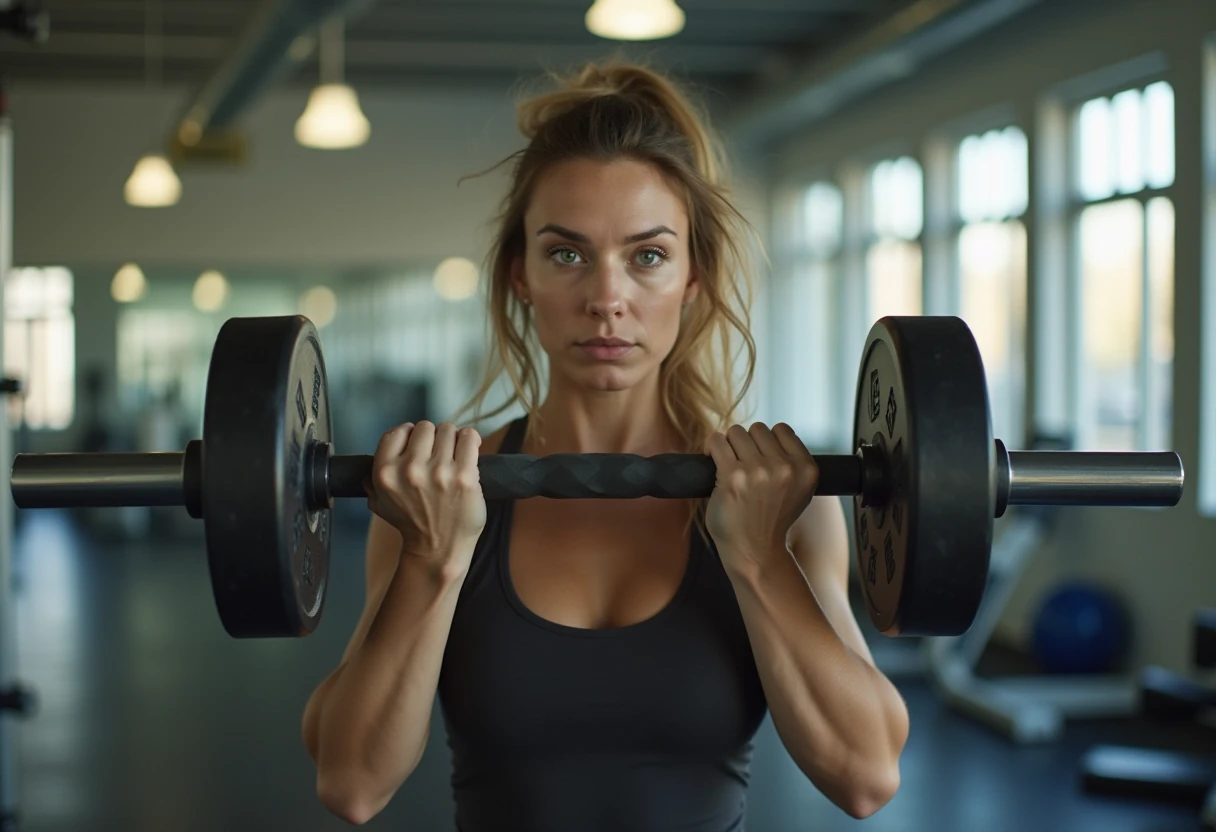
Building muscle requires the same biochemical machinery in women as in men: a per-meal leucine dose of roughly 2.5g to trigger muscle protein synthesis, 1.6–2.2g of protein per kilogram of bodyweight per day, and progressive resistance training. The best protein powder for women building muscle is therefore chosen on protein quality and leucine content — not on anything marketed “for women.” What differs between the sexes is the rate of hypertrophy, not the mechanism.
The best protein powder for women building muscle has a high protein-quality score (PDCAAS near 1.0 or DIAAS above 90), enough leucine per serving to cross the roughly 2.5g threshold that initiates muscle protein synthesis, and the fewest possible additives. Potato protein isolate, whey isolate, and a pea-plus-rice blend all meet these criteria. Women need 1.6–2.2g of protein per kg of bodyweight daily — the same range current evidence recommends for men. Lower testosterone slows the rate of muscle gain in women but does not change the underlying mechanism, so consistency matters more than intensity of any single session.
We evaluated protein powders the way the underlying physiology demands: on the amino acid profile that actually drives muscle protein synthesis, and on what else is in the tub. Below is the framework, three picks across different dietary needs, and a one-week protocol you can copy.
Top Options by Category
Potato Protein Isolate
Strongest all-around plant option
Potato protein isolate is the rare plant protein that performs like an animal protein. A 2020 trial published in Nutrients gave young women 25g of potato protein isolate twice daily and measured a clear increase in muscle protein synthesis at rest and after resistance exercise, compared with a control group eating a habitual lower-protein (0.8 g/kg) diet. Its DIAAS has been reported as high as 100% in Food Science & Nutrition, and its PDCAAS is among the highest of any plant source.
Pros:
- DIAAS reported up to 100%; clinically shown to increase muscle protein synthesis in women
- Single ingredient — nothing to react to
- Low-FODMAP and free of dairy, soy, egg, and nuts
- Unflavored, so it mixes into anything
Cons:
- Earthy taste some people need to mask
- Not as widely stocked as whey or pea
- Leucine per serving is adequate but not as concentrated as whey
Pea + Rice Blend
Best for complete plant profile
Pea protein alone is limited by its sulfur amino acids — methionine and cysteine are its first limiting amino acids, which lowers its standalone protein-quality score. Rice protein supplies exactly those amino acids, so a pea-plus-rice blend reaches a complete profile. Acute trials show a well-formulated plant blend can match whey for the muscle protein synthesis response that drives muscle gain.
Pros:
- Complete amino acid profile when pea and rice are combined
- Comparable muscle gains to whey in head-to-head trials
- Dairy-free and soy-free
Cons:
- Lower leucine per gram — size servings accordingly
- Pea can carry FODMAPs that bother sensitive guts
- Often sold as multi-ingredient, flavored formulas
Whey Protein Isolate
Best if you tolerate dairy
Whey isolate delivers leucine fast and in quantity, which is why it remains the reference point for muscle protein synthesis. It stimulated post-exercise muscle protein synthesis more than casein or soy in the Journal of Applied Physiology, attributed to its rapid digestion and high leucine content, and it outperformed casein for muscle protein accretion in the American Journal of Clinical Nutrition. Dairy protein also stimulates mTOR signaling more effectively than soy, per Nutrition & Metabolism.
Pros:
- Highest leucine density of the three picks
- Strongest body of evidence for muscle protein synthesis
- Isolate form is very low in lactose
Cons:
- Dairy-based — off the table for the lactose-intolerant and dairy-allergic
- Often flavored and sweetened
- Whey-based powders have tested lower for lead and cadmium than plant-based ones in recent studies, though individual product testing still matters more than category
What to Look For on Your Own
Once you understand the criteria, most of the marketing falls away. Three numbers do almost all the work: protein quality, leucine per serving, and ingredient count. Everything else — “for women” labeling, proprietary blends, added BCAAs — is noise or markup. The table below compares the three picks on the metrics that actually predict muscle growth.
| Protein source | Protein quality | Complete profile | Common allergens | Ingredients | FODMAP |
|---|---|---|---|---|---|
| Potato protein isolate | DIAAS up to 100; PDCAAS among highest of plant proteins | Yes | None of the top allergens | 1 | Low-FODMAP (Monash) |
| Whey isolate | Animal-protein tier (egg reference PDCAAS 1.00) | Yes | Dairy (under 1% lactose) | 1–several | Lower than whey concentrate |
| Pea + rice blend | Complete when combined; pea limited by methionine + cysteine | Yes (combined) | Legume (pea) | 2+ | Pea may contain FODMAPs |
What to avoid
Three categories cost women more than they return. Mass gainers bury 30g of protein under 1,000+ calories of maltodextrin and sugar; muscle gain needs only a 200–300 calorie surplus, and larger surpluses mostly add fat. Proprietary blends hide how much of each protein you are actually getting, which makes leucine dosing guesswork. And any protein with a PDCAAS below 0.8 — collagen being the obvious example — does not supply amino acids in the ratios muscle needs. In a controlled trial in Medicine & Science in Sports & Exercise, 30g of whey raised myofibrillar protein synthesis above placebo while 30g of collagen did not. Collagen is fine for connective tissue; it is not a muscle-building protein.
One more thing the supplement aisle understates: no powder builds muscle on its own. Protein supports the repair and synthesis, but it has to be paired with resistance training to produce hypertrophy. For the training and timing side of the equation, our protein for athletes guide goes deeper, and if you want the protein-quality scoring explained in full, see PDCAAS explained. Women over 40 navigating faster age-related muscle decline should also read protein after 40.
A One-Week Protein Protocol
Here is a workable week for a woman in a muscle-building phase. It assumes a 68kg bodyweight and a daily protein target of roughly 1.8g/kg — about 120g per day — spread across four feedings so each one clears the leucine threshold. Protein distribution matters: the case for per-meal targets is laid out in the Journal of Frailty & Aging.
- On training days (3–4 per week): Eat in a modest surplus of 200–300 calories above maintenance. Keep the surplus small — anything larger primarily adds fat.
- Breakfast (~30g): Eggs or Greek yogurt, or a shake with 25g potato protein isolate blended into oats.
- Lunch (~30g): A whole-food source — chicken breast, cottage cheese, or fish.
- Post-training or afternoon (~30g): A protein shake. There is roughly a two-hour post-exercise window when muscle is especially receptive to amino acids; a shake here is convenient rather than magic.
- Dinner (~30g): A second whole-food source, ideally with vegetables and a starch to support the surplus.
- Rest days: Hold the same protein total; drop back to maintenance calories.
Consistency over weeks is what produces visible change. Because lower testosterone slows the rate of hypertrophy in women, the timeline is longer than it is for men — but the inputs are identical. Patience is the variable, not the protein. For shake ideas that fit this protocol, the recipe index has options that do not rely on sweeteners.
References
- Schaafsma G. The protein digestibility-corrected amino acid score. The Journal of Nutrition (2000). PMID:10867064
- Oikawa SY, et al. Potato Protein Isolate Stimulates Muscle Protein Synthesis at Rest and with Resistance Exercise in Young Women. Nutrients (2020). PMID:32349353
- Herreman L, et al. Comprehensive overview of the quality of plant- and animal-sourced proteins based on the digestible indispensable amino acid score. Food Science & Nutrition (2020). PMID:33133540
- Lim MT, et al. Muscle Protein Synthesis in Response to Plant-Based Protein Isolates With and Without Added Leucine Versus Whey Protein. Current Developments in Nutrition (2024). PMID:38846451
- Tang JE, et al. Ingestion of whey hydrolysate, casein, or soy protein isolate: effects on mixed muscle protein synthesis at rest and following resistance exercise. Journal of Applied Physiology (2009). PMID:19589961
- Pennings B, et al. Whey protein stimulates postprandial muscle protein accretion more effectively than do casein and casein hydrolysate in older men. The American Journal of Clinical Nutrition (2011). PMID:21367943
- Gran P, et al. Muscle p70S6K phosphorylation in response to soy and dairy rich meals in middle aged men with metabolic syndrome. Nutrition & Metabolism (2014). PMID:25302072
- Aussieker T, et al. Collagen Protein Ingestion during Recovery from Exercise Does Not Increase Muscle Connective Protein Synthesis Rates. Medicine & Science in Sports & Exercise (2023). PMID:37202878
- Murphy CH, et al. Dietary Protein to Maintain Muscle Mass in Aging: A Case for Per-meal Protein Recommendations. The Journal of Frailty & Aging (2016). PMID:26980369
- Clean Label Project. Protein Study 2.0 (2025). cleanlabelproject.org/protein-study-2-0
- Consumer Reports. Protein powder testing (October 2025).