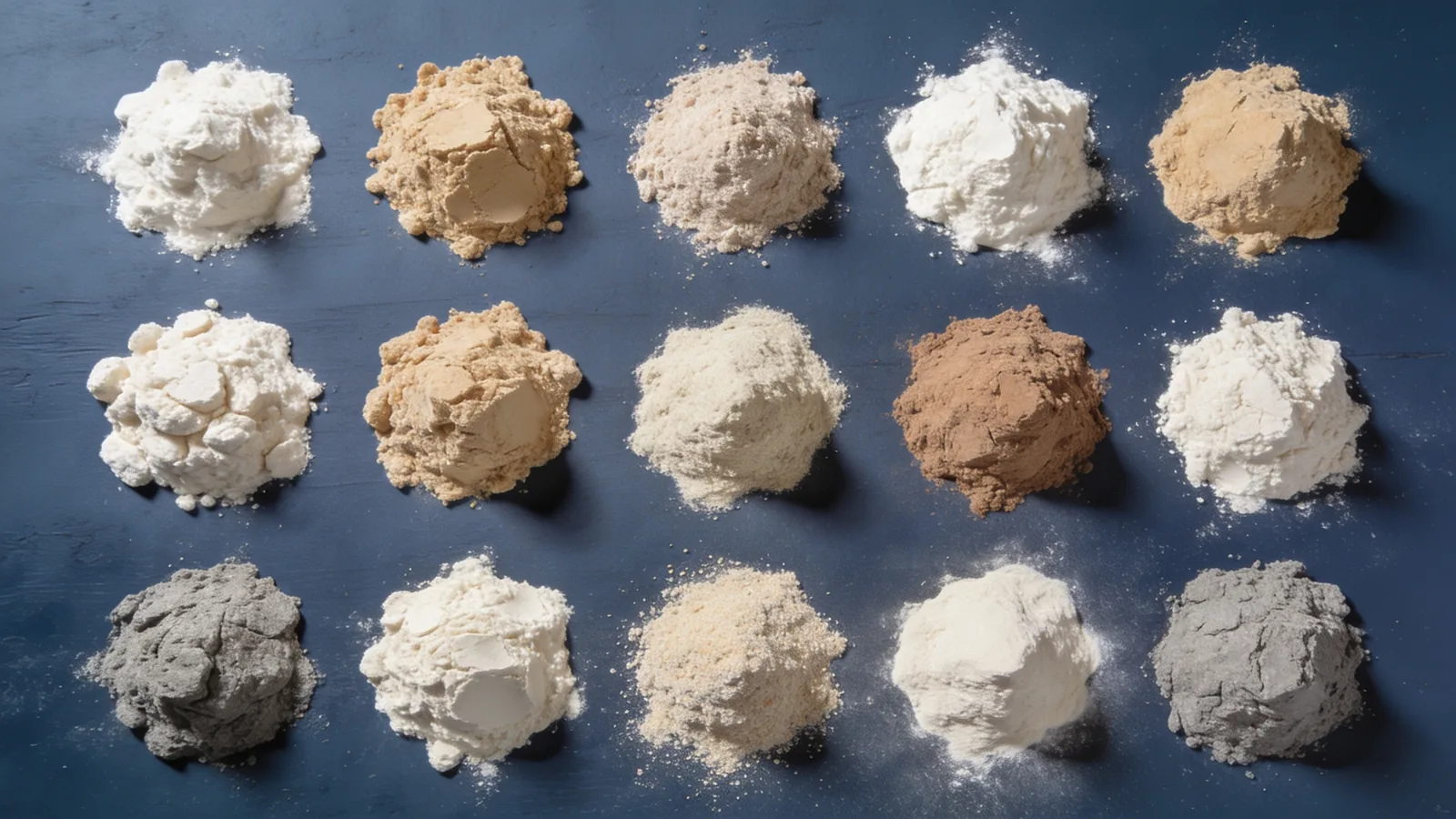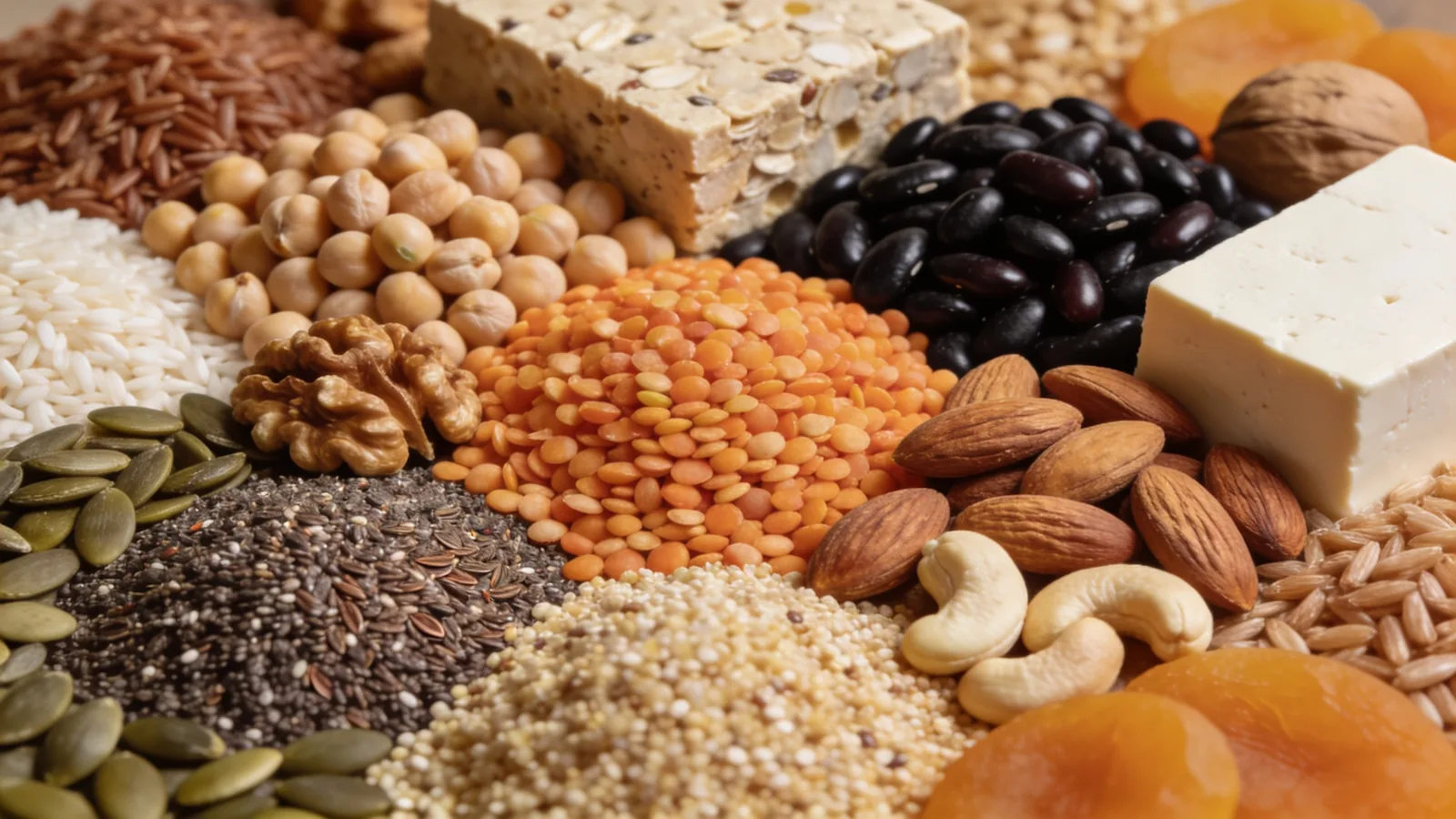
The most inexpensive vegan protein powder per gram of protein is almost always soy or pea isolate, with rice protein close behind. Whole foods — lentils, dried beans, and tofu — beat every powder on price, but they come with calories and carbohydrates a powder does not. The catch is that the cheapest options also tend to be incomplete: pea protein, for instance, runs low in the sulphur amino acids, with a chemical score of just 46% (Molecules, 2024, PMID 39519674).
Soy and pea protein isolates are the cheapest complete-or-near-complete vegan protein powders by cost per gram, while dried lentils and beans are the cheapest sources overall if you eat them whole. Soy is the only single plant powder that is functionally complete on its own; pea, rice, and hemp each fall short on a specific amino acid and are usually blended to compensate. A 2024 analysis found a plant-protein blend raised muscle protein synthesis to 0.041%/h versus whey’s 0.046%/h — close, but measurably lower (J Nutr, 2024).
“Hitting your macros” cheaply is mostly an exercise in reading two numbers: grams of protein per serving and the amino acid that runs out first. Below is how the common vegan options compare on both, plus the quieter cost — contamination — that the price tag never shows.
Cheapest Vegan Protein Sources Compared
The table ranks the powders and whole foods most people actually reach for. Relative cost is per gram of protein, not per package. Verified protein percentages are given where reliable figures exist.
| Source | Protein content | Amino acid profile | Allergen / FODMAP notes | Relative cost |
|---|---|---|---|---|
| Soy protein isolate | — | Functionally complete | Common allergen; can contain FODMAPs | Lowest |
| Pea protein isolate | — | Low in methionine + cysteine (score 46%) | Allergen-friendly; can contain GOS/fructan FODMAPs | Low |
| Rice protein | — | Low in lysine | Allergen-friendly | Low |
| Hemp protein | — | Lower digestibility, incomplete | Allergen-friendly | Moderate |
| Potato protein isolate | 80–95% protein | High quality; DIAAS ~100% | Allergy-free; low-FODMAP | Moderate |
| Lentils / beans (whole) | — | Low in methionine; complete when paired with grains | Allergen-friendly; high FODMAP | Cheapest overall |
What Is the Cheapest Vegan Protein Powder?
Soy protein isolate is the cheapest vegan protein powder per gram of protein and the only single plant powder that is functionally complete on its own. Pea and rice isolates cost slightly more and each miss one amino acid, which is why they are so often blended together. Soy is also, by one practitioner’s account, the closest any plant protein gets to flavorless — though still “far from flavorless” (Drink Wholesome, 2026).
The reason soy and pea dominate the budget shelf is scale: both are produced in enormous volume for the food industry, so the isolate is a by-product rather than a boutique ingredient. Potato protein is consistently listed as its own distinct category in market reports alongside pea, rice, soy, hemp, and wheat (Mordor Intelligence, 2026), but it is a newer and lower-volume ingredient, which is why it sits in the moderate cost tier rather than the cheapest one.
If you want to understand what separates a high-quality isolate from a filler-heavy one, our explainer on what potato protein actually is walks through how isolates are made and what the protein percentage on the label really tells you.
Cheap Doesn’t Mean Complete: The Amino Acid Catch
No, the cheapest vegan proteins are not all complete — most run short on one amino acid. Across new pea genotypes, lysine is abundant at an average 7.9 g per 100 g of protein and leucine at 7.1 g, but the limiting pair — methionine plus cysteine — averages only 2.6 g, a chemical score of 46% (Molecules, 2024, PMID 39519674). Rice has the opposite problem: plenty of methionine, not enough lysine.
This is why blends exist. Combine pea (lysine-rich) with rice (methionine-rich) and the gaps cancel out. The Academy of Nutrition and Dietetics has long held that “plant protein can meet protein requirements when a variety of plant foods is consumed and energy needs are met,” and that an assortment eaten over a day supplies all essential amino acids (Journal of the American Dietetic Association, 2009, PMID:19562864). You do not need to combine proteins at a single meal — only across the day.
Where this matters for macros is muscle. A 2024 trial found 20 g of a plant-protein blend increased myofibrillar muscle protein synthesis from a resting 0.015%/h to 0.041%/h — significantly, but still below whey’s 0.046%/h (J Nutr, 2024). The practical translation: plant protein works, but cheap single-source plant powders may need a slightly larger serving to match the same anabolic response. For the full picture on which plant proteins stand alone, see our guide to complete plant-based proteins.
The Whole-Food Route Is Cheaper Still
Dried lentils, chickpeas, and black beans are the cheapest vegan protein on earth per gram, full stop. A bag of dried lentils costs a fraction of any powder and delivers protein plus fiber, iron, and slow carbohydrate. The trade-offs are real: they are calorie- and carbohydrate-dense, so hitting a high protein target on whole legumes alone means eating a large volume of food, and they are high in FODMAPs, which is a problem for anyone managing IBS.
For most people the sensible budget strategy is a hybrid: legumes, tofu, and tempeh as the dietary base, with an inexpensive powder used only to close the daily gap. Vegetarian and vegan athletes are advised to target 1.3 to 1.7 g of protein per kilogram of body weight per day (The Whole U, University of Washington, 2015), and that upper end is hard to reach on whole foods alone without a great deal of eating. A ranking of the densest options is in our piece on the highest-protein vegan whole foods.
Where Cheap Plant Protein Cuts Corners
The hidden cost of inexpensive plant protein is contamination, not amino acids. Plants draw heavy metals up from soil, and the cheapest, least-controlled supply chains test worst. Consumer Reports tested 23 protein products in 2025 and found plant-based powders averaged nine times more lead per serving than dairy-based ones, with more than two-thirds of all products exceeding its 0.5-microgram safe daily limit (Consumer Reports, 2025).
The Clean Label Project’s 2025 Protein Study 2.0 tested 160 products across 35,862 data points and found 47% exceeded at least one federal or state safety standard, with plant-based powders containing five times more cadmium than whey-based varieties (Clean Label Project, 2025). Organic certification did not help — certified organic powders averaged three times the lead of non-organic, and chocolate powders carried 110 times the cadmium of vanilla.
The takeaway is not that plant protein is unsafe; it is that the price you save on a bargain powder can be paid in contaminants the label never lists. Insist on a published certificate of analysis and third-party testing — a buying factor that evidence-based guides list as essential (Anabolic Health, 2026). The broader problem is detailed in how to verify a protein powder has no heavy metals.
Where Potato Protein Fits the Budget
Potato protein sits in the moderate cost tier, not the cheapest, but it earns its place on quality. Potato protein isolate runs 80–95% protein, and its DIAAS is among the highest of any vegetable protein — reported around 100% (Food Science & Nutrition, 2020, PMID:33133540). In a controlled trial, 25 g of potato protein isolate taken twice daily stimulated muscle protein synthesis effectively in young women (Nutrients, 2020, PMID:32349353).
It is also a low-FODMAP protein (Monash University, 2019), which the cheaper soy and pea isolates are not — Monash notes those plant proteins “can be particularly challenging to purify, and often contain some FODMAPs.” For anyone with IBS, a single-ingredient, allergy-free potato isolate solves a problem that bargain pea protein creates. The point is not that cheapest always wins; it is matching the source to what you actually need.
One more reason to swap toward plant protein at any price point: people who ate the highest ratio of plant-to-animal protein had a 19% lower risk of cardiovascular disease (American Journal of Clinical Nutrition, 2024, PMID:39631999), and 100 g of protein from peas emits roughly 90 times less CO2 than the same amount from beef (BBC Future, 2022).
References
- Foods (2024), PMID 39519674 — pea genotype amino acid composition.
- J Nutr (2024), PMC11153912 — plant-protein blend vs. whey muscle protein synthesis.
- Potato Protein Isolate Stimulates Muscle Protein Synthesis at Rest and Exercise Recovery in Young Women. Nutrients (2020), PMID:32349353.
- Herreman et al., Food Science & Nutrition (2020), PMID:33133540 — potato protein DIAAS.
- Craig WJ & Mangels AR, Journal of the American Dietetic Association (2009), PMID:19562864.
- Glenn AJ et al., Dietary plant-to-animal protein ratio and risk of cardiovascular disease in 3 prospective cohorts. American Journal of Clinical Nutrition (2024), PMID:39631999.
- Consumer Reports (2025) — protein powder lead testing.
- Clean Label Project, Protein Study 2.0 (2025).
- Monash University FODMAP (2019) — potato protein low-FODMAP classification.
- BBC Future (2022) — protein source carbon footprint.