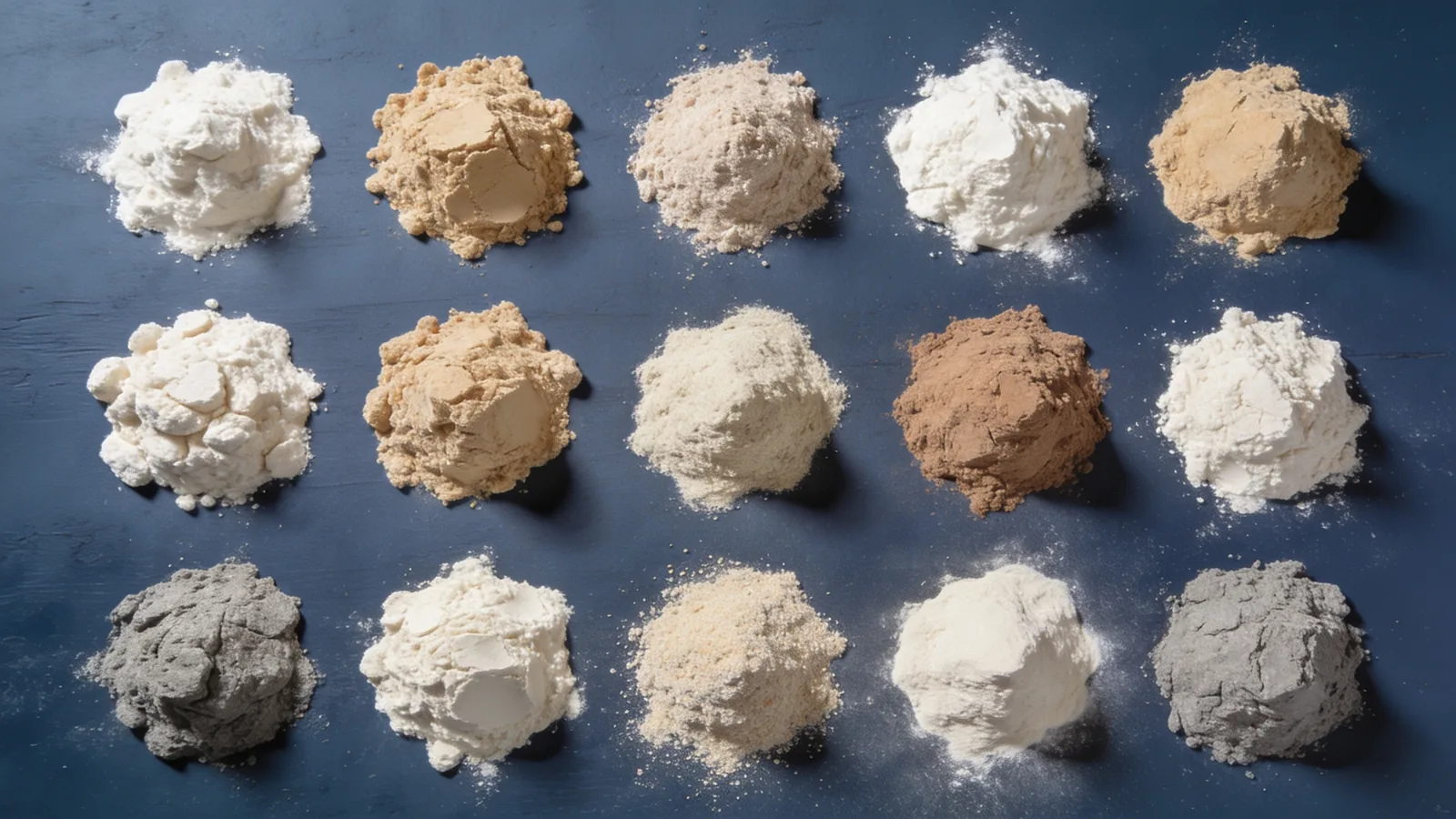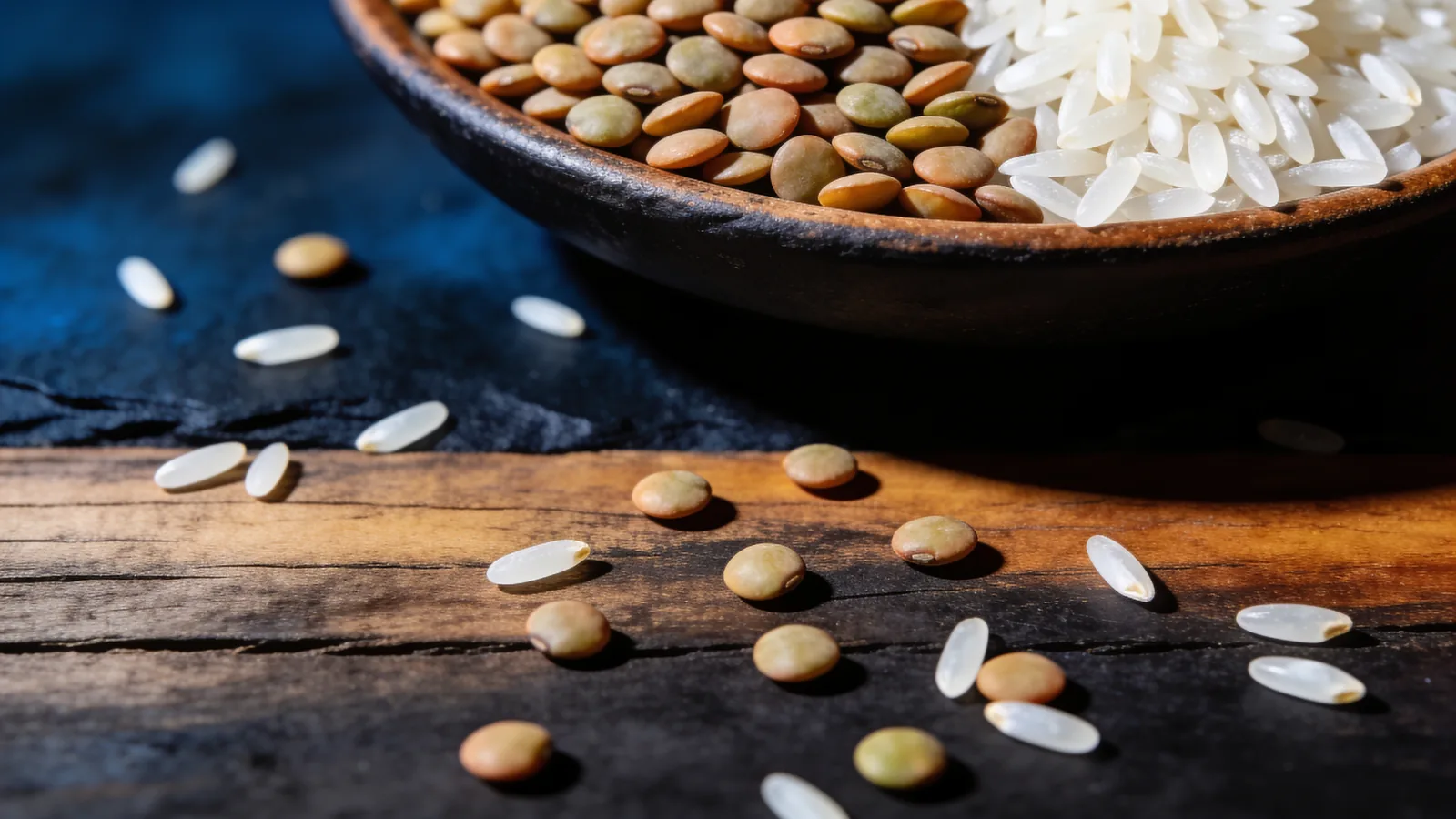
A complete protein, plant based or animal, contains all nine essential amino acids in amounts adequate to support human needs. Most single plant foods fall short on at least one — grains run low on lysine, legumes run low on the sulfur amino acids methionine and cysteine — but a few plant proteins are complete on their own, and the rest become complete when you combine them. This guide ranks the best complete protein plant based options and shows exactly which ones pair to cover each other’s gaps.
The plant proteins that are complete on their own include soy, potato protein isolate, and mung bean — each supplies all nine essential amino acids. Other plant proteins become complete when combined: pea protein (limited in methionine and cysteine) with rice protein (limited in lysine) is the classic complementary pairing. Potato protein isolate has a Digestible Indispensable Amino Acid Score (DIAAS) reported as high as 100%, comparable to high-quality animal proteins.
We evaluated single-source plant proteins and complementary blends on amino acid completeness, leucine content, digestibility, ingredient simplicity, allergen profile, and third-party contaminant testing.
Top Options by Category
Single-Ingredient Potato Protein Isolate
Single-ingredient, allergy-free
Potato protein isolate is complete on its own and scores at the top end of plant protein quality. Its DIAAS has been reported as high as 100% (Herreman et al., Food Science & Nutrition, 2020, PMID:33133540), which places it alongside high-quality animal proteins rather than typical plant sources. In a controlled trial, 25 g of potato protein isolate taken twice daily stimulated muscle protein synthesis at rest and after resistance exercise in young women (Nutrients, 2020, PMID:32349353). It is also a single ingredient — no gums, no sweeteners, no fillers — and it is a low-FODMAP, allergy-free source, which makes it usable for the dairy-, egg-, nut-, and soy-free reader.
Pros:
- Complete amino acid profile, DIAAS reported as high as 100%
- Demonstrated muscle protein synthesis in a human trial
- Single ingredient — nothing to read past
- Low-FODMAP and free of the major allergens
Cons:
- Lower leucine per dose than whey
- Earthy, neutral flavor rather than sweetened
- Less widely stocked than pea or soy
Soy Protein Isolate
Widely available, well studied
Soy is the original single-source complete plant protein and remains one of the few that reaches the top of the PDCAAS scale, which truncates all high-quality proteins to a maximum of 1.00 (Schaafsma G, Journal of Nutrition, 2000, PMID:10867064). For comparison, on the established FAO/WHO PDCAAS values, egg protein scores 1.00 while wheat gluten scores around 0.25. The honest caveat: soy protein isolate stimulates acute muscle protein synthesis less than whey after resistance exercise, attributed to whey’s faster digestion and higher leucine (Journal of Applied Physiology, 2009, PMID:19589961). It is also one of the major allergens, which rules it out for soy-free households.
Pros:
- Complete on its own, high PDCAAS
- Widely available and well studied
- High protein percentage per serving
Cons:
- One of the major allergens
- Lower acute muscle synthesis response than whey
- Can contain FODMAPs that trigger IBS symptoms (Monash University)
Pea + Rice Protein Blend
Complementary pairing, widely available
Neither pea nor rice is complete alone, but they are textbook complements. Across pea genotypes, lysine is the most abundant amino acid at an average 7.9 g/100 g protein, while the limiting amino acid is methionine plus cysteine, averaging only 2.6 g/100 g (chemical score 46%) (Molecules, 2024, PMID 39519674). Rice is the reverse — low in lysine, adequate in the sulfur amino acids. Combine them and the gaps close. Researchers have shown that linear programming can formulate pea, rapeseed, and rice blends to match the WHO reference or animal protein profiles (Frontiers in Nutrition, 2022, PMID:35187024). Pea also brings respectable leucine, averaging 7.1 g/100 g protein.
Pros:
- Complementary profile becomes complete when combined
- Widely available and well priced
- Pea contributes useful leucine
Cons:
- Plant blends average higher cadmium and lead than dairy powders
- Pea and soy can carry FODMAPs
- Usually arrives with sweeteners and flavorings, not as a single ingredient
Mung Bean Protein
Emerging single-ingredient option
Mung bean is another legume protein that supplies all nine essential amino acids, and it is increasingly sold as a single-ingredient powder. It is a reasonable choice for households avoiding dairy, egg, nut, and soy. The trade-off is that mung bean has a thinner research base than soy, pea, or potato, so there is less published data on its muscle synthesis response.
Pros:
- Complete amino acid profile
- Available as a single ingredient
- Not among the major allergens
Cons:
- Limited published research compared with soy or potato
- Distinct flavor that some find difficult to mask
- Less widely stocked than pea or soy
Multi-Source Blends
Pre-formulated, flavored
If you want a complete protein without assembling the pairing yourself, a pre-formulated blend does the combining for you. A plant-based ready-to-drink (RTD) shake is typically designed to deliver all nine essential amino acids, and multi-ingredient powders are often built to be free of the major allergens. These are convenient and flavored. The cost is a longer ingredient list — usually pea and rice plus sweeteners, gums, and flavorings — and the heavy-metal considerations that apply to plant blends generally.
Pros:
- Complete profile with no combining required
- Flavored and convenient for daily use
- Allergen-free formulations exist
Cons:
- Long ingredient list with added sweeteners
- Subject to the plant-powder heavy-metal pattern
- Harder to verify what each gram is doing
Plant Protein Sources Compared
The table below summarizes which sources stand alone and which need a partner. Where a reliable published value is not established, the cell is left without a number rather than filled with a guess.
| Source | Complete alone? | Limiting amino acid | Leucine (g/100g protein) | Allergen status |
|---|---|---|---|---|
| Potato protein isolate | Yes | — | — | Allergy-free; not a major allergen |
| Soy protein isolate | Yes | — | — | Major allergen |
| Pea protein | No | Methionine + cysteine (score 46%) | 7.1 | Legume; not a top-9 allergen |
| Rice protein | No | Lysine | — | Low allergenicity |
| Mung bean protein | Yes | — | — | Legume; not a top-9 allergen |
| Hemp protein | Reliable PDCAAS not established | — | — | Not a top-9 allergen |
What to Look For on Your Own
Completeness is the first filter, but it is not the only one. Here is how to read a plant protein the way someone who reads labels by default would.
Decide whether you need a single source or a pairing. Soy, potato protein isolate, and mung bean cover all nine essential amino acids by themselves. If you build meals around grains and legumes instead, you do not need to obsess over timing: the Academy of Nutrition and Dietetics states that an assortment of plant foods eaten over the course of a day provides all essential amino acids and adequate nitrogen retention in healthy adults (Journal of the American Dietetic Association, 2009, PMID:19562864). You do not have to combine pea and rice in the same bite — across a day is enough. If you want the mechanics of pairing potatoes with other foods, see what pairs with potatoes to make a complete protein, and for the broader definition see complete vs incomplete proteins.
Mind the leucine. Leucine is the primary trigger for muscle protein synthesis, and plant proteins generally carry less of it per dose. In a 2024 trial, a 20 g plant-based protein blend raised myofibrillar muscle protein synthesis to 0.041 %/h versus 0.046 %/h for whey (Journal of Nutrition, 2024, PMC11153912). That blend supplied 1.5 g of leucine, half the leucine of an equivalent whey dose; when free leucine was added to bring the plant blend to 3.0 g, its synthesis response rose to 0.049 %/h and became statistically indistinguishable from whey (Journal of Nutrition, 2024, PMC11153912). The practical takeaway: with plant protein, a slightly larger dose or a leucine-adequate blend matters more than it does with whey. For the deeper comparison, see whey vs plant protein for muscle growth.
Read digestibility, not just protein grams. Plant proteins generally have lower protein quality scores than animal proteins, which is why DIAAS and PDCAAS exist. Potato protein isolate is an exception at the high end. If protein-quality scoring is unfamiliar, PDCAAS explained walks through what the numbers mean and why a high score does not guarantee an identical muscle response.
Count the ingredients. A single-ingredient isolate is easy to verify; a blend with eight added inputs is not. If a label needs squinting, that is information. Our position is simple: never squint to read your ingredient label. To understand how the isolate itself is made, see what is potato protein.
Check third-party testing for heavy metals. This is where plant powders need scrutiny. The Clean Label Project’s 2025 Protein Study 2.0 found plant-based powders contained five times more cadmium than whey-based varieties, with testing performed by independent laboratory Ellipse Analytics using ICP-MS. Consumer Reports, testing 23 protein powders and shakes in October 2025, found lead in plant-based products averaged nine times higher than dairy-based powders. The Clean Label Project also reported that certified organic powders averaged three times the lead of non-organic products, and chocolate-flavored powders contained 110 times more cadmium than vanilla. None of this means avoid plant protein — it means demand a Certificate of Analysis.