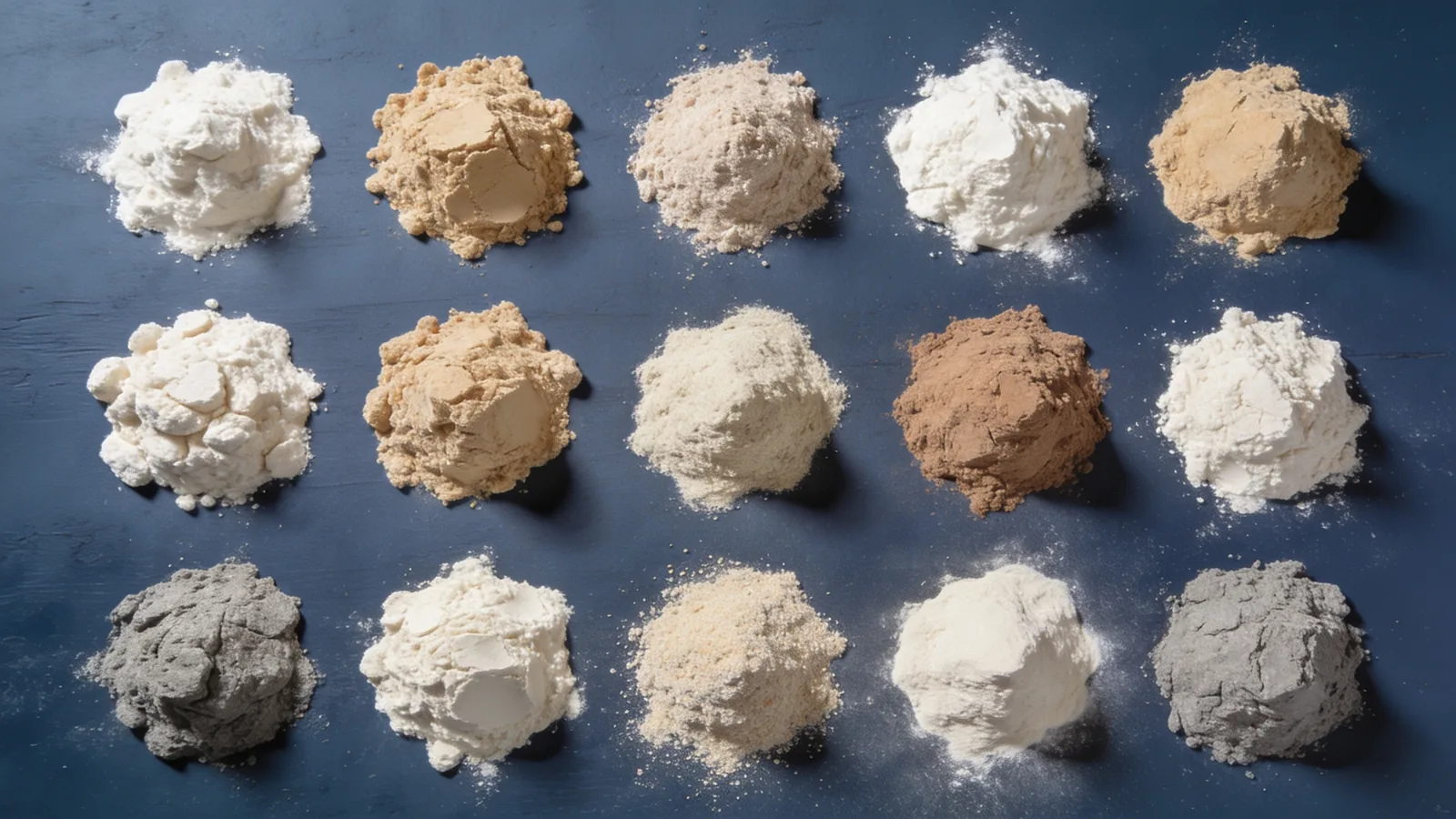
A standard milk-based meal replacement is not vegan — its protein comes from cow’s milk, so it is off the table for anyone avoiding dairy. The good news is that vegan meal replacement shakes built on pea, soy, or potato protein cover the same nutritional ground, and several are also free of the top eight allergens. The harder question is not whether a vegan version exists, but whether the protein inside it is high enough quality to do what a meal replacement is supposed to do.
Yes. A standard milk-based meal replacement is not vegan because its protein is milk-based, but vegan meal replacement shakes substitute plant proteins such as pea, soy, or potato. A plant-based ready-to-drink (RTD) shake is often certified vegan and free from the top eight allergens, and an organic plant-based blend supplies 20g of plant protein per serving. Single-ingredient potato protein isolate is also a recognized allergen-free, vegan option with a DIAAS reported as high as 100%.
Why a Standard Milk-Based Meal Replacement Is Not Vegan
A standard milk-based meal replacement is built around milk protein, which makes it unsuitable for vegans and for anyone with a milk allergy. That single ingredient choice is what people are usually trying to replace when they search for an alternative. A vegan meal replacement needs to match a milk-based shake on three things: enough complete protein, enough calories and micronutrients to stand in for a meal, and a digestibility profile that does not leave you uncomfortable.
The table below compares the main categories of vegan options. Where a manufacturer figure is not verified, the cell is left with an em-dash rather than an estimate.
| Option | Protein source | Protein per serving | Free from top 8 allergens? |
|---|---|---|---|
| Plant-based ready-to-drink (RTD) shake | Plant blend | — | Yes — often certified vegan, gluten-free, non-GMO, free from milk, eggs, fish, shellfish, tree nuts, peanuts, wheat, and soy |
| Organic plant-based blend | Plant blend | 20g | — |
| Single-ingredient potato protein isolate | Potato | — | Recognized as an allergen-free and vegan option |
| Milk-based meal replacement (for reference) | Cow’s milk | — | No — contains dairy |
A plant-based ready-to-drink (RTD) shake is the most straightforward swap if your priority is allergen safety: many are certified vegan and free from all top eight allergens. If you would rather build your own shake and control exactly what goes in, a single-ingredient powder is the minimalist route — and the simplest of those is potato protein isolate, which is recognized as both allergen-free and vegan.
-
You want a grab-and-go replacement with calories and micronutrients already balanced
-
Allergen certification matters and you do not want to read a long label
-
You are buying for an older adult with appetite loss who needs convenience
-
You react to additives, gums, or sweeteners and want the fewest possible inputs
-
You prefer to control the calories, fats, and carbohydrates yourself
-
You want protein you can mix into food rather than only drink
Do Plant Proteins Build Muscle as Well as the Milk Protein in a Standard Shake?
Not quite as efficiently gram-for-gram, but the gap is closable. In young adults, 20g of a plant-based blend raised muscle protein synthesis to 0.041%/h versus 0.046%/h for whey — whey was about 12.1% higher on average (Journal of Nutrition, 2024). The difference is driven largely by leucine content, which can be matched by dosing or fortifying.
The leucine point is the crux. The same research line found that a 20g plant blend supplied only 1.5g of leucine — half the leucine of an equivalent whey dose. When free leucine was added to bring the blend to 3.0g, its muscle protein synthesis response (0.049%/h) became statistically indistinguishable from whey (0.046%/h; Journal of Nutrition, 2024). In other words, leucine fortification closed the anabolic gap.
Over longer training periods, plant protein holds its own. An 84-day trial in sedentary adults doing weekly resistance training found pea protein and whey produced comparable gains in muscle mass (2.3% vs 2.4%) and strength, with no significant between-group differences (Nutrients, 2024). On protein-quality scores, pea protein isolate has a DIAAS of 100%, demonstrating its ability to meet all amino acid requirements (American Journal of Clinical Nutrition, 2021, PMID 34665230) — complete, but not as concentrated as casein, which scores around 115%.
Potato protein is the outlier among plant sources. Its DIAAS has been reported as high as 100% (Food Science & Nutrition, Herreman et al., 2020, PMID 33133540), and a study titled “Potato protein isolate stimulates muscle protein synthesis at rest and with resistance exercise in young women” demonstrated a measurable synthesis response (Nutrients, 2020, PMID 32349353). If you want a deeper comparison of plant sources, see our guides on which plant-based proteins are complete and pea protein bioavailability.
The Heavy-Metal Trade-Off in Plant-Based Shakes
This is the part of the vegan shake conversation that gets skipped, and it deserves attention. Plant proteins draw up metals from soil, and testing in 2025 made the pattern clear. Consumer Reports tested 23 protein powders and ready-to-drink shakes and found more than two-thirds contained more lead per serving than its safe daily limit of 0.5 micrograms; lead in plant-based products averaged nine times higher than in dairy-based powders (Consumer Reports, 2025).
Specific products stood out. The most contaminated item, a plant-based vegan mass-gainer powder, delivered 7.7 micrograms of lead per serving — 1,570% of Consumer Reports’ daily concern level, against the FDA’s interim reference level of 8.8 micrograms per day (Consumer Reports, 2025). A complete meal-replacement powder, plant-based, contained 9.2 micrograms of cadmium per serving, over double Consumer Reports’ 4.1-microgram safe daily limit (Consumer Reports, 2025).
The Clean Label Project’s 2025 Protein Study 2.0 tested 160 products from 70 brands and found 47% exceeded at least one federal or state safety standard, with plant-based powders containing five times more cadmium than whey-based varieties (Clean Label Project, 2025; analysis by Ellipse Analytics using ICP-MS). Counterintuitively, certified organic powders averaged three times the lead of non-organic products, and chocolate-flavored powders contained 110 times more cadmium than vanilla (Clean Label Project, 2025).
The takeaway is not “avoid plant protein.” It is “demand testing.” A single-ingredient powder has fewer places for contamination to hide, and any brand worth buying will publish results. For the broader picture, read what to look for in a plant-based protein powder.
Digestion: Why Some Vegan Shakes Cause Bloating
If you switched away from a milk-based meal replacement because dairy bothered your stomach, be aware that some plant proteins carry their own digestive issue: FODMAPs. Monash University notes that plant-derived proteins such as soy and pea “can be particularly challenging to purify, and often contain some FODMAPs,” and that protein powders containing 70–90% protein can still be high enough in FODMAPs to trigger IBS symptoms (Monash University FODMAP). Potato protein is not on the standard high-FODMAP protein list, which is one reason it suits sensitive stomachs. Our guide to the easiest protein to digest goes through this in detail.
How Much Protein Should a Vegan Meal Replacement Deliver?
Aim for at least 25–30g of high-quality protein per serving if the shake is genuinely replacing a meal. That is the per-meal target proposed for preserving muscle in adults at risk of sarcopenia (Journal of Clinical Medicine Research, 2015, PMID 26566405), and it lines up with the higher needs of plant-based eaters.
Vegan athletes tend to consume less protein than omnivores, and improving intake requires attention to both quantity and quality of amino acids (Journal of the International Society of Sports Nutrition, 2017, PMID 28924423). Recommended intake for vegetarian and vegan athletes ranges from 1.3 to 1.7 grams per kilogram of body weight per day (The Whole U, University of Washington, 2015). The reassuring news for anyone worried about completeness: the Academy of Nutrition and Dietetics states that “an assortment of plant foods eaten over the course of a day can provide all essential amino acids and ensure adequate nitrogen retention and use in healthy adults” (Journal of the American Dietetic Association, Craig & Mangels, 2009, PMID 19562864).
Protein also helps a shake actually function as a meal. High-protein meals increase satiety and thermogenesis more than standard-protein meals (Journal of the American College of Nutrition, 2004, PMID 15466943), which is exactly what you want from something replacing solid food. Whether a shake can fully stand in for a meal is its own question — we cover it in can protein powder replace a meal.