Protein does not lower cortisol the way a sedative or a beta-blocker would — no macronutrient switches off the stress axis on command. So the honest version of the question “Can protein lower cortisol?” is whether protein can lower it indirectly, by removing some of the conditions that make cortisol climb. That version has a defensible answer, and it is more useful than the supplement-aisle version.
Protein does not directly lower cortisol, and no controlled trial shows a protein supplement reducing baseline cortisol in healthy people. What protein can do is blunt the blood-sugar crashes and the under-fed, catabolic state that prompt cortisol release. The practical lever is eating enough protein at regular meals — roughly 25g, the dose used in muscle-protein-synthesis research — rather than treating any one powder as a cortisol remedy.
How Cortisol Works, and Where Protein Could Intervene
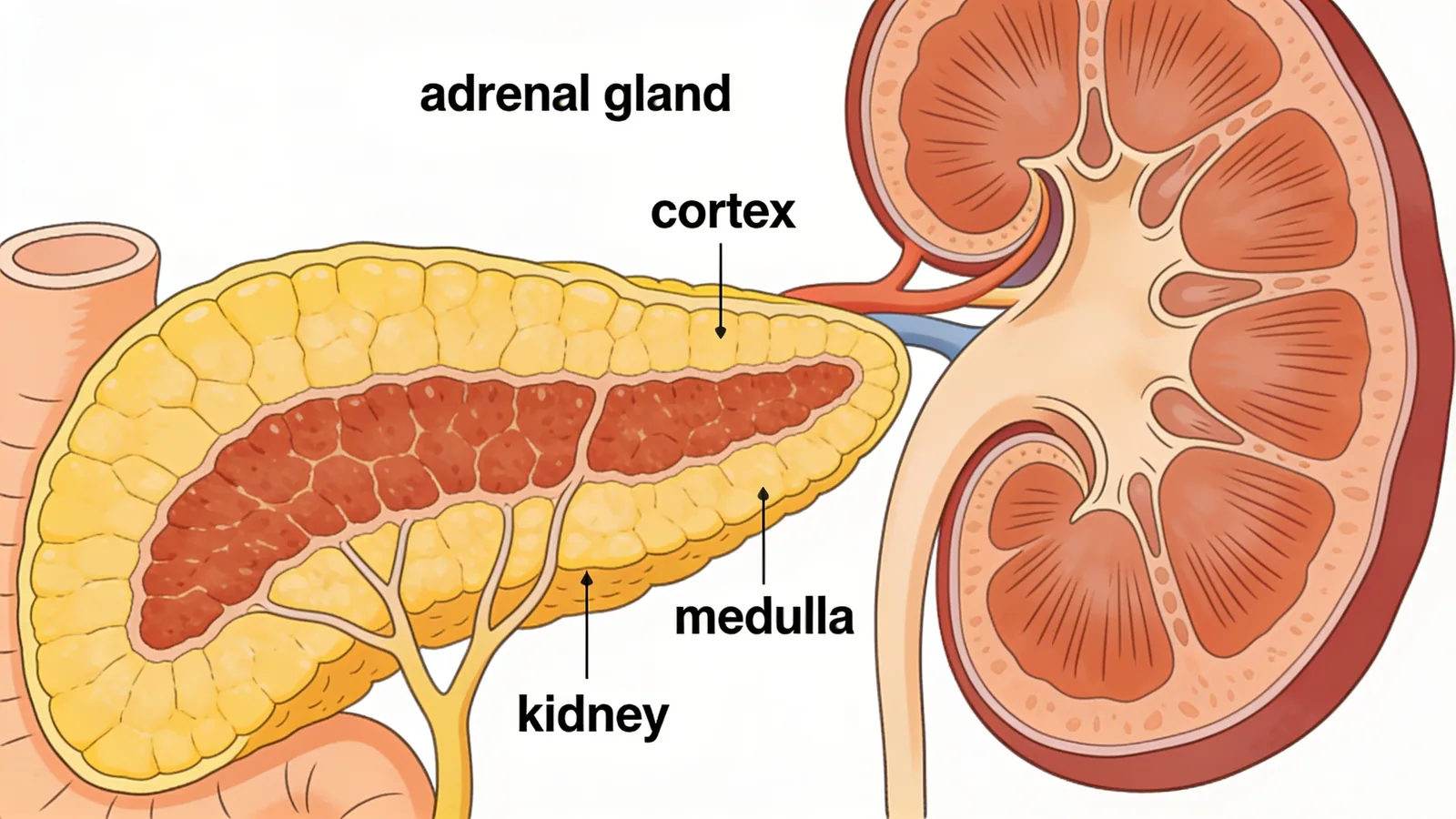
Cortisol is a glucocorticoid hormone released by the adrenal glands under the direction of the hypothalamic-pituitary-adrenal (HPA) axis. It is not the villain it is marketed as: cortisol mobilizes glucose, manages inflammation, and follows a daily rhythm that is highest in the morning and lowest at night. The problem is not cortisol existing — it is cortisol being elevated repeatedly and at the wrong times, by chronic stress, poor sleep, and metabolic instability.
One of cortisol’s jobs is counter-regulation: when blood glucose drops too low, the body releases cortisol and glucagon to raise it again. That single mechanism is where diet, and therefore protein, has a plausible foothold. A meal that produces a sharp glucose rise followed by a reactive crash can trigger that counter-regulatory response. A meal that produces a flatter, slower glucose curve gives the HPA axis less reason to intervene.
Protein contributes to that flatter curve in two ways: it slows gastric emptying, and it carries no rapidly absorbed sugar of its own. This is general physiology rather than a cortisol-specific finding, but it is the most direct route by which “what you eat” touches “what your adrenal glands do.”
Does Protein Lower Cortisol? What the Evidence Shows
Protein does not lower cortisol on its own, and the direct trial evidence is thin. The studies that exist measure protein’s effect on glucose regulation, satiety hormones, and thermogenesis — proxies for metabolic stress rather than cortisol itself. Treat any claim that a protein powder “lowers cortisol” as marketing that runs ahead of the data.
What the research does support is real but narrower. A 2021 comparison of whey, rice, and potato protein isolate in healthy males found measurable differences in glycaemic regulation and appetite signaling between protein sources; whey produced a greater release of GLP-1 — a satiety and glucose-regulating hormone — than potato protein, a difference linked to whey’s amino acid profile. Separately, a critical review of high-protein diets concluded that high-protein meals increase satiety and thermogenesis more than standard-protein meals. Greater satiety means fewer of the blood-sugar swings and reactive hunger episodes that accompany stress eating — an indirect benefit, not a cortisol-lowering drug effect.
Protein is not a cortisol pill. It is one of the few dietary levers that reliably flattens the metabolic instability cortisol responds to.
There is a flip side worth stating plainly: under-eating protein is itself a physiological stressor. A 1995 study found that caloric or protein restriction produces significant changes in serum IGF-I and IGF-binding proteins — evidence that chronically restricting protein shifts the hormonal environment, not just muscle mass. For the reader who has quietly under-eaten protein for two decades, the relevant intervention may not be “lower cortisol” but “stop running a deficit your body reads as a threat.”
Protein, Blood Sugar, and the Stress Loop
The clearest mechanism connects protein to cortisol through glucose. The table below compares common protein sources on the signals that matter for that loop — glycaemic and appetite response, FODMAP load (which drives gut symptoms that are their own low-grade stressor), and allergen status. Reliable head-to-head appetite-hormone values are not established for every source, so unmeasured cells are left blank rather than guessed.
| Protein source | Glycaemic / appetite signal | FODMAP load | Common allergen |
|---|---|---|---|
| Whey isolate | Greater GLP-1 release than potato | Low (isolate); lactose higher in concentrate | Dairy |
| Potato protein isolate | Lower GLP-1 than whey | Low-FODMAP | None common |
| Pea protein | — | Can contain GOS and fructan | Legume |
| Soy protein isolate | — | Can contain FODMAPs | Soy |
The takeaway is not that one protein is a stress remedy. It is that a protein-containing meal — almost regardless of source — produces a steadier glucose response than the same meal without it. For someone whose afternoon cortisol tends to ride a blood-sugar rollercoaster, that steadiness is the actual benefit, and it is available from food long before it is available from a supplement.
How to Eat Protein If Cortisol Is Your Concern
If cortisol stability is the goal, the protein strategy is unremarkable and that is the point. Front-load protein at breakfast, when the morning cortisol peak coincides with the largest glucose swings of the day. Aim for roughly 25–30g per meal — the per-meal range used in muscle-protein-synthesis research — and spread it across the day rather than stacking it at dinner. Pair protein with fiber and fat to slow digestion further.
Age changes the math. After 40, muscle becomes less responsive to a given dose of protein, a phenomenon researchers call anabolic resistance — the blunted rise in muscle protein synthesis after eating. The practical consequence is that older adults often need a higher per-meal protein dose to get the same metabolic and muscular response, which makes consistent, adequate intake more important, not less. Our guide to protein after 40 covers the dosing in detail, and if your symptoms overlap with perimenopause, protein during menopause and perimenopause addresses that specifically.
Source matters less than total, but it is not irrelevant. Higher plant-to-animal protein ratios are associated with a 19% lower risk of cardiovascular disease in pooled cohort data — a longevity signal worth weighting if you are choosing between otherwise similar options. And if gut symptoms are part of your stress picture, a low-FODMAP protein avoids adding to the problem. For a broader troubleshooting view, see common protein problems; for the ingredient itself, what is potato protein covers the basics.
Limitations and What Protein Cannot Do
Be clear about the ceiling here. No protein lowers cortisol as a primary effect, and cortisol is driven far more by sleep, psychological stress, training load, and circadian timing than by any single macronutrient. Eating protein will not offset chronic sleep deprivation or an unmanaged stress load. Anyone promising a “cortisol-lowering protein” is selling a story the evidence does not support.
The extremes cut both ways. Very-high-protein diets — defined as 40% or more of daily calories from protein — are a different category from simply eating adequate protein, and chasing ever-higher intake offers no cortisol advantage. The realistic goal is sufficiency and consistency, not maximization.
One more limitation concerns the powder itself rather than the protein. The Clean Label Project’s 2025 Protein Study 2.0 reported that certified organic protein powders averaged three times the lead of non-organic products, and that chocolate-flavored powders contained 110 times more cadmium than vanilla varieties, with 65% of chocolate powders exceeding California Prop 65 levels. If you are managing physiological stress, adding a heavy-metal load is the opposite of helpful — which is one more reason fewer ingredients and third-party testing matter.
References
- Comparative Assessment of the Acute Effects of Whey, Rice and Potato Protein Isolate Intake on Markers of Glycaemic Regulation and Appetite in Healthy Males. Nutrients (2021). PMID:34201703.
- The effects of high-protein diets on thermogenesis, satiety and weight loss: a critical review. Journal of the American College of Nutrition (2004). PMID:15466943.
- Effects of caloric or protein restriction on insulin-like growth factor-I (IGF-I) and IGF-binding proteins in children and adults (1995). PMID:7531712.
- Anabolic resistance of muscle protein synthesis with aging (2013). PMID:23558692.
- Dietary plant-to-animal protein ratio and risk of cardiovascular disease in 3 prospective cohorts. The American Journal of Clinical Nutrition (2024). PMID:39631999.
- Clean Label Project, Protein Study 2.0 (2025); GLP-1 user product survey, Food Business News (2025).
- Monash University FODMAP, “Protein powders and IBS” (Monash FODMAP blog).