The 5 signs of protein deficiency (and how to fix them) are mostly quiet ones: fading muscle and grip strength, brittle hair and nails, hunger that returns an hour after eating, slow recovery from workouts or wounds, and persistent fatigue. None of these announce themselves. Most people under-eating protein feel fine right up until they measure grip strength, get bloodwork, or step on a body-composition scanner.
The five most common signs of protein deficiency are loss of muscle and grip strength, brittle hair and nails, frequent hunger and cravings, slow recovery and wound healing, and ongoing fatigue or fluid retention. The fix in every case is the same: raise daily protein above the 0.8 g per kg minimum, spread it across your meals, and prioritize complete sources rich in leucine. Adults over 40 and physically active people typically need more than the baseline.
Identify which of the five deficiency signs apply to you, then close the gap with a daily protein target you can actually hit. What you need: A body weight in kg · A food log or app · A complete protein source · Time: 15 min
How to Identify and Fix Each Sign
Check for muscle loss and weakness
The first and most measurable sign is shrinking muscle and dropping strength. Muscle is maintained when muscle protein synthesis exceeds breakdown over time, and that synthesis depends on dietary protein. When intake runs short, the body draws on muscle tissue to cover its amino acid needs, and grip strength, stair-climbing, and carrying groceries all get harder.
This is worse with age. Aging is characterized by a blunted rise in muscle protein synthesis after eating protein — a condition called anabolic resistance (PMID:23558692). The practical consequence: an older adult needs more protein per meal, not less, to get the same result a 25-year-old gets from a smaller dose.
Tip: Track grip with a $20 hand dynamometer, or simply note whether jars, doorknobs, and grocery bags feel harder than they did a year ago.
Read your hair, skin, and nails
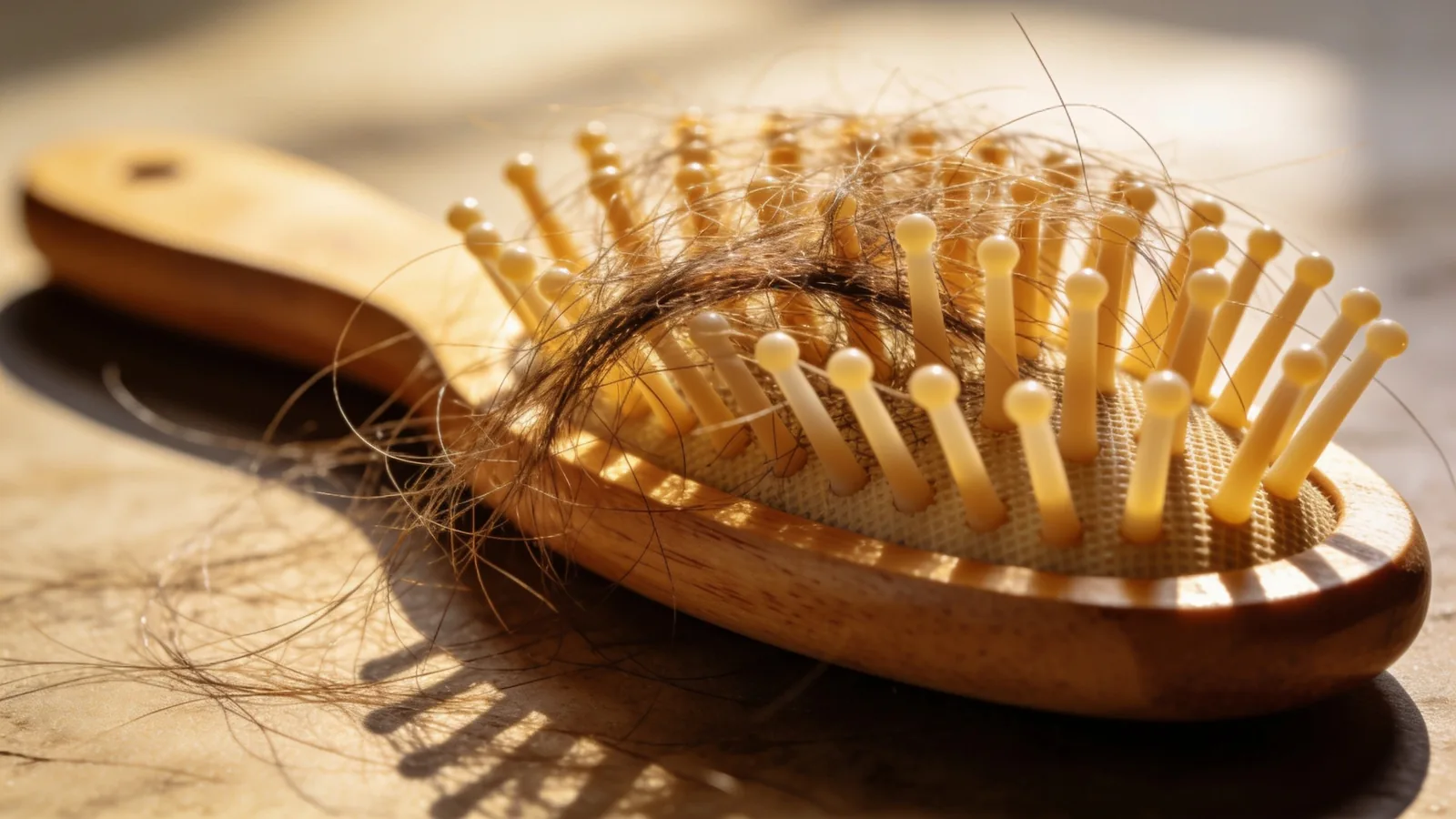
Hair, skin, and nails are built from protein, and they are low on the body’s priority list. When protein is scarce, the body diverts amino acids to organs and immune function first, so the visible tissues show strain early: hair that sheds more than usual, nails that split or ridge, skin that heals slowly and looks thin.
These changes are non-specific — plenty of things cause brittle nails — but when they appear alongside the other signs on this list, low protein is a reasonable suspect. They also tend to improve within a few weeks of consistently meeting your target, since these tissues turn over quickly once raw materials return.
Pitfall: Do not chase a single biomarker here. Hair and nail changes are a clue, not a diagnosis. Use them to prompt a real look at your weekly protein intake, not a supplement spree.
Track persistent hunger and cravings
If you eat a meal and feel hungry again within an hour, the meal may have been short on protein. Protein is the most satiating macronutrient: high-protein meals increase satiety and thermogenesis more than standard-protein meals (PMID:15466943). A breakfast of toast and fruit leaves the appetite signal switched on; the same breakfast with 25–30 g of protein quiets it.
Chronic grazing, late-afternoon crashes, and a strong pull toward refined carbohydrates are all downstream of meals that did not contain enough protein to trigger fullness. This is also why so many people raising their protein report eating less overall without trying — the hunger driving the snacking was a protein signal all along.
Notice slow recovery and frequent illness
Protein stimulates muscle protein synthesis and inhibits breakdown, facilitating repair of damaged tissue. Under-eat it and the repair queue backs up: workout soreness lingers for days, small cuts and bruises heal slowly, and you seem to catch every circulating cold. Antibodies and immune cells are themselves proteins, so a sustained shortfall thins your defenses.
Protein restriction also lowers insulin-like growth factor-I (IGF-I), a key signal for tissue repair and growth — protein or energy restriction produces significant changes in serum IGF-I and its binding proteins (PMID:7531712). If recovery has quietly slowed and you cannot blame sleep or training load, audit your protein before anything else.
Account for fatigue, swelling, and low mood
Ongoing tiredness that sleep does not resolve can reflect inadequate protein, partly because amino acids are precursors to neurotransmitters and partly because chronic under-eating of protein pushes the body into a catabolic, negative-nitrogen-balance state. In nitrogen balance terms, a negative balance indicates the body is losing more protein than it takes in.
In more pronounced or prolonged deficiency, fluid can shift into the tissues and cause swelling, most visibly in the feet and ankles. Fatigue and puffiness have many causes, so treat these as the least specific signs on the list — meaningful only in combination with the four above, and worth raising with a clinician if they persist.
Calculate your target and close the gap
Here is the fix, and it is the same regardless of which signs you have. Take your body weight in kilograms and multiply by 0.8 — that is the RDA minimum, the amount derived from nitrogen-balance studies to prevent deficiency. For most adults over 40, anyone training, and anyone recovering from illness, the realistic target sits well above that floor. Distribution matters as much as the total: spreading protein across meals supports muscle maintenance better than loading it all at dinner, especially as you age.
Build each meal around a complete, leucine-rich source, since leucine is the primary amino acid trigger for muscle protein synthesis. Whole foods come first — eggs, dairy, fish, meat, and combinations of legumes and grains. When food alone falls short, a single-ingredient isolate closes the gap cleanly. Potato protein isolate carries a PDCAAS of roughly 0.92–1.00, placing it alongside several animal proteins, and 25 g of it twice daily was shown to stimulate muscle protein synthesis in young women (PMID:32349353). It is also a low-FODMAP protein source, which matters if digestion is part of why you have been avoiding protein in the first place.
Tip: For a deeper protocol on raising intake as you age, read our guide to protein after 40, and if specific symptoms keep recurring, our overview of common protein problems covers the usual culprits.
Checklist
- Note whether grip strength and everyday lifting have gotten harder over the past year.
- Watch for more hair shedding, splitting nails, or slow-healing skin.
- Flag meals that leave you hungry within an hour.
- Track lingering soreness, slow wound healing, or frequent colds.
- Calculate body weight (kg) × 0.8 as your minimum, and aim higher if over 40 or active.
- Spread protein across meals and anchor each one with a complete, leucine-rich source.