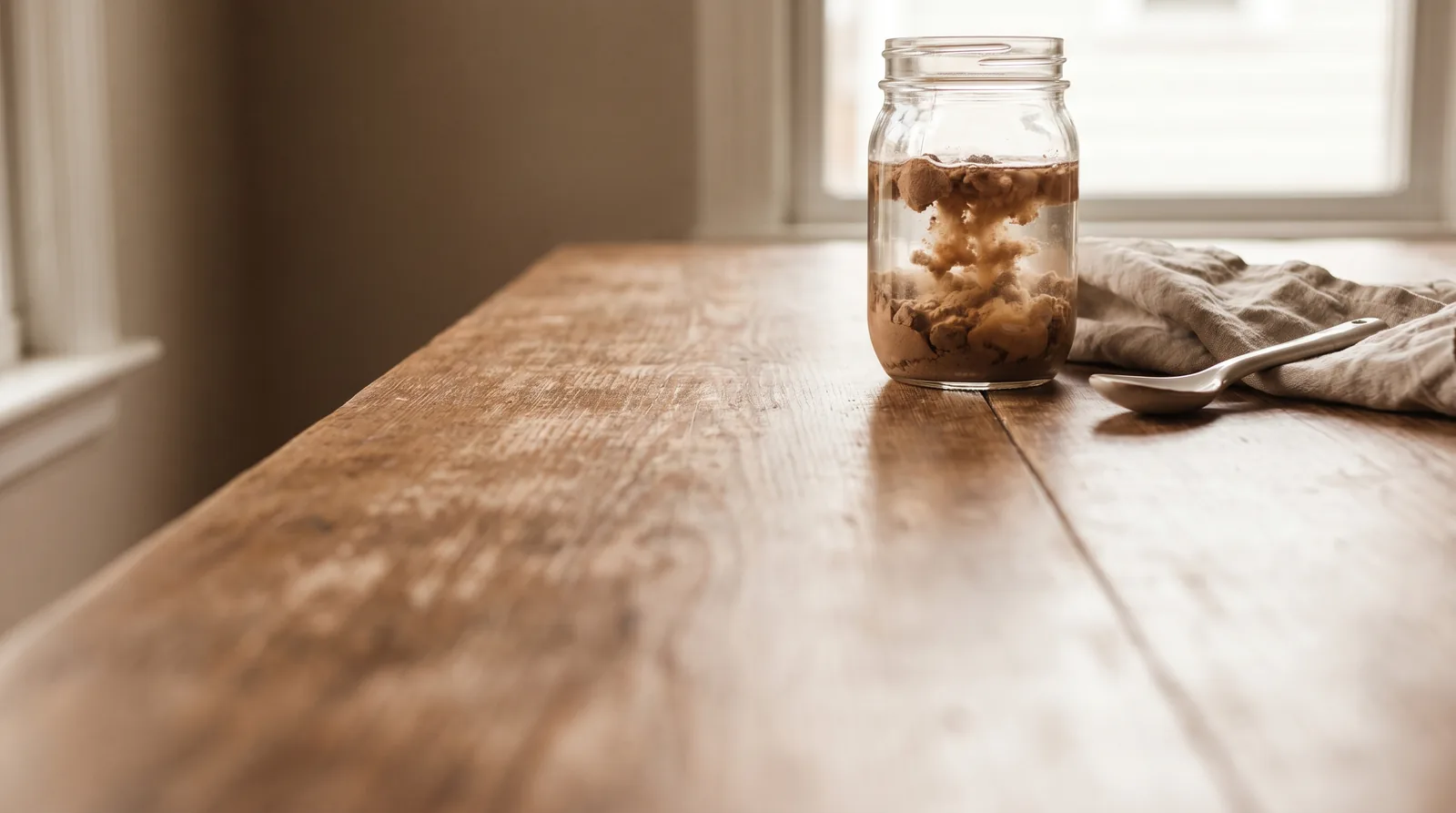
You stirred a scoop into hot coffee, oatmeal, or a pot of soup, and instead of dissolving it seized into rubbery lumps that cling to the spoon and leave a dry pocket of powder in the middle. You whisked harder. It got worse. The same powder mixes fine in cold water, so it feels like the heat broke it. It didn’t. Clumping in hot liquid is a predictable hydration problem, and it is fixable without changing brands.
Yes, you can mix protein powder with water, including hot water, but heat makes the outer layer of each particle hydrate and gel almost instantly, sealing dry powder inside before it can disperse. The fix is to control the order of mixing and the temperature: make a smooth slurry with a small amount of cool or room-temperature water first, then stir that paste into the hot liquid. Heat changes the protein’s shape but does not reduce its amino acid content.
- Clumping is a hydration problem, not a sign the powder has gone off or lost nutritional value.
- Make a smooth paste with a splash of cool or room-temperature water first, then stir it into the hot liquid.
- Add powder gradually with mechanical agitation — a whisk, milk frother, shaker ball, or immersion blender — rather than dumping a scoop into a still mug.
- Let near-boiling liquid cool to drinking temperature before the powder goes in.
- Single-ingredient powders with no added lecithin or gums need slightly more technique, but the slurry method handles them.
The mechanism matters because once you understand it, every fix below is obvious. Below is what actually happens when dry protein meets hot water, followed by four practical methods ranked from cheapest to most reliable. The first two require nothing but a spoon and a little patience.
What Actually Happens When Protein Hits Hot Water
When a particle of protein powder contacts water, its surface absorbs moisture and swells. In cool water this happens slowly enough that the particle has time to separate from its neighbors and disperse evenly. In hot water the surface hydrates and partially gels in a fraction of a second, forming a thin gummy skin. That skin traps the dry powder behind it, and you end up with a lump that is wet on the outside and chalky in the center. Stirring harder only packs those lumps tighter.
Heat also denatures protein — it unfolds the molecule from its native shape, the same change that turns a clear egg white opaque in a pan. Denaturation makes the surface stickier, so particles bind to each other rather than to the water. This is a structural change, not a loss of nutrition. Denatured protein delivers the same amino acids your body uses; cooking does not lower the protein content of the food. So the lumps are a texture inconvenience, not a reason to throw the batch out.
Make a Cool Slurry First, Then Add Heat
This is the single most effective fix and it costs nothing. Put your scoop in a mug or bowl, add two or three tablespoons of cool or room-temperature water, and stir into a smooth, lump-free paste before any heat is involved. Cool water lets each particle hydrate gradually instead of slamming shut. Once the paste is uniform, stir it slowly into your hot coffee, broth, or oatmeal and the protein folds in without seizing.
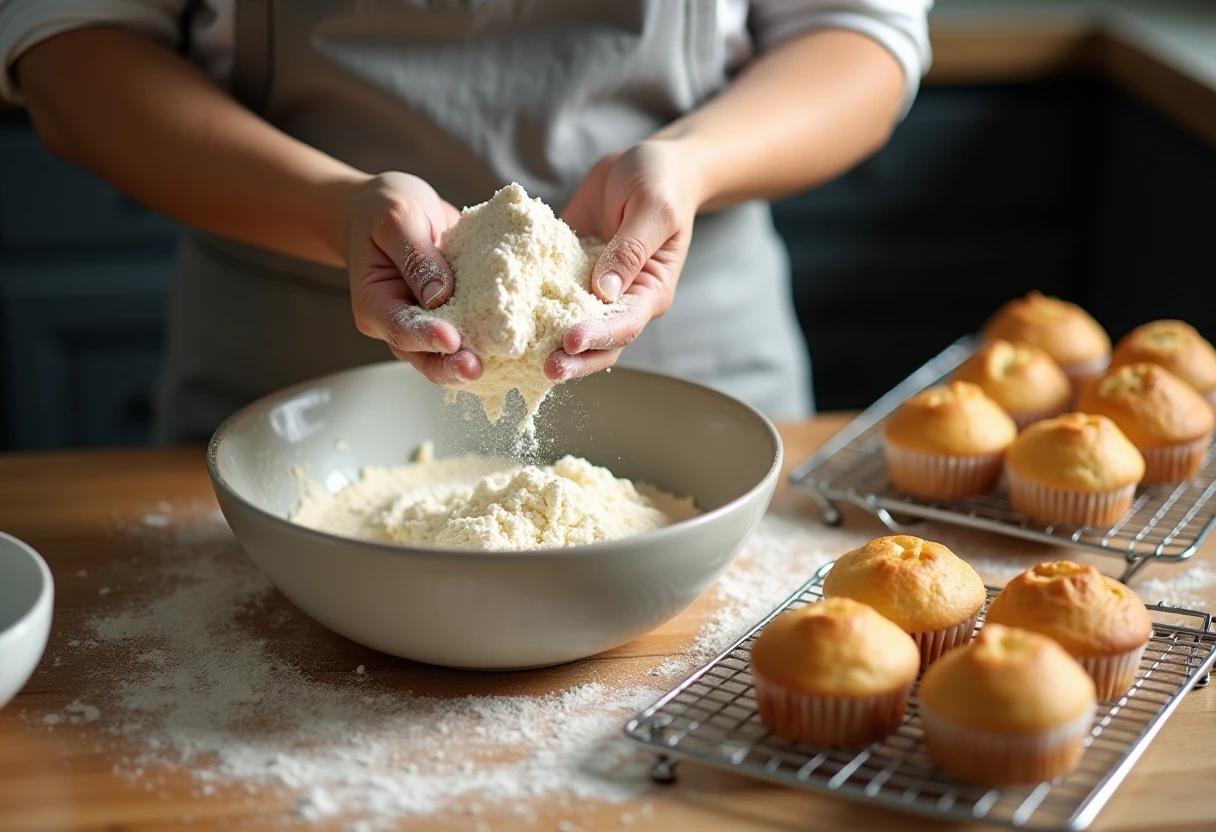
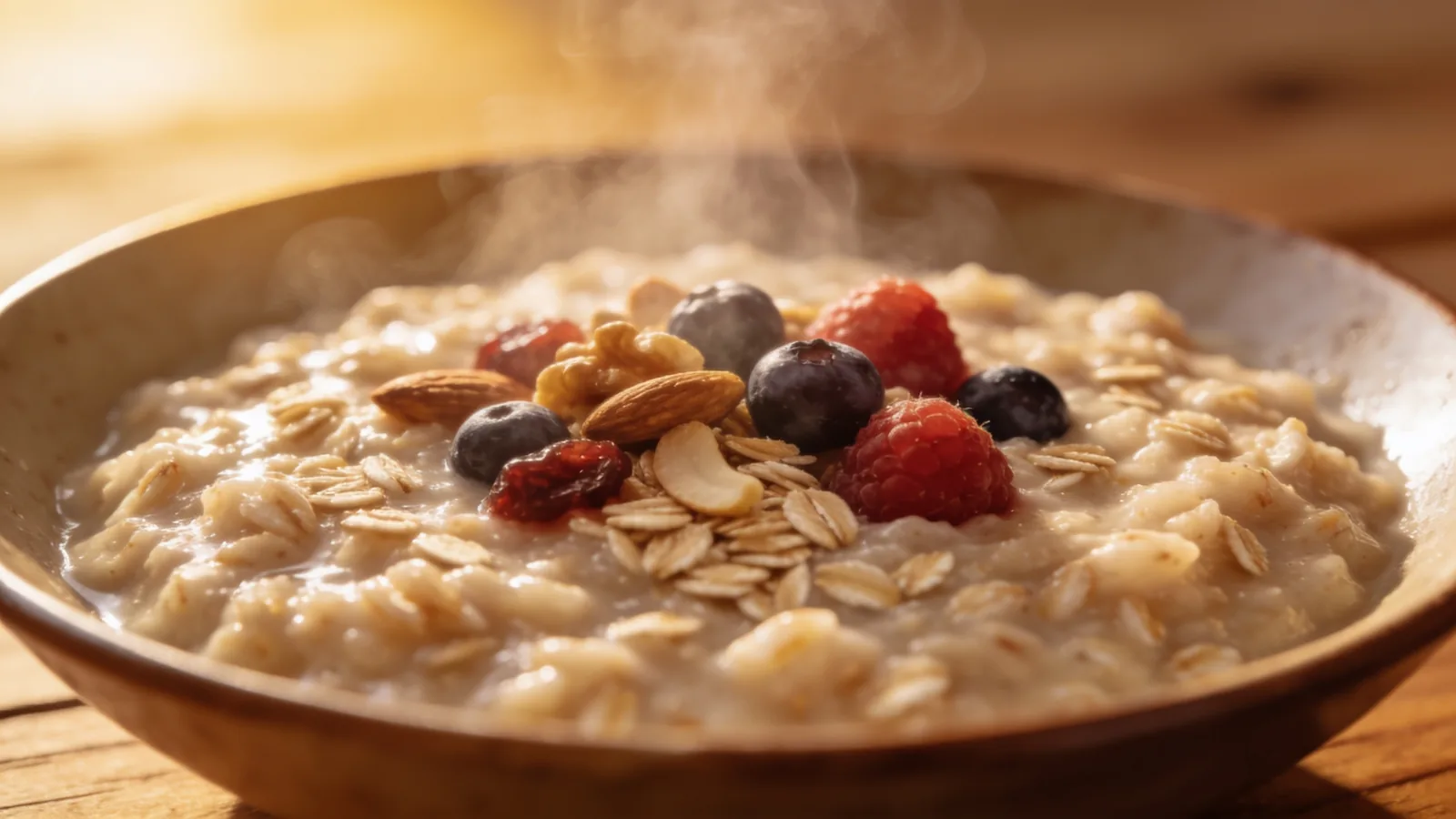
The same logic applies to cooking. If you are adding protein to a sauce or a pot of soup, never shake the dry powder directly over the heat. Whisk it into a little cold liquid taken from the recipe, then return that mixture to the pan off the boil. For hot cereals, stir the powder into the grains while they are still cold, then heat the whole thing together.
Add the Powder Gradually With Agitation
A spoon in a still mug is the worst possible tool. Mechanical agitation breaks particles apart faster than the gummy skin can form. A handheld milk frother is the cheapest upgrade and works directly in a hot mug; a shaker bottle with a wire ball or spring works for warm-but-not-scalding liquids; an immersion blender handles soups and larger volumes. Whatever the tool, add the powder in two or three small pours rather than one dump, keeping the liquid moving the whole time.
Sifting helps too. Tapping the powder through a small fine-mesh strainer over the surface of a moving liquid prevents the dense clumps that form when a packed scoop hits water all at once. It is a small step, but for fine isolates it makes a visible difference.
Lower the Temperature of the Liquid
Heat is the accelerant, so removing some of it removes most of the problem. Boiling or near-boiling liquid causes the fastest gelling; coffee fresh from the machine is often hot enough to seize a scoop instantly. Let it sit two or three minutes until it is hot enough to drink but no longer steaming aggressively, then mix. You sacrifice nothing — the drink is still warm — and the powder disperses far more readily.
If you specifically want a cold drink, the problem largely disappears. Whether to use cold water at all is worth a thought: our breakdown of protein powder with water vs milk covers the texture and nutrition trade-offs, and our guide to common protein problems collects the rest of the mixing, taste, and digestion issues people run into.
Choose a Powder That Disperses Predictably
Here is the honest part: many protein powders mix more easily in a shaker than single-ingredient powders do, because they add sunflower lecithin, gums, or other dispersing agents specifically to keep particles separated. If shaker-bottle convenience is your only priority, those formulas have an edge, and it would be dishonest to pretend otherwise.
Single-ingredient potato protein isolate — one ingredient, no lecithin, no gums, no flavor — is one such option. Single-ingredient powders exist across the category, with various sources offering this same stripped-down approach. The trade-off is straightforward: with nothing added to aid dispersion, the slurry method in Solution 1 does the work the additives would otherwise do. The upside is that there is nothing in the bag to react to, which matters if you read labels by default. Potato protein isolate is typically 80 to 95% protein, is recognized as a low-FODMAP source (Monash University, 2019), and reviews of its food applications note functional properties like gelation and foaming (Food Research International, 2021, PMID:34507729).
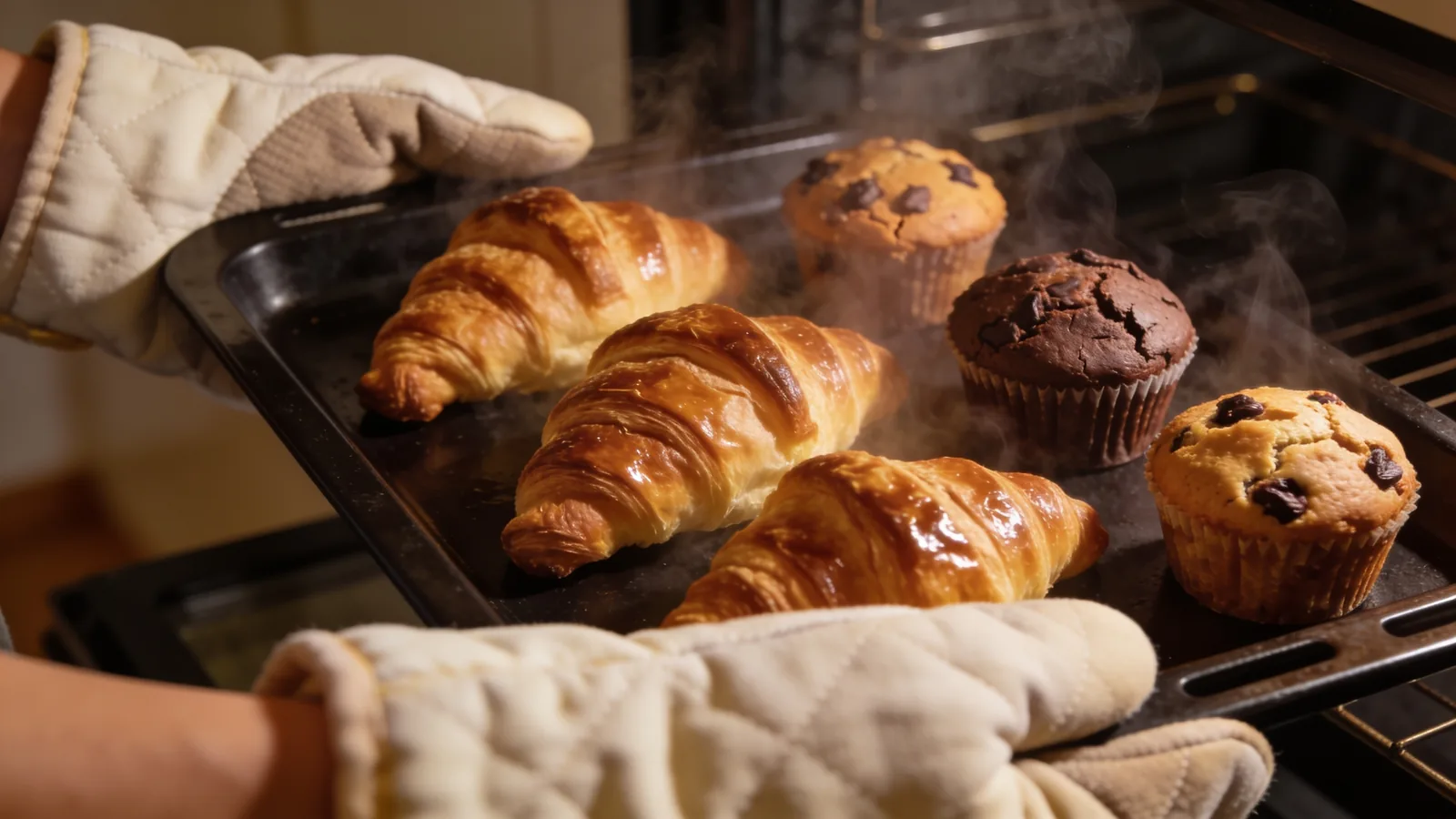
Because it has no flavor of its own, it disappears into your food. Rather than fighting it in a hot drink, many people stir it into oatmeal, batters, sauces, and baked goods, where the cooking is part of the recipe and clumping is controlled from the start. Our recipe index has worked examples, and if a shaker-friendly water mix is your main use case, the best protein powder to mix with water walks through what to look for.