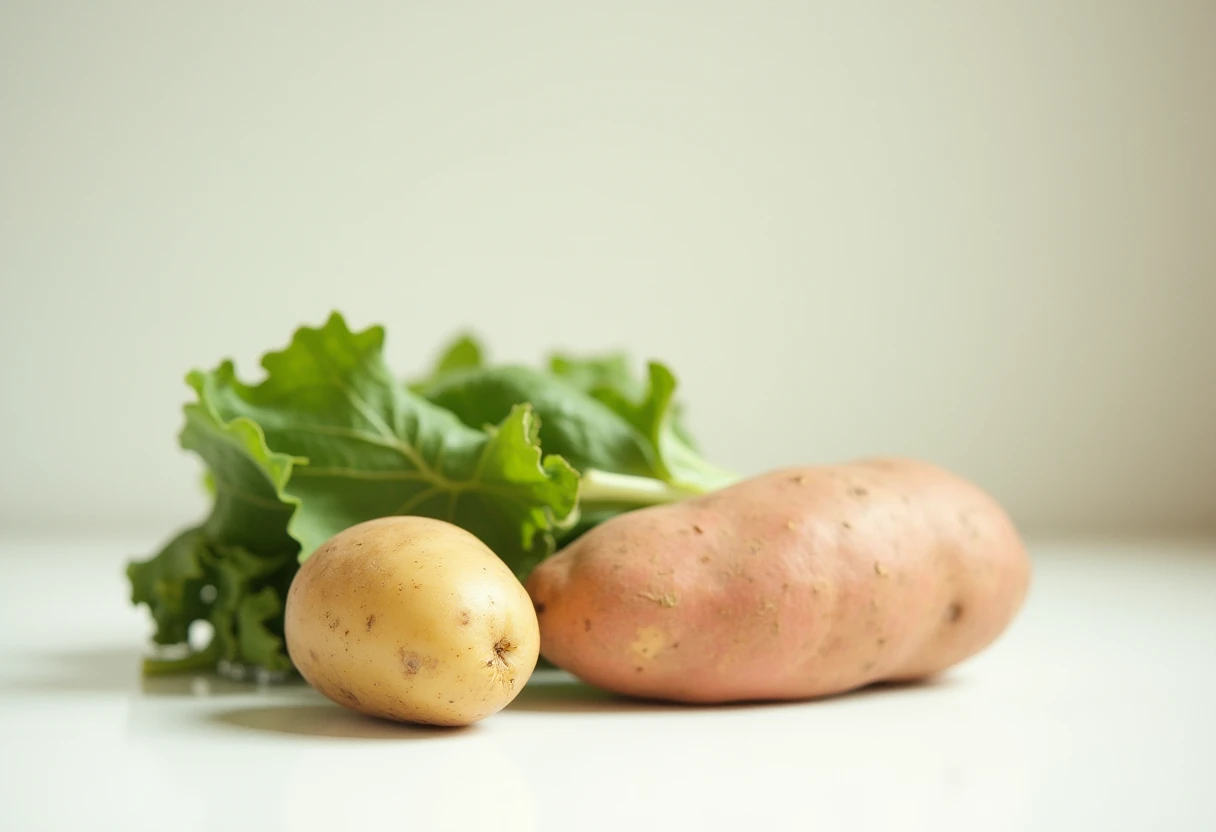
If you searched “protein powder AIP,” you already know the part most articles skip: potato is a nightshade, and the strict Autoimmune Protocol elimination phase removes nightshades along with grains, legumes, dairy, eggs, nuts, and seeds. So a single-ingredient potato protein isolate is not compliant during AIP elimination. It becomes relevant later — at reintroduction, and across the broader anti-inflammatory diets that are less rigid than full AIP.
Strict AIP elimination excludes all nightshades, and the potato is a nightshade, so potato protein isolate does not belong in the elimination phase. It is a candidate during AIP reintroduction or on a general anti-inflammatory diet, where the goal is the fewest possible inputs. Diets higher in plant protein are associated with a significant increase in anti-inflammatory butyrate-producing gut bacteria and greater bacterial diversity compared with animal-protein diets (Nutrients, 2023, PMID:37375578).
- You have run an elimination diet and reintroduced foods one at a time, tracking reactions in a notebook.
- A protein powder’s ingredient list routinely runs longer than the rest of your pantry shelf.
- You reacted to a “plant-based blend” once and never could isolate which of the fourteen ingredients did it.
- Someone said the word “inflammation” to you and you went home and started reading abstracts.
“You read every label because your body keeps the receipts.”
The problem with protein powder on an anti-inflammatory diet is rarely the protein. It is everything bolted onto it. The category is built around blends, gums, flavor systems, and sweeteners, and each added input is one more variable to rule in or out when something flares. The whole appeal of single-ingredient eating is that there is nothing to investigate. When the panel reads one line, a reaction has exactly one suspect.
What Makes Protein Harder on an Anti-Inflammatory Diet
Most protein powders are designed for the general market, not for someone reintroducing foods one at a time. Four things tend to get in the way.
The additive problem
Gums, emulsifiers, “natural flavors,” and sweetener systems are added to nearly every flavored powder, and any one of them can be the thing you react to. On an anti-inflammatory diet, an ingredient you cannot identify is an ingredient you cannot test. A protein with no added sweeteners or thickeners removes the guesswork — there is nothing in the tub to react to except the protein itself.
The allergen problem
Dairy and soy are off the table for most autoimmune-aware eaters, and they are the two most common protein-powder bases. Whey is a dairy protein; soy and pea isolates are frequently produced on shared lines or formulated into blends. If you are also avoiding eggs and nuts, the list of safe bases shrinks fast. Single-ingredient design is the cleanest way to know exactly what you are eating — for the full picture, see our allergen-free protein guide.
The nightshade problem
This is the one specific to potato protein, and we are not going to soft-pedal it. The potato is a nightshade (Solanum tuberosum), and strict AIP elimination removes nightshades entirely. During that phase, potato protein isolate is simply not an option, and any article telling you otherwise is not reading the protocol. Where it earns a place is the reintroduction phase, when nightshades are tested one at a time, and on the broader anti-inflammatory diets that never excluded nightshades to begin with.
The heavy-metal problem
Plant-based powders carry a contamination risk that is easy to miss. The Clean Label Project’s 2025 Protein Study 2.0 tested 160 products from 70 brands and found 47% exceeded at least one federal or state safety standard, with plant-based powders averaging five times more cadmium than whey-based ones (Clean Label Project, Protein Study 2.0, 2025). Consumer Reports’ October 2025 testing of 23 powders found plant-based products averaged nine times the lead of dairy-based ones (Consumer Reports, 2025). For an autoimmune-aware reader, third-party lab testing is not a nicety — it is the reason to check a product’s Certificate of Analysis before you buy.
What Actually Works for Autoimmune and Anti-Inflammatory Eaters
Start with the constraint that matters most to you. If you are mid-elimination on strict AIP, no protein powder built on a nightshade, legume, grain, dairy, egg, nut, or seed belongs in your day — you are eating whole meat, fish, and AIP-legal vegetables, and that is the protocol. Powders re-enter the conversation at reintroduction and on the looser anti-inflammatory diets, where the working rule is the same one you already apply to everything else: fewest inputs, known source, tested for what you cannot taste.
On the protein quality, the data is better than the “plant proteins are inferior” shorthand suggests. The Digestible Indispensable Amino Acid Score for potato protein isolates has been reported as high as 100% (Food Science & Nutrition, Herreman et al., 2020, PMID:33133540), and a 2020 trial found that 25g of potato protein isolate taken twice daily stimulated muscle protein synthesis at rest and after resistance exercise in young women (Nutrients, 2020, PMID:32349353). That places it well above the assumption that a plant isolate cannot do the structural work animal protein does.
The inflammation angle is where plant protein has a measurable edge. Diets rich in plant proteins are associated with a significant increase in anti-inflammatory butyrate-producing bacteria and greater bacterial diversity, alongside a reduction in pro-inflammatory bacteria, compared with animal-protein diets (Nutrients, 2023, PMID:37375578). There is also a gut-load consideration: when dietary protein exceeds small-intestinal digestion and reaches the colon, fermentation produces ammonia, hydrogen sulfide, and other compounds, and the amount of dietary protein is associated with intestinal disease across species, including inflammatory bowel disease in humans (Am J Physiol Gastrointest Liver Physiol, 2018, PMID:29597354). A highly digestible isolate leaves less undigested protein to ferment.
Digestibility matters for a second reason on this audience: potato protein is classified as a low-FODMAP protein source (Monash University, 2019), which is relevant if your autoimmune picture overlaps with IBS or SIBO — a common pairing covered in our piece on protein powder for IBS, SIBO, and Crohn’s/IBD. Soy and pea isolates, by contrast, can be difficult to purify and often retain some FODMAPs such as GOS and fructan.
If you want the broader picture on how an isolate is made and why a single ingredient behaves differently from a blend, our explainer on what potato protein is covers the extraction. And if you are weighing it against pea, rice, or whey, the higher plant-to-animal protein ratio that comes with replacing animal sources is itself associated with a 19% lower risk of cardiovascular disease (American Journal of Clinical Nutrition, Glenn AJ et al., 2024, PMID:39631999) — a relevant data point for anyone managing systemic inflammation.
The honest summary: potato protein is not an AIP-elimination food, full stop. It is a strong fit for the reintroduction phase and for anti-inflammatory eating that allows nightshades, because it is single-ingredient, low-FODMAP, highly digestible, and — when the brand publishes a Certificate of Analysis — verifiable against the heavy-metal problem that plagues the category.