A low calorie high protein breakfast without eggs or dairy is straightforward once you stop trying to assemble 30 grams from whole foods alone and instead anchor the meal with a single-ingredient protein isolate. A 30g scoop of potato protein isolate (80–95% protein, dry basis) supplies roughly 25g of protein for around 100 calories. Add a second plant source and a high-fiber base, and you clear 30g before you have spent more than five minutes in the kitchen.
To reach 30g of protein at breakfast without eggs or dairy, start with a single-ingredient plant protein isolate. A 30g serving of potato protein isolate delivers about 25g of protein for roughly 100 calories, then a high-fiber base like oats or a fruit smoothie plus a second plant protein takes you past 30g. In a 2020 study, 25g of potato protein isolate effectively stimulated muscle protein synthesis in young women at rest and after exercise (Nutrients, PMID:32349353).
Build a 30g-protein breakfast with no eggs, no dairy, and a calorie count low enough to leave room for the rest of your day. What you need: Potato protein isolate · A low-calorie base (oats, frozen fruit, or unsweetened plant milk) · A second plant protein · A blender or a bowl · Time: 5 min
Steps to a 30g No-Egg, No-Dairy Breakfast
Anchor the meal with a single-ingredient protein isolate
Whole plant foods rarely deliver 30g of protein at breakfast without dragging hundreds of calories along with them. A protein isolate fixes that. Potato protein isolate runs 80–95% protein on a dry basis, so a single 30g scoop provides roughly 25g of protein and very little else. That density is the entire reason to start here rather than with toast or fruit.
It also performs. In the 2020 trial, 25g of potato protein isolate effectively stimulated muscle protein synthesis in young women, both at rest and after resistance exercise (Nutrients, PMID:32349353). The Digestible Indispensable Amino Acid Score for potato protein isolates has been reported as high as 100% (Food Science & Nutrition, Herreman et al., PMID:33133540). If you want the longer explanation of where the protein in a potato actually comes from, read what potato protein is.
Pick a low-calorie base
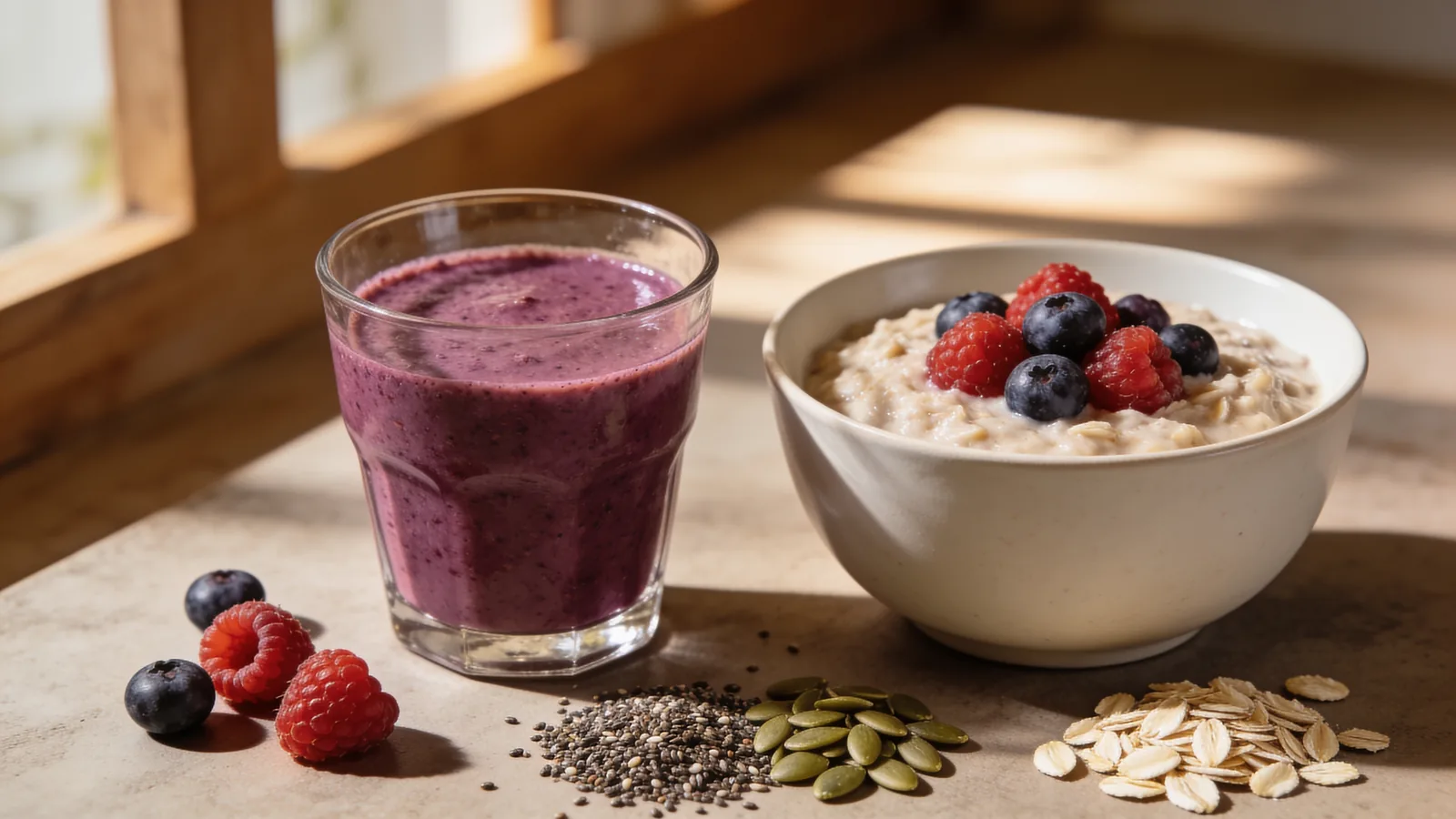
The base sets your calorie ceiling, so choose one that carries the protein without adding much on its own. Three reliable options: 40g of rolled oats, a cup of unsweetened plant milk, or a handful of frozen berries blended into water. Each keeps the meal under control while giving the isolate something to hide in.
Potato protein isolate is close to flavorless and dissolves into liquid or stirs into oats without grit. It disappears into your food, which matters when the goal is a breakfast you will actually repeat. For more low-calorie carriers and toppings, the high protein low calorie foods list is a useful reference.
Tip: Stir the isolate into oats after cooking, not before. Adding it to the pot can make the texture pasty; folding it in off the heat keeps it smooth.
Add a complementary plant protein
One scoop gets you to roughly 25g. To clear 30g and round out the amino acid profile, add a second plant source: a tablespoon of hemp seeds, a spoon of pea protein, or 30g of rolled oats already in your base all contribute. Combining sources covers the limiting amino acids of any single one. Across new pea genotypes, for example, lysine averages 7.9g per 100g of protein while methionine plus cysteine — the limiting amino acids — average only 2.6g per 100g (Molecules, 2024, PMID 39519674). Pairing pea with a different profile fills that gap.
The Academy of Nutrition and Dietetics has stated that plant protein can meet protein requirements when a variety of plant foods is consumed and energy needs are met (Journal of the American Dietetic Association, PMID:19562864). You do not need to engineer this perfectly at a single meal, but stacking two sources at breakfast is the easiest way to do it. See how to combine plant-based complete proteins for the details.
Add fiber and micronutrients without the calories
A high-protein breakfast keeps you full longer than a low-protein one. A 2021 meta-analysis of randomized trials in children and adolescents found that protein-rich breakfasts reduced subsequent energy intake and increased fullness compared with normal-protein breakfasts (Nutrients, PMID:34445000), and a review of high-protein diets concluded that high-protein meals increase satiety and thermogenesis more than lower-protein meals (Journal of the American College of Nutrition, PMID:15466943). Fiber extends that effect. Chia seeds, ground flax, frozen spinach blended into a smoothie, or a few berries add volume and micronutrients for almost no calorie cost.
If a sensitive gut is part of the picture, the source matters. Potato protein is considered a low-FODMAP protein (Monash University, 2019), whereas some pea and soy powders contain FODMAPs such as GOS and fructans that can trigger symptoms even in small amounts (Monash University FODMAP).
Combine, blend or stir, and check the math
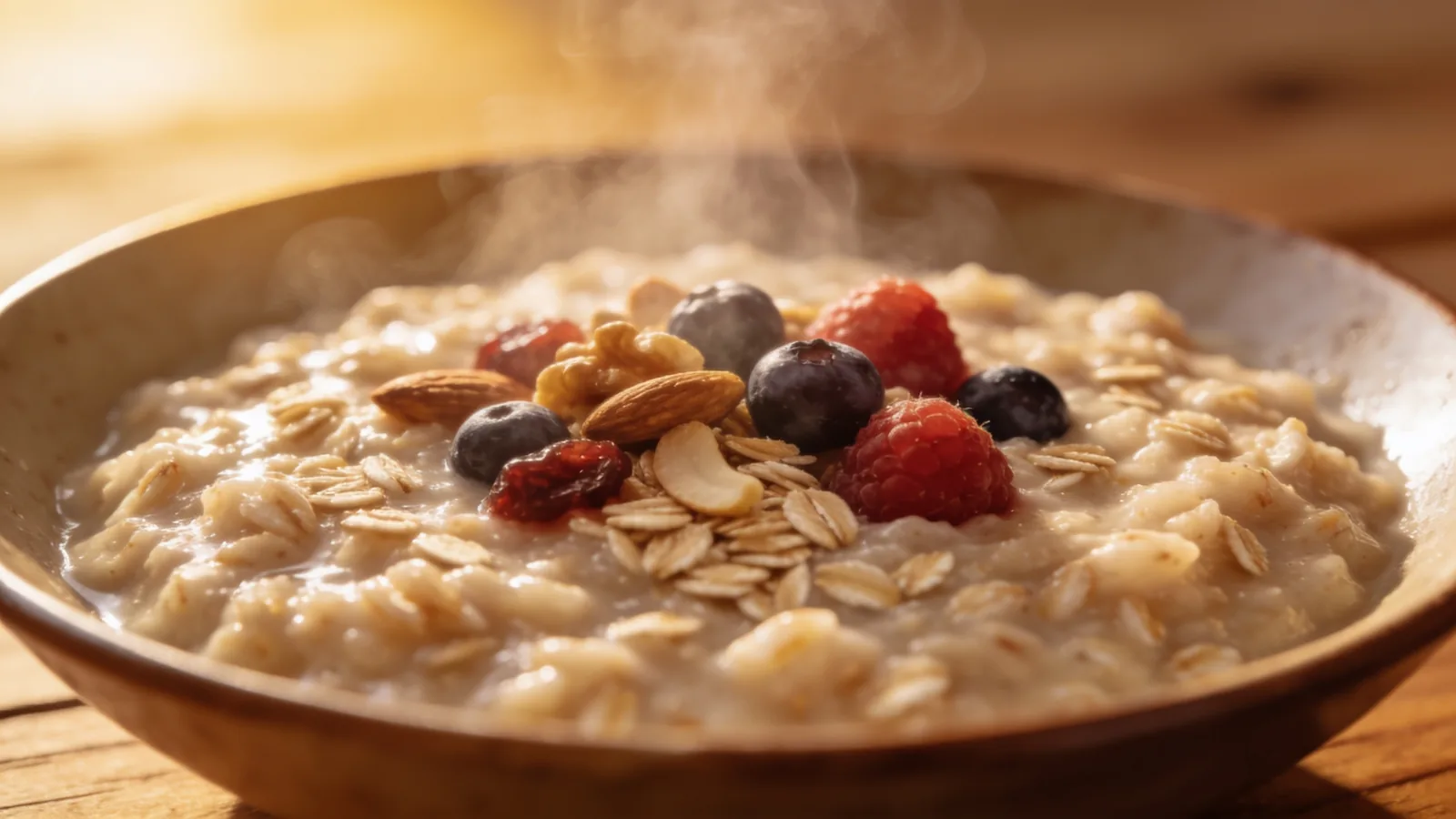
Blend the smoothie version or stir the oatmeal version, then add up your grams. A worked example: 30g potato protein isolate (about 25g protein) + 40g rolled oats (about 5g) + a tablespoon of hemp seeds (about 3g) lands near 33g of protein, comfortably past your target, and still moderate in calories because none of those additions is calorie-dense.
Swap freely once you have the pattern. Frozen mango and water instead of oats. Unsweetened soy milk instead of hemp. The structure — isolate plus base plus a second protein — holds either way. For more assembled ideas, browse the recipe index and the dedicated low calorie high protein breakfast ideas.
Pitfall: Do not rely on nut butter or granola to hit your protein number. They add 100+ calories per spoon for only a few grams of protein, which defeats the low-calorie goal. Use them for flavor, not for protein.
Checklist
- One scoop of single-ingredient protein isolate (about 25g protein)
- A low-calorie base: oats, frozen fruit, or unsweetened plant milk
- A second plant protein to clear 30g and round out amino acids
- Fiber from chia, flax, or greens for fullness
- No eggs, no dairy, no nuts or soy if you need an allergen-free build
- Total protein checked: 30g or more