The phrase “best fat burning protein shake” sets up a false promise: no protein shake burns fat on its own. What protein does — reliably, in published trials — is increase satiety, raise the thermic effect of a meal above what carbohydrate or fat produces, and help preserve lean muscle while you eat in a calorie deficit. A thermogenic “fat-burner” blend with caffeine and herbal extracts is not what drives those results; the protein is.
No protein shake burns fat directly. The best “fat burning protein shake” is simply a high-protein shake with minimal additives that keeps you full and protects muscle during a calorie deficit. Protein increases satiety and reduces later food intake more than carbohydrate or fat, partly through diet-induced thermogenesis (PMID:18469287). Skip the proprietary thermogenic blends and choose a protein with a high quality score and a short ingredient list.
We evaluated protein shakes the way you would evaluate any tool for fat loss — by what the evidence supports, not by the claims on the tub.
| Protein source | Protein content | Quality score | Muscle-synthesis evidence | Allergen / FODMAP |
|---|---|---|---|---|
| Potato protein isolate | 80–95% (dry basis) | DIAAS reported as high as 100% | 25g stimulated muscle protein synthesis in young women (Nutrients, 2020) | No top allergens; low-FODMAP |
| Whey protein isolate | 90–95% | Egg-comparable, high | Raised myofibrillar synthesis to 0.046%/h vs plant blend 0.041%/h (J Nutr, 2024) | Dairy; lactose <1% |
| Pea protein isolate | 70–90% | Chemical score ~46% (limited by methionine + cysteine) | Increased synthesis as part of a plant blend; below whey | Legume; can contain FODMAPs (GOS, fructan) |
| Egg white | — | PDCAAS 1.00 | — | Egg allergen |
Top Options by Category
Single-Ingredient Potato Protein Isolate
Single-ingredient plant option
If the real fat-loss job is satiety, muscle preservation, and a short ingredient list, potato protein isolate does it without baggage. The DIAAS for potato protein isolates has been reported as high as 100% (Food Science & Nutrition, 2020), and in a controlled trial 25g of potato protein isolate twice daily stimulated muscle protein synthesis at rest and after resistance exercise in young women (Nutrients, 2020). It is also a low-FODMAP protein source (Monash University, 2019), which matters when you are drinking the same shake every day. One ingredient — no caffeine, no green-tea extract, no proprietary thermogenic blend. Here is the full breakdown of what potato protein is.
Pros:
- Single ingredient; never squint to read the label
- High protein quality (DIAAS reported up to 100%)
- Low-FODMAP and free of the top allergens
- Published muscle-protein-synthesis data in humans
Cons:
- Lower leucine and slower amino-acid release than whey
- Earthy taste some people need to mix into food
Whey Protein Isolate
Fast-absorbing dairy protein
For muscle preservation in a deficit, whey isolate is hard to beat. Isolate forms run 90–95% protein with less than 1% lactose, and their rapid digestion and high leucine content stimulate muscle protein synthesis more effectively than slower proteins (American Journal of Clinical Nutrition, 2011, PMID:21367943). In a blinded trial, whey isolate combined with resistance training increased fat-free mass without significant changes in body fat (PMID:31565912). If you tolerate dairy, this is the strongest single argument for a protein shake during fat loss.
Pros:
- High leucine, fast absorption, strong synthesis data
- Isolate form keeps lactose under 1%
Cons:
- Dairy-based — not for the allergy or dairy-free reader
- Concentrate versions carry more lactose; read the label
Egg Whites or Low-Fat Cottage Cheese
Whole-food alternative
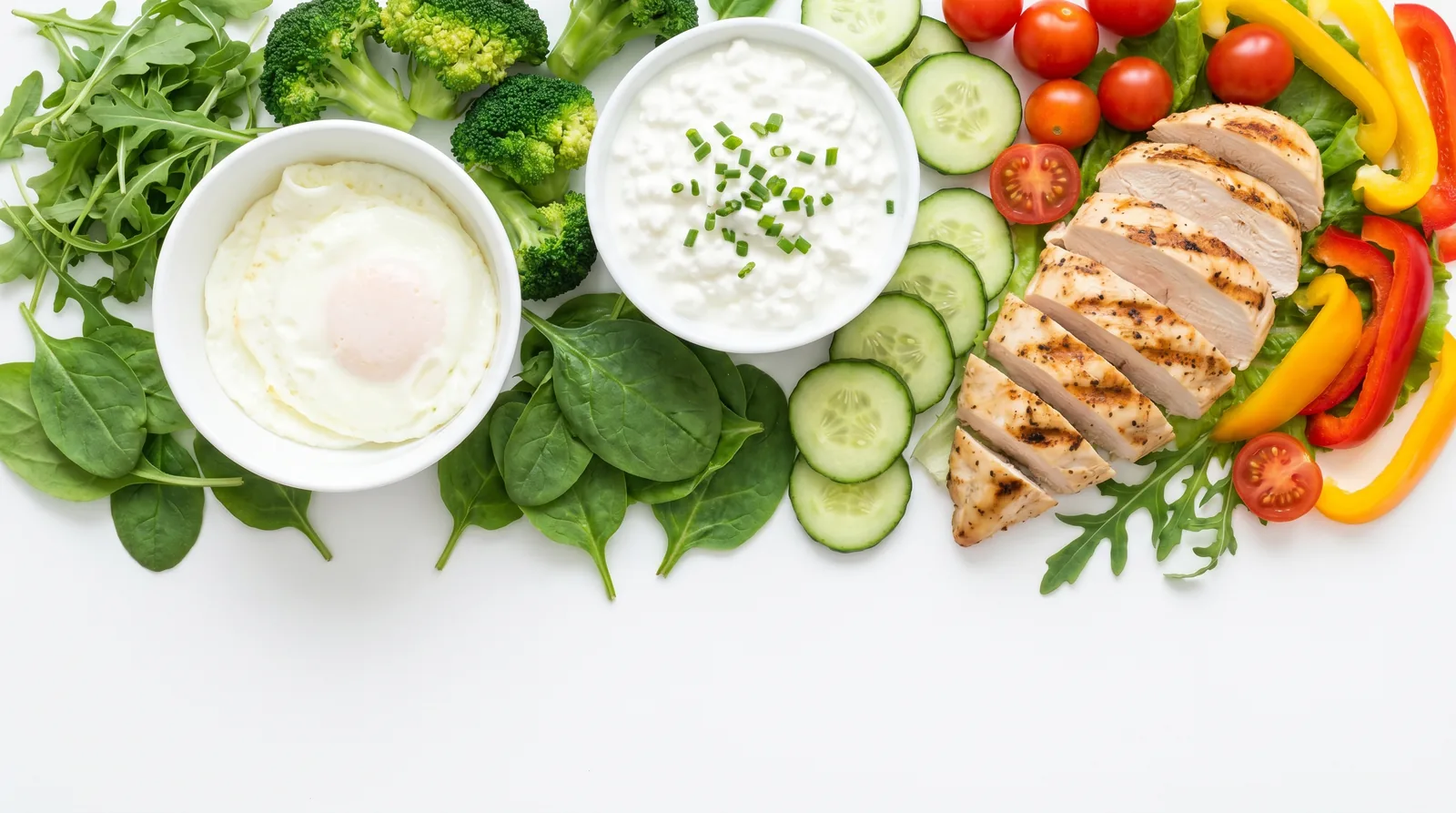
Not everything needs to come from a tub. Four egg whites contain 13g of protein and are almost isolated protein with no saturated fat (Cleveland Clinic, 2025), and 113g of 1% cottage cheese provides about 14g of protein for 81 calories (USDA FoodData Central). Egg white scores a PDCAAS of 1.00, the maximum on the FAO/WHO scale. For anyone whose goal is simply more protein per calorie, whole foods belong in the comparison.
Pros:
- High protein per calorie, minimal additives
- Egg white PDCAAS of 1.00
Cons:
- Egg and dairy allergens rule it out for many readers
- Less convenient than a shake on a busy day
Thermogenic “Fat-Burner” Protein Blends
Stimulant-spiked protein
Protein powders marketed as fat-burners add caffeine, green-tea extract, L-carnitine, or undisclosed “thermogenic blends” to ordinary protein and charge a premium. The evidence that protein supports fat loss comes from the protein itself — its effect on satiety and thermogenesis — not from the stimulant add-ons. Stacking caffeine into a daily shake also makes dosing unpredictable. You are paying more for a longer ingredient list that works against the one thing that matters here.
Pros:
- Convenient if you already want the caffeine
Cons:
- The “fat-burning” claim rests on the protein, not the blend
- Long, often proprietary ingredient lists
- Unpredictable stimulant dosing in a daily drink
What to Look For on Your Own
Once you accept that the protein — not a thermogenic blend — is what helps, the buying decision gets simpler. Three mechanisms do the work, and a short ingredient list protects you from the rest.
Satiety: the part that actually matters
Protein increases satiety and reduces subsequent energy intake more than carbohydrate or fat, an effect mediated by diet-induced thermogenesis and hormonal responses (PMID:18469287). High-protein meals raise satiety and thermogenesis more than standard-protein meals (Journal of the American College of Nutrition, 2004, PMID:15466943). A 25%-of-energy casein diet increased energy expenditure, improved protein balance, raised satiety, and produced a negative fat balance (American Journal of Clinical Nutrition, 2009, PMID:19176726). In plain terms: a high-protein shake makes you less hungry and slightly raises the calories you burn digesting it. That is the entire “fat burning” story, and it is enough.
Muscle preservation in a deficit
When you eat below maintenance, the goal is to lose fat without losing muscle. That is a muscle-protein-synthesis problem, and protein quality decides it. Whey raised muscle protein synthesis more than a plant blend in a 2024 trial (0.046 vs 0.041 %/h; J Nutr, 2024), and whey combined with resistance training increased lean mass without changing body fat (PMID:31565912). Plant proteins generally carry lower quality scores than animal proteins, which is worth knowing rather than glossing over — though potato protein isolate is a notable exception, with published human data showing it stimulates muscle protein synthesis (Nutrients, 2020). Whichever you choose, protein alone does not build or hold muscle; it must be paired with resistance exercise. The full mechanism is laid out in our guide to protein for weight loss, and the dosing question is covered in how much protein per day to lose weight.
Ingredients and contamination
This is where most “fat-burner” shakes fail. A short ingredient list is not an aesthetic preference — it is a contamination strategy. In the Clean Label Project’s 2025 Protein Study 2.0, which tested 160 products across 35,862 data points, 47% of products exceeded at least one federal or state safety standard, and plant-based powders contained five times more cadmium than whey-based varieties. Chocolate-flavored powders contained 110 times more cadmium than vanilla. Separately, Consumer Reports tested 23 protein products in 2025 and found more than two-thirds exceeded its safe daily lead limit, with plant-based products averaging nine times the lead of dairy-based powders. The fewer the inputs, the fewer the places for contamination and flavor-masking additives to hide. If a maker will not show you a certificate of analysis, treat that as an answer.
Digestibility
A shake you cannot drink daily helps nothing. Whey concentrate carries more lactose than isolate (Monash University FODMAP), and pea and soy proteins can be challenging to purify and often contain FODMAPs such as GOS and fructan (Monash University FODMAP). Potato protein, by contrast, is classified as a low-FODMAP protein source. If you have a sensitive gut, the digestibility column matters as much as the protein column.