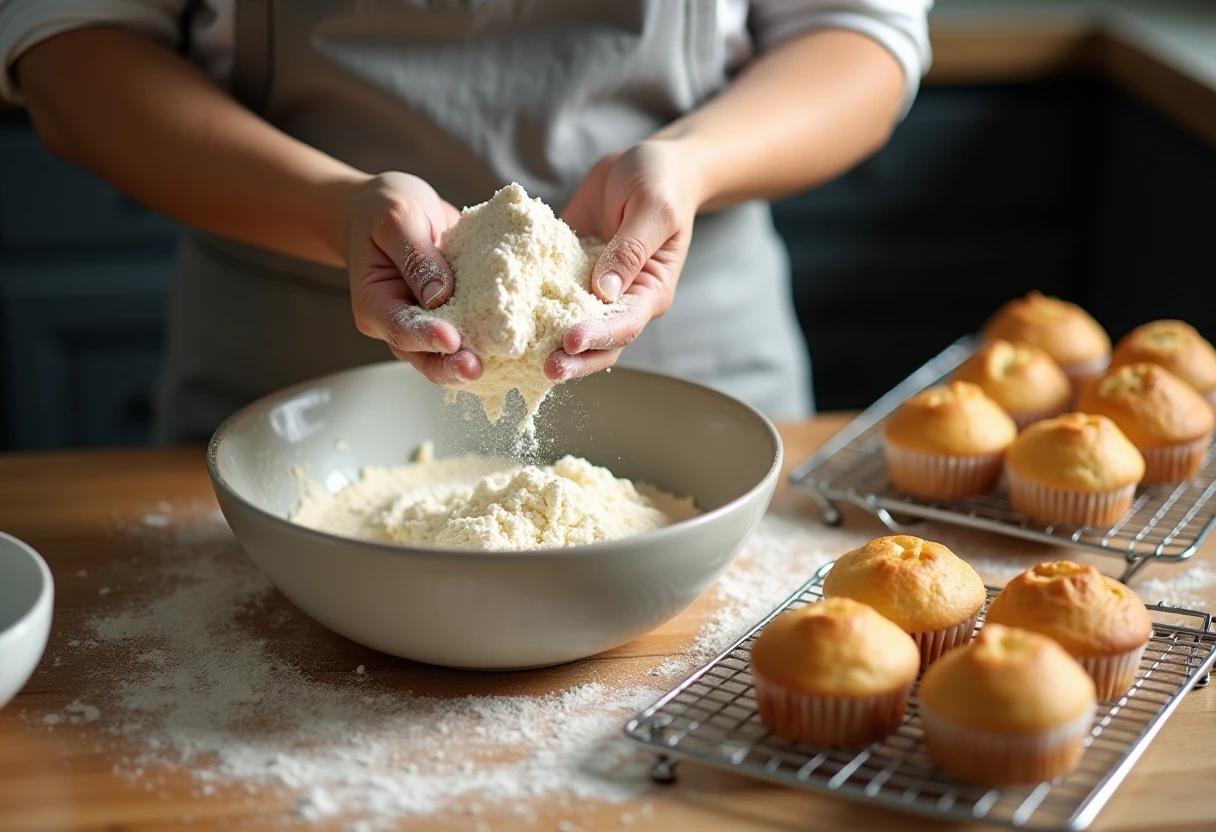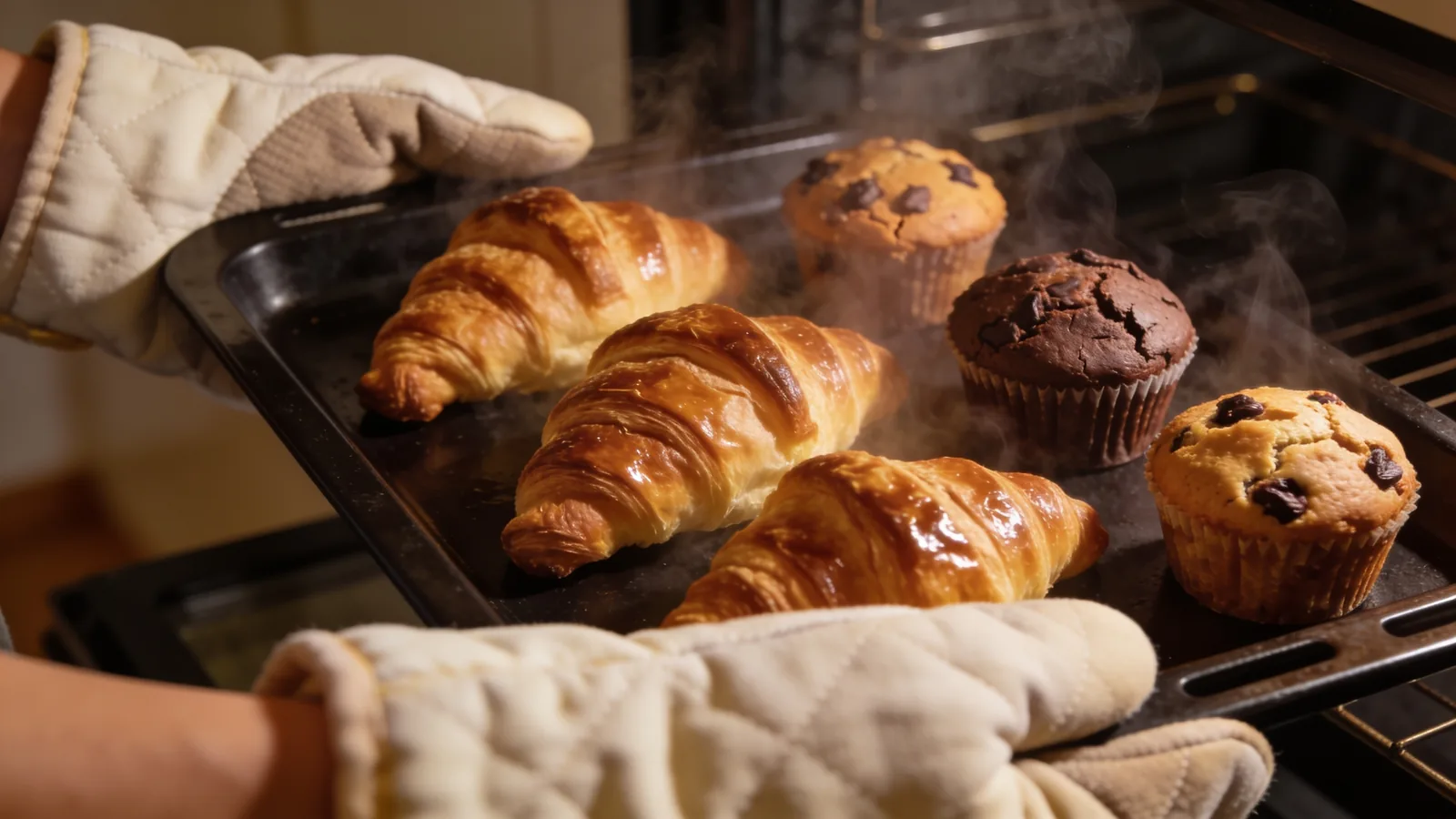
You followed the recipe. You swapped in protein powder to get the macros up, pulled the muffins out on time, and they still came out dense, crumbly, and dry enough to need a glass of water for each bite. You’ve tried adding an extra egg, baking them a minute less, even doubling the vanilla. Nothing fixed the texture. The problem is not your oven and it is not your technique — it is the protein itself behaving differently from flour.
- Root cause: protein powder absorbs far more liquid than flour and tightens as it heats, squeezing moisture out of the crumb.
- Fix 1: replace only part of the flour with protein — never all of it.
- Fix 2: add extra liquid and a fat source to offset the water the protein soaks up.
- Fix 3: lower the temperature and pull the bake early — protein sets before starch does.
- Fix 4: use a concentrate, a blend, or an unflavored isolate at a small ratio instead of a flavored powder.
Dry protein baked goods are one of the most common complaints in home baking, and the cause is consistent across muffins, breads, pancakes, and cookies. Once you understand why protein behaves the way it does in the oven, the fixes are straightforward. Below is the mechanism, then five practical solutions in order of how much they help.
Protein baked goods turn out dry because protein powder absorbs much more liquid than flour and lacks the starch that holds water during baking. When protein heats, it denatures and coagulates — tightening and pressing moisture out of the crumb, the same way an overcooked egg turns rubbery. Isolates, which run 80–95% protein, have the least starch and fiber to retain water, so they dry out fastest. The fix is to replace only a portion of the flour, add liquid and fat, and shorten the bake.
Replace only part of the flour, not all of it
The single biggest mistake is treating protein powder as a one-to-one swap for flour. It isn’t. Flour brings starch that gelatinizes and traps water, giving baked goods their soft, moist crumb. Protein powder brings almost none of that structure. Swap out all the flour and you remove the very thing that holds moisture in place.
Keep protein as a partial substitution. Nicole Hunn of Gluten Free on a Shoestring advises against using protein powder alone in pancakes, noting it would be drying and would not hold together, and recommends mixing it with oat flour or a gluten-free flour blend instead. The same logic applies to muffins, breads, and cookies: protein works best as a supporting ingredient, not the base. For commercial gluten-free baked goods, potato protein isolate is approved for use at levels from 0.01% to 10% of the formula — a useful reminder that even at industrial scale, protein is a minority ingredient, not the bulk of the recipe.
If you want a fuller breakdown of when a powder can stand in for flour and when it can’t, see our guide on whether you can use protein powder instead of flour.
Add extra liquid and a fat source
Protein powder is thirsty. Gram for gram, it absorbs more liquid than flour, so a batter that looked correct on paper ends up under-hydrated by the time it reaches the oven. The protein pulls water away from the rest of the crumb, and what’s left bakes out as steam.
Compensate by adding liquid back. For every scoop of protein you add, increase the wet ingredients — milk, water, yogurt, or a mashed banana — and add a fat such as oil, butter, or nut butter. Fat coats the protein and slows moisture loss, which is why a recipe built around protein and fat (think a flourless protein brownie) stays moist while a low-fat protein muffin turns to sawdust. Greek yogurt, applesauce, and pumpkin purée all work well because they bring water and body at the same time. Start by adding a tablespoon or two of extra liquid per scoop and adjust from there; the batter should be slightly looser than your usual one.
Lower the temperature and pull the bake early
Protein coagulates at a lower temperature than starch sets, which means a protein-heavy batter is effectively “done” on the inside before the clock says so. Leave it in for the full time printed on a conventional recipe and you overcook the protein, driving out the last of the moisture and leaving a tight, dry crumb.
Drop the oven temperature by about 25°F and check for doneness several minutes early. A toothpick should come out with a few moist crumbs clinging to it, not bone dry. Carryover heat will finish the center after you remove the pan. This single change rescues more dry protein bakes than any other, because most people are simply baking the moisture out. For more on what heat does — and doesn’t do — to the protein itself, see does heat destroy protein powder when you cook it. The short version: heating does not destroy the protein content or its amino acids, so baking it longer buys you nothing nutritionally and costs you texture.
Choose a concentrate, a blend, or an unflavored isolate
Not all protein powders dry out a bake equally. Isolates are the most concentrated — typically 80–95% protein — which means they carry the least residual starch and fiber to hold water. Concentrates retain more of those companion components and tend to bake softer. Fitfoodwizard.com makes the point directly: when baking with protein, use a concentrate rather than an isolate, or a mix of both, because the more concentrated the isolate, the more it draws moisture out.
If you only have an isolate on hand, use it at a smaller ratio and lean harder on Solutions 1 and 2. Also reach for an unflavored powder where possible. Flavored powders carry added sweeteners, gums, and flavor compounds that change how the batter sets and can make the result gummy or dry in unpredictable ways; unflavored isolates are widely recommended for baking precisely because they add nothing but protein to the equation. Whey, pea, and potato proteins all behave a little differently in the oven, so expect to recalibrate liquid and bake time when you switch sources.
Use a single-ingredient potato protein isolate at a small ratio
If your goal is to add protein without wrecking the crumb, an unflavored potato protein isolate is a reasonable choice — used as a minority ingredient, not the base. Potato protein has documented functional properties including solubility, emulsification, foaming, and gelation, which is why it shows up in gluten-free baking in the first place. Added to gluten-free baked goods, potato protein isolate can produce softer breads that stay fresh longer and more closely mimic the feel of wheat-based bread, and it has been reported to extend the shelf life of gluten-free bread by up to a week.
A single-ingredient potato protein isolate — no flavors, sweeteners, or gums — disappears into your food. Keep it at a small fraction of the total dry weight, add liquid and fat to match, and bake low and short. For tested ratios and formulas, browse the recipe index, and if you’re chasing down a different texture issue, our roundup of common protein problems covers clumping, gumminess, and grit.