A mass gainer protein powder and a standard protein powder solve two different problems, and most people reaching for the first actually need the second. A mass gainer is mostly carbohydrate — maltodextrin and added sugar — wrapped around a modest dose of protein; a protein powder is concentrated protein with little else. The distinction matters: in Consumer Reports’ 2025 testing, the most contaminated product was a vegan mass gainer that delivered 7.7 micrograms of lead per serving, more than 15 times the publication’s safe daily limit of 0.5 micrograms (Consumer Reports, 2025).
Most people need a protein powder, not a mass gainer. A protein powder is roughly 80–95% protein per serving with minimal carbohydrate; a mass gainer adds several hundred calories of rapidly digested carbohydrate to a smaller protein dose. Choose a gainer only if you genuinely cannot eat enough whole food to gain weight — and even then, assembling your own from a protein powder plus oats and nut butter avoids the heavy-metal and added-sugar problems found in many commercial gainers.
We evaluated both categories the way a label-reader would: protein per serving, what the rest of the powder is doing, third-party contaminant data, and how each one fits a real goal rather than a marketing promise.
Top Options by Category
Three of these are protein powders and one is a strategy, because for most readers the honest answer is “a protein powder plus food,” not a tub labelled “gainer.” Remember that no powder builds muscle on its own — protein supports muscle protein synthesis only when paired with resistance training, the point at which synthesis exceeds breakdown over time (Sports Medicine, PMID 24791918).
Single-ingredient potato protein isolate
Strongest all-around plant option
One ingredient: potato protein isolate, which runs 80–95% protein on a dry basis. A 2020 trial showed that 25 g of potato protein isolate, taken twice daily, increased muscle protein synthesis at rest and after resistance exercise in young women (Nutrients, PMID 32349353), and DIAAS for potato protein isolates has been reported as high as 100% (Food Science & Nutrition, PMID 33133540). It is also a low-FODMAP protein source (Monash University, 2019) and carries none of the dairy, soy, egg, or gluten that trip up other powders. It is a protein powder, not a gainer — you add the calories you actually want. Read the full breakdown of what potato protein is.
Pros:
- One ingredient — never squint to read the label
- Low-FODMAP; dairy-, soy-, egg-, nut-, and gluten-free
- Documented muscle-protein-synthesis response at 25 g
Cons:
- Slower, lower leucine rise than whey
- No carbohydrate — not a weight-gain product by itself
- Mild, earthy flavor some people notice
Whey protein isolate
Best for the fastest post-workout response
Whey protein isolate is 90–95% protein and less than 1% lactose (mindbodygreen, 2023). Its rapid digestion and high leucine content stimulated post-exercise muscle protein synthesis more than casein or soy in young men (Journal of Applied Physiology, PMID 19589961). If dairy is not a problem for you and you want the quickest aminoacidemia, this is the benchmark. Choose isolate over concentrate — concentrate carries more of the FODMAP lactose (Monash University FODMAP).
Pros:
- Highest leucine and fastest amino-acid rise of the picks
- Complete protein, all nine essential amino acids
- Deeply studied for strength training
Cons:
- Dairy allergen — off-limits for many readers
- Concentrate versions are higher in lactose
- Often blended with sweeteners and gums
Pea protein isolate
Best budget plant option
Over a longer horizon, pea protein holds up. An 84-day trial in sedentary adults doing weekly resistance training found pea protein (~20–22.5 g/day) and whey produced comparable gains in muscle mass (2.3% vs 2.4%, P = 0.92) and strength (Nutrients, 2024). Pea is lysine-rich, averaging 7.9 g per 100 g protein, but its limiting amino acids are methionine plus cysteine, at a chemical score of 46% (Molecules, 2024, PMID 39519674) — which is why it is often blended with rice.
Pros:
- Dairy-free and widely available
- Comparable long-term muscle gains to whey in one trial
- High in lysine
Cons:
- Limited in methionine and cysteine
- Can contain FODMAPs such as GOS and fructan (Monash University FODMAP)
- Plant-based powders averaged five times more cadmium than whey in 2025 testing (Clean Label Project, Protein Study 2.0)
Build your own gainer
Best route if you truly need to gain weight
If you genuinely struggle to eat enough — a real hard-gainer, or someone recovering from illness — you do need extra calories, but a commercial gainer is a poor way to buy them. Blend a protein powder you trust with oats, whole milk or a milk alternative, a banana, and a spoon of nut butter, and you control both the calorie count and the ingredient list. That matters: the worst-tested product in Consumer Reports’ 2025 round was a vegan mass gainer (Consumer Reports, 2025). For a fuller treatment, see our guide to protein powder for healthy weight gain.
Pros:
- You set the calories, carbs, and fats
- Whole-food carbohydrate instead of maltodextrin and sugar
- Avoids the heavy-metal load found in some gainers
Cons:
- Requires a blender and a few minutes
- Less portable than a pre-mixed tub
What to Look For on Your Own
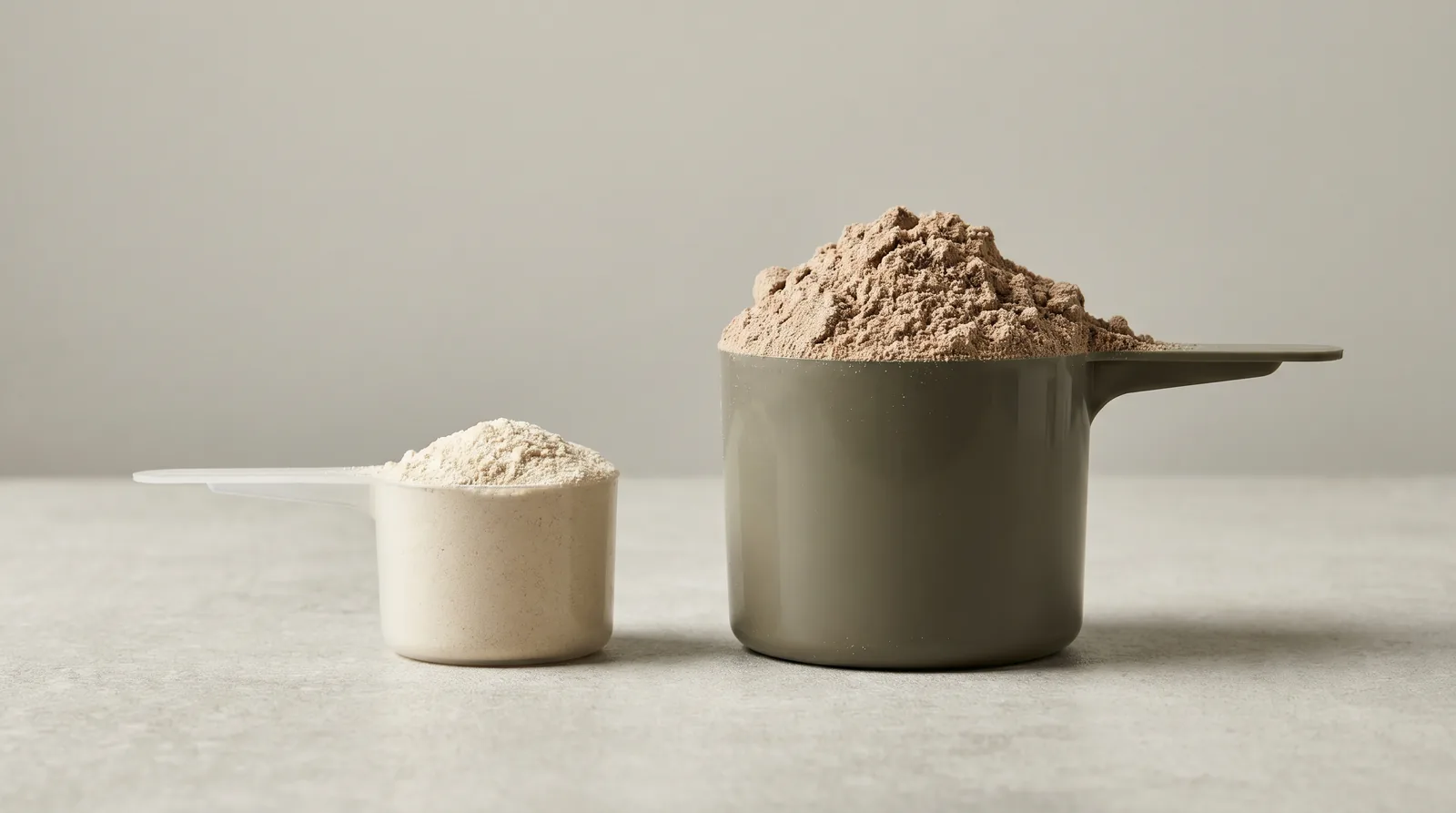
The core difference is what the powder is mostly made of. A protein powder is built to deliver protein with as little else as possible; a mass gainer is built to deliver calories, and most of those calories arrive as rapidly digested carbohydrate. Once you see that, the choice usually makes itself: if your problem is “I am not eating enough protein,” a gainer is the wrong tool, because you would have to drink a large carbohydrate load to reach the same protein you would get from two scoops of a concentrated powder.
Start with protein density. A serving that is 80–95% protein leaves almost no room for filler. A serving that is 20–25% protein, with the rest carbohydrate, is a carbohydrate supplement with protein added — fine if extra calories are the goal, wasteful if they are not. The table below compares the picks on the metrics that actually distinguish them; reliable single-figure PDCAAS values are not established for every plant isolate, so those cells are marked with an em-dash rather than a guessed number.
| Source | Protein (% of powder) | Complete protein | Quality marker | Allergen / digestibility note |
|---|---|---|---|---|
| Potato protein isolate | 80–95% | Yes | DIAAS reported up to 100% | Low-FODMAP; dairy/soy/egg/gluten-free |
| Whey protein isolate | 90–95% | Yes | Highest leucine of these picks | Dairy; <1% lactose in isolate |
| Pea protein isolate | 70–90% | Limited in Met+Cys | Chemical score 46% (Met+Cys) | Can contain FODMAPs (GOS, fructan) |
| Egg white | — | Yes | PDCAAS 1.00 | Egg allergen |
| Mass gainer (whey + carbs) | ~20–25% | Depends on protein used | — | High carbohydrate; added sugar common |
Next, read the contaminant data, because this is where mass gainers fare worst. Consumer Reports tested 23 protein powders and shakes in 2025 and found that more than two-thirds contained more lead per serving than its safe daily limit of 0.5 micrograms, with plant-based products averaging nine times the lead of dairy-based ones (Consumer Reports, 2025). The Clean Label Project’s Protein Study 2.0 tested 160 products from 70 brands and found 47% exceeded at least one federal or state safety standard, with chocolate powders carrying 110 times more cadmium than vanilla (Clean Label Project, Protein Study 2.0, 2025). A large serving size — the whole premise of a gainer — multiplies whatever contamination is present. Whatever you buy, look for a published Certificate of Analysis from the manufacturer.
Finally, match the product to the goal honestly. If you are training and want to recover, you want protein quality, not bulk calories — plant proteins generally produce a lower and slower rise in essential amino acids and leucine than whey (postprandial data), though a 20 g plant-based blend still raised myofibrillar synthesis to 0.041%/h against whey’s 0.046%/h (The Journal of Nutrition, 2024). If you are an endurance athlete, your protein needs run roughly 1.5–2 times those of a sedentary person (Trail Runner, 2021); our pillar guide to protein for athletes covers how to spread that across the day. If weight gain is the real goal, add calories from food you would actually eat, and treat the protein powder as the protein, not the calorie source.