- Prep
- 5 min
- Serves
- 1
- Protein
- 22g
- Calories
- 320
Ingredients
Tick them off as you go.
It is built on potato protein isolate — one ingredient, no proprietary blend, dairy-free by default — so it suits anyone avoiding whey, soy, or nuts. The trick the recipe leans on is restraint: you undercook rather than overcook, because the difference between tender and rubbery is about 15 seconds in the microwave. For more single-mug and single-bowl ideas, see our recipe index, and if you want the background on why this ingredient behaves the way it does, read what potato protein is.
Method
-
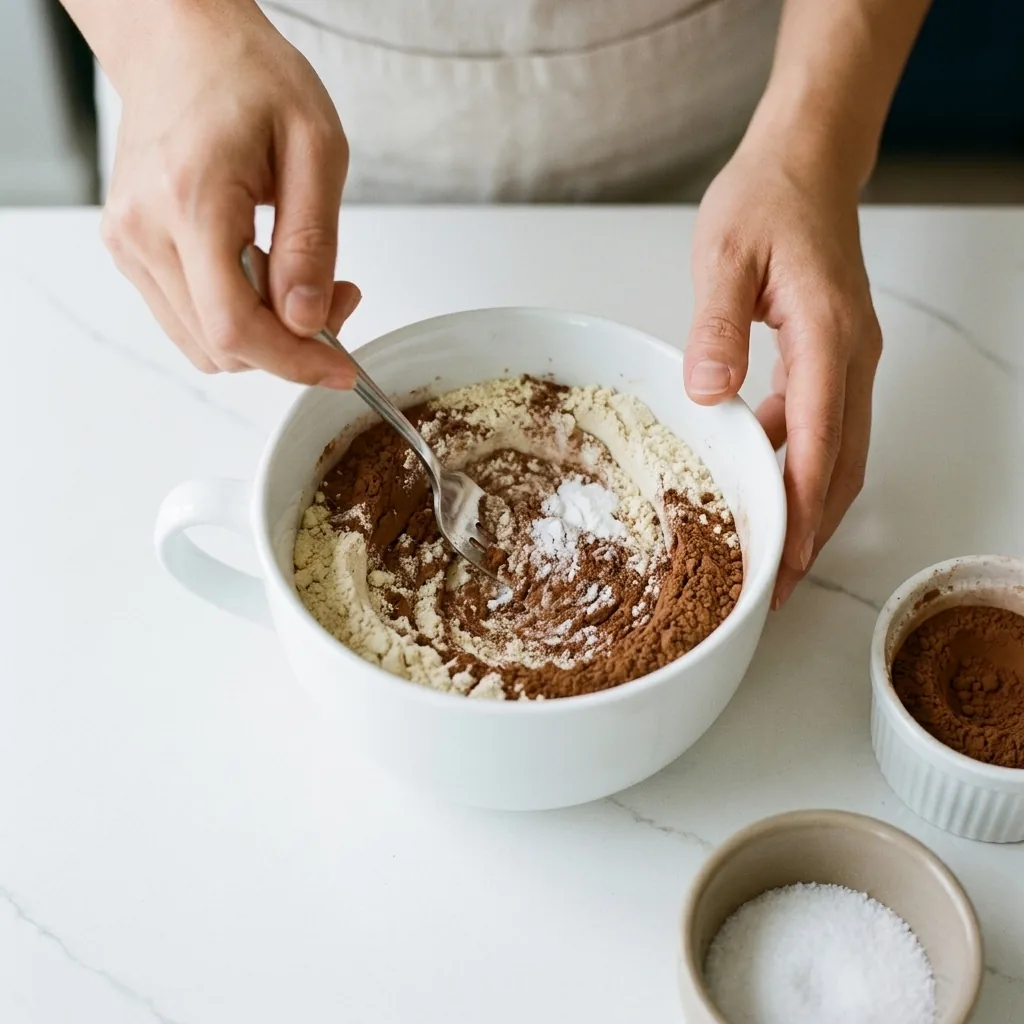
Whisk the dry ingredients. Add the potato protein isolate, cocoa powder, baking powder, and salt to a wide microwave-safe mug — wider is better than tall, because it cooks more evenly. Whisk the dry mix with a fork for 20 seconds until the cocoa is evenly distributed and you see no streaks. Potato protein isolate is fine and absorbs liquid fast, so getting it dispersed now prevents dry pockets later. A mug that holds at least 12 ounces gives the cake room to rise without spilling over.
-
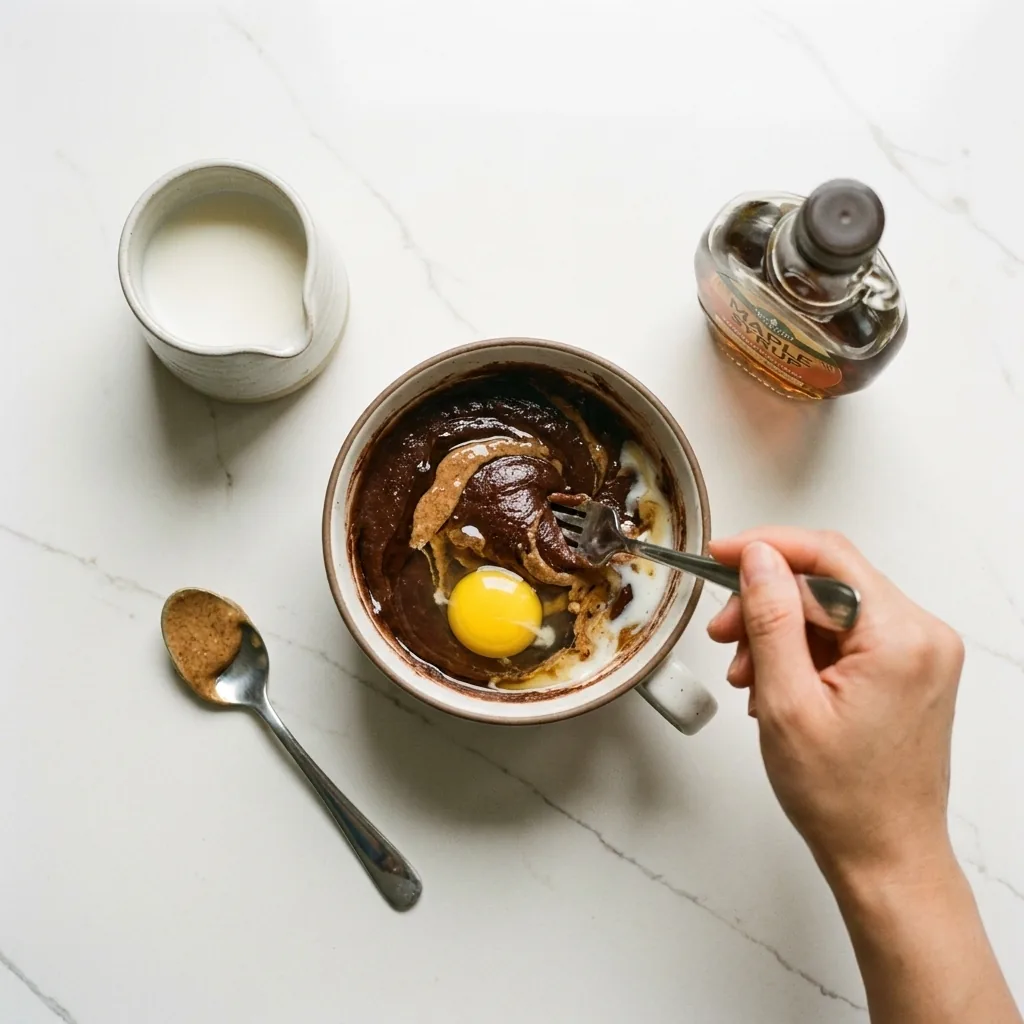
Add the wet ingredients. Crack in the egg, then add the milk, almond butter, and maple syrup. Stir with the same fork until the batter is smooth and pourable, scraping the corners of the mug where dry powder likes to hide. The batter should look like thick brownie batter — if it seems stiff or pasty, add milk one teaspoon at a time. Potato protein isolate thickens more than flour does, so a slightly looser batter going in produces a softer cake coming out.
-

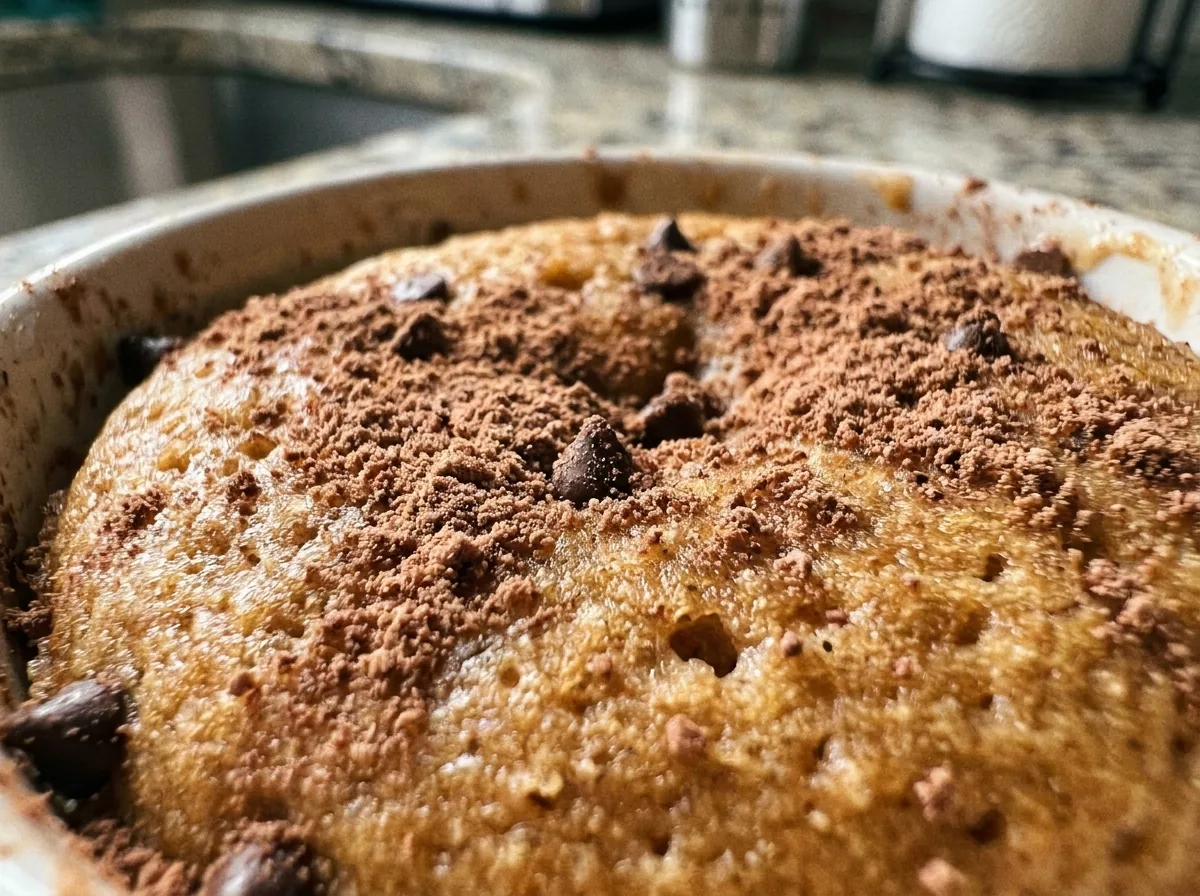
Microwave 60 to 90 seconds. Microwave on full power for 60 seconds first, then check. The top should look set but still slightly moist, and a toothpick should come out with a few damp crumbs — not wet batter, not bone dry. If it needs more, add 10 to 15 seconds at a time. This is the step that decides everything: protein sets fast and keeps cooking from residual heat, so a cake that looks perfect at 90 seconds turns rubbery at 120. When in doubt, pull it early.
-

Rest, then eat. Let the mug sit for one minute before eating. The cake firms up as it cools and the center finishes setting from carryover heat, which is why undercooking slightly is the right call. Eat it straight from the mug, or run a knife around the edge and tip it onto a plate. Top with a spoonful of yogurt, fresh berries, or a drizzle of extra nut butter. It disappears into whatever you add.
-
Vanilla variation and oven option. For a vanilla high protein mug cake, skip the cocoa, add ½ teaspoon vanilla extract, and increase the potato protein isolate to 3 level tablespoons plus 1 teaspoon to keep the protein near 22g. To bake instead of microwave, pour the batter into a greased ramekin and bake at 350°F for 10 to 12 minutes, checking at 10. The oven gives a slightly drier crumb and a real crust; the microwave gives a softer, faster result.
Nutrition per serving
- Calories 320
- Protein 22g
- Carbohydrate 24g
- Fat 14g
Other recipes you might enjoy
More from the desserts board — and the rest of the kitchen.